
When the Museum of Modern Art wrapped up six months of foregone agonizing and decided to raze the American Folk Art Museum, it claimed to be sacrificing a small work of architecture for the sake of Big Art. MoMA’s prescription for the ideal viewing experience is more galleries, more wall space, more hallways, and bigger lobbies. MoMA isn’t so much growing as it is engineering itself to pump high-volume crowds as efficiently as possible through its art-lined pipes.
Jerry Saltz to MoMA’s Trustees: Please, Reject This Awful Expansion Plan
Last week, Diller Scofidio + Renfro unveiled a design that replaces AFAM — a useless place for the exhibition of art, and a building whose demolition I have advocated — with even worse spaces. Their generic technocratic edifice is scornful to art, and will be less conducive to looking at art than the building it will replace.
John Baldessari’s Unforgivingly Humorous Art
When John Baldessari started creating his text paintings in the mid 1960s, only a handful of artists had ever trifled with the idea.
For one of his early text paintings, Baldessari chose a simple phrase that offered a perfect example of the layered meanings his work is often able to express with extremely limited means: “Pure Beauty.”
The 10 most subversive women artists in history
From the 17th-century painter who repeatedly depicted a woman beheading a man to the last great surrealist, Louise Bourgeois, here are 10 women artists who took on the patriarchy and won.
Coincident Bubbles: Art Versus The Stock Market
Handicapping 2014, maybe I see up to a 10% gain for the S&P 500 Index, refusing to anticipate the death toll of rapidly escalating interest rates or inflation. The market can sell at a high teens price-earnings ratio, even with earnings rising mid-single digits. Speculation is in the air so good stock pickers can do 25% or better.
My feel for the contemporary art scene is rosier. Dozens of million dollar canvases make $5 million in under five years. Paintings going for $5 million get knocked down at $10 million. A handful of pieces reach $200 million, but net worth limitations of even the super rich entail a self imposed art budget ceiling.
Is collecting art as profitable as it is painted?
The international art market is having its time in the sun: auction records keep tumbling, living artists have become superstars, and their punchy paintings and shiny sculptures have become the billionaire’s playthings of choice. Amid all this noise, however, it is time to question the much-touted belief that art is also an investment-grade asset.
New York’s Museum of Modern Art: a case study in how to ruin an institution
MoMA’s many expansions and redesigns have destroyed one of the most unique and precious public experiences of modern art.
Who is Glenn D Lowry?
A particular modern problem is that megalomania, especially when it involves real estate development, is the disturbance of many faceless men. And a faceless man is a difficult enemy.
Douglas Coupland: Unclassy

The old class definitions are becoming obsolete. Here are some new ones for a new era.
“This past spring, I was interviewing assembly-line workers in a suburban Shanghai internet router factory. When I asked workers what class they belonged to, they asked me what I meant and I said that I’m from North America, where most people will describe themselves as middle class.”
Doug has new meanings for new words like: “Blank-collar workers”, “Detroitus”, “Chinosis”, etc. So, read on, and be the first on your block to use these words and impress your friends.
Doggy style: Trussardi hires greyhound models

A dog in a shirt. Sounds silly, looks great – when it’s a greyhound (picked, presumably, from thousands) styled by the house of Trussardi.
Mike Kelley Retrospective @ PS1
Kelley’s cynicism, deftness with appropriation, and oddball subversiveness is introduced immediately in the exhibition space. “Entry Way (Genealogical Chart)” (1995) is a wall-mounted sculpture loaded with iconic symbols and logos one might find upon entering a small town in America—Kiwanis Club, 4-H, Masonic Lodge, Goodwill.
Richard Serra – Shifting His Tectonic Plates
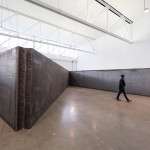
Richard Serra at the Gagosian Gallery. Heavy metal.
At the end of December, the PBS host Charlie Rose conducted a curious interview with Richard Serra about his new show in two locations of the Gagosian Gallery in New York, and it quickly became popular on the Internet. The conversation was notable mostly because it reached an uncomfortable deadlock over how to talk about Mr. Serra’s sculpture. (Mr. Rose thought one work in Mr. Serra’s new show looked like a cemetery; Mr. Serra disagreed. Repeat.)
MoMA Reveals Its Expansion Plans
The Museum of Modern Art is on the march again, advancing westward down 53rd Street, sweeping away the old American Folk Art Museum and planting its flag in the base of a future skyscraper.
Only the American Folk Art Museum building, Tod Williams and Billie Tsien’s twelve-year-old gem, has to go, because, like a cobbler’s shack next to an airport, it’s in the way.
Saltz: The Next MoMA Expansion Is As Big a Mess As the Last One
The word art barely came up. Maybe that’s why midway through this excruciatingly verbose three-hour closed-door briefing about MoMA’s second major rebuilding in less than ten years, I felt my eyes tear up and my stomach turn.
Anselm Kiefer To Mount Major Retrospective At Royal Academy In September
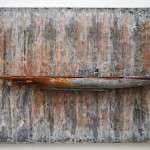
The Royal Academy in London is mounting a major a retrospective exhibition of the artist Anselm Kiefer who has made it his life’s work to confront the dark pre and post-war past of his native Germany, wrestling with its moral inheritances. Massive paintings, artist’s books, drawings, photographs, watercolours, sculptures and installations, will be presented by this 20/21st century giant. (September 27 to December 14)
What Was the Pictures Generation?
“The Pictures Generation” is as elusive as any label attached to a group of contemporary artists. As it is often used, the phrase refers to a range of painters and photographers active during the 1970s and ‘80s whose work made use of images appropriated from mass culture. With that understanding, it’s easy to conjure up some of the hottest names in the last half-century of American art—from Cindy Sherman to Richard Prince toBarbara Kruger. But none of those artists were part of the original “Pictures” artists, who were brought together for a show with that name at the nonprofit Artists Space.
Walter Robinson’s New Year’s Resolution to Forget 2013
We begin 2014 with a resolution, and that is to leave all the unfinished business of 2013 behind—to be done with it, to turn our back on it and give it not another thought. After all, we don’t want to start the new year by getting distracted by all the unexplored themes and missed opportunities of the last 12 months. Or do we?
By Walter Robinson
Breakfast with the FT: Nicholas Penny
“The National Gallery’s great advantage is that we are obliged to give prominence to works of art that are important in the collection but don’t mean much to people today,” he says cheerfully. Conceptual works by trendy names – notably installations by Conrad Shawcross and Mark Wallinger alongside Titian in 2012 – have entered the National Gallery during Penny’s reign but more than any of the world’s leading museum directors, Penny’s vision of art history remains rooted in the Renaissance. “I don’t believe art up to the present should be taught at university,” he says. “Because of consumer demand, the explosion of teaching of contemporary art now is colossal – and it is achieved at the expense of older art. We at the National Gallery should do more to become a magnet for scholarship.”
Charlie Rose vs. Richard Serra: A Play-by-Play
Over the holiday break, Richard Serra, who currently has a major exhibition at two of Gagosian Gallery’s locations in New York, made an appearance on Charlie Rose’s talk show. Who knew such strange things happened when the savant sculptor of steel converses with the Carolinian cornerstone of public broadcasting?
Guide to art as therapy – Alain de Botton

Can visual art offer solace, hope and reassurance as music can? The writer chooses the works that make him feel less alone.
It comes naturally to most of us to think of music as therapeutic. Almost all of us are, without training, DJs of our own souls, deft at selecting pieces of music that will enhance or alter our current moods for the better. Yet few of us would think of turning to the visual arts for this kind of help. Few of us involve paintings or sculptures in our emotional lives. We don’t have playlists of favourite images on our phones. We don’t assemble our own private galleries on our computers. The cost and prestige of art typically draws us back from such steps. The way the establishment presents art to us doesn’t invite us to bring ourselves into contact with works.
Anish Kapoor: Mirror Stages
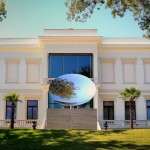
Mirrors can invert, distort, reveal and register experiences. Sculptor Anish Kapoor’s reflective work Non-Object (Pole) (2008) refracts a spectacular view of the Anatolian side of the Bosphorus Sea from the marble terrace of the Sakip Sabanci Museum in Istanbul. The mirror, in this case, operates as a kind of cultural and pictorial index, recording not only the surrounding foreground as a kind of proto–landscape painting, but also imprinting the embedded histories of the Turkish people, as well as the Ottoman and Byzantine empires, their politics, social systems and cultural traditions.