The man behind the World’s Most Expensive Painting
An Idiot’s Guide to Fancis Bacon
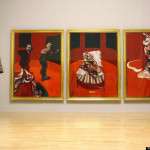

The man behind the World’s Most Expensive Painting
Instead of catering to carefully selected museums and collectors, auction houses sell to the highest bidder. They find two people who want the same work and get them to bid as high as possible; often those who buy work will only sell it again in two years.
“I collect in sort of the old fashioned way, a little bit at a time. If I miss something this time, there is always something else to come along, and it’s usually a blessing in the end. My best hope is that the Italians go to sleep on their own material. You also have to be pragmatic: bidding beyond what is a fair price — irrespective of whether you have the resources — is just sort of a mindless exercise that turns into trophy hunting. It doesn’t mean anything to build a collection that way… except bragging rights.”
The influential but oft-maligned project of pop urbanist Richard Florida first took off in 2002 with the publication of The Rise of the Creative Class, in which he defined a new economic sector composed of creative laborers: a group extending beyond artists to include designers, journalists, and tech people, a “highly educated and well-paid segment of the workforce on whose efforts corporate profits and economic growth increasingly depend.”
Roslery opens with a question that feels both obvious and deeply uncomfortable: Does choosing to be an artist mean aspiring to serve the rich? In 2013 it seems a given that artistic experiments in the use of space devised to subvert this destiny — and, ultimately, engage in radical social change — have been in turn assimilated by the long arm of capitalism, a process she historicizes in the chapter “Take the Money and Run?
Our first instinct is to marvel at the forgers’ skill and lament their misdeeds. But while forgery is very clearly an economic crime, it may not always be an artistic or aesthetic one. Forgers can even be an art lover’s friend.
Blake Gopnik in New York Times
Kathleen and Laing Brown are interviewed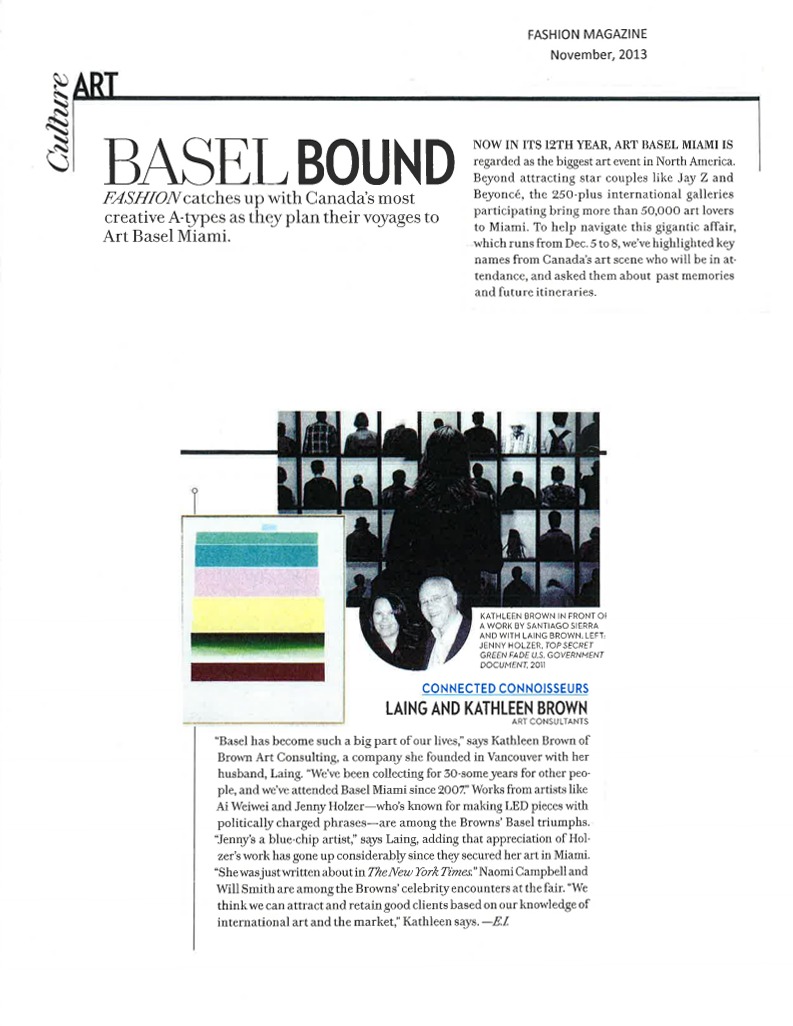 in Fashion Magazine.

The critic of today’s art is ironically its biggest benefactor: Perry has taken a fifth-rate talent and made himself an old master.
In the great game of contemporary art, Grayson Perry is a master. He has perfected the move that trumps all others: denouncing the art world from within. His Reith lectures, to be broadcast on Radio 4 later this month, reportedly lay bare the cynical workings of 21st-century art. He’s in the papers today mocking his bete noire, Damien Hirst, and claiming that the avant garde art is no longer subversive because the entire bourgeoisie love it.
The joke, of course, is obvious. The favourite contemporary artist of that same bourgeoisie is … Grayson Perry. He is loved by Today-listening folk for his wit and perceptive comments and has done more than anyone else to make art a mainstream part of issue-debating, educated, middle-class British culture, Guardian or Telegraph reading. He’s thetoast of book festivals, the darling of museums.
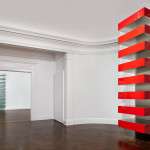
Donald Judd once wrote that an artist’s main challenge is to find “the concatenation that will grow” — in other words, an artistic preoccupation that will sustain a lifetime of development, not peter out by the third or even second show.
Christopher Wool is one of many painters who have experimented with bringing their medium to extinction. They strip it of familiar attributes like imagery, brushwork or flatness, often ending up with some kind of monochrome that suggests the last painting that could possibly be made.
Again and again, these works make viewers ask, in effect: Are you kidding me? That’s a painting?

The bookmaker’s favourite to win is Glasgow-based artist David Shrigley whose piece Life Model features a larger than life naked male robot. Show-goers are encouraged to take part by drawing the model and their efforts are displayed around the gallery.
Among the best known artists in the running for the £25,000 prize money is Berlin-based Tino Sehgal, 37, whose work This Is Exchange consists of live ‘encounters’ between interpreters dressed in black T-shirts and the audience. There are no actual objects or displays on show.
Art fairs have their dos and don’ts. If you Google “negotiating at art fairs,” few results come up; it may be a taboo subject—and a common pratfall for beginner collectors—but haggling happens, and it’s a veritable part of the art-buying game, for better or worse.
Crotchless trousers, baths of excrement, John Cage, Yoko Ono and Marina Abramovic … in the first of a series of exclusive films with the Tate, in which stars give potted histories of art movements, Frank Skinner opens up the wild world of performance art.
By far the most common topics of discussion and consternation in the art world these days are the four behemoths. Gagosian, Hauser & Wirth, David Zwirner, and Pace are the bull elephants of the field, galleries that galumph everywhere all the time, Hoovering up artists and money and monopolizing attention.
Jerry Saltz on the Trouble with Mega Galleries
“Chris Burden: Extreme Measures” at the New Museum is a superb survey, but also a kind of transfiguration. It liberates the Los Angeles-based Mr. Burden from the clutches of history, expanding and rebalancing our understanding of his art.
“I bought it through Amazon because it was quick and easy,” she said. Amazon is betting that millions of buyers like Ms. DeFord will happily buy paintings and prints in the same way that they now buy shoes or books or kitchen appliances online.
We shall see …
The protean Carol Bove continues to cultivate her extraordinary garden, operating in the gaps between art and design, modernism (especially Minimalism) and nature, language and structure, found and made, order and chaos, her work/art and other people’s work/art. One of the best artists of our peculiar moment, …
The art world has officially joined the rest of the world in a maniacal obsession with celebrity culture. Sure, Warhol did it long ago with his 1960s “screen tests” of Warren Beatty and Dylan, and by hosting the likes of Mick Jagger, Jackie O, her son John John and sister Lee Radziwill in Montauk in the ’70s, then hanging with Halston and Liza Minelli throughout the ’80s. But these days, celebrities and art are hooking up in a whole new way.
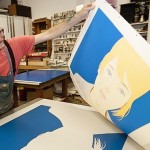
Since the invention of the printing press, artists have used it for a wide variety of reasons—to experiment with new forms, to exploit its unique strengths as an image-making tool, and to create more work than one person can execute by hand. Equally importantly, artists have made prints so that their artistic visions would be accessible to a broad audience. As the famedNeo-Expressionist painter Georg Baselitz said, “I’ve painted, but I’ve also done graphics since as long as I can remember so even people with little to spend could afford it.” As a result, prints have been embraced as one of art’s most democratic mediums.
But… what is a print, exactly? From Albrecht Dürer to Andy Warhol, artists have worked with master printmakers to employ a vast array of different printmaking strategies, each yielding its own distinctive result—so navigating the many varieties of prints can be challenging for newcomers. In the interest of providing some insight into a truly influential and important medium, here is a glossary of printmaking terms.
A work of art falls and breaks at the height of the London Art Fair. How did the piece still manage to get sold? This gallery girl has some confessions to make.
Oh dear oh dear, when things get broken, do they ever get pieced back together the way they were? I like to think that broken objects gain personality: been there, done that, broke a leg and now I have a scar story, know what I mean?
When loving art becomes an obsession: at a gallery in New York City, a gallerina mischievously walks off with a painting she fell in love with. This gallery girl needs more than chocolate to calm down.