
Cats vs. dogs, dolphins vs. sharks, and, most notably, males vs. females: classic rivalries of the animal kingdom. The art world is is not immune and the competition is fierce. Last week at Art Basel, I heard a story that was too good to keep to myself.
Confessions Of A Gallery Girl Pt. 2: The Evil Collector
What is the downside of selling artwork: A fist fight in an art fair? Going to bed with a married millionaire? This gallery girl has some confessions to make.
Every gallery I’ve ever worked for has always been careful with whom they make business with. Whenever some anonymous or obscure rich person e-mails us regarding the fresh young talent we’ve picked up, we always ask them for references: a letter from another gallerist whom the collector purchased work from or from artist who may be lucky enough to be hanging within his or her mansion. What we ideally want to hear is that they are a pleasure to work with, that they have a great personal interest in the artwork in question, and that they aren’t frivolously purchasing art to put it in storage only to sell it later like stock.
Confessions Of A Gallery Girl Pt. 1
How many art collectors actually know what they are buying? What’s the best way to smuggle artwork across the Atlantic? This gallery girl has some confessions to make.
Philanthropist Michael Audain reveals design for his Whistler museum
Described by its architect as a “very quiet participant within the forest,” the Audain Art Museum planned for Whistler, B.C., has grown to double the size originally announced. On Tuesday, philanthropist Michael Audain revealed the design for a 55,000-square-foot museum – up from the 27,000 square feet first proposed last fall, and the 39,000-square-foot facility later approved by the Resort Municipality of Whistler.
Jerry Saltz on MoMA’s Plan to Raze the Folk Art Museum: Good!
How sad. Just twelve years after it was built on W. 53rd Street next to MoMA, the former American Folk Art Museum is going to be torn down by its new owner: MoMA. What’s sad is not that the building is going; it’s that, despite near-universal rave reviews for its architecture, it was doomed to death as an art museum from the beginning.
Art first; all else will follow.
Protected: BAC Questions
Protected: BAC Rules
Looking At Contemporary Art: A Beginner’s Guide

Hey art non-experts, this one’s for you. Being in Berlin, the contemporary art capital of Europe, this crash course on how to look at art is a must!
Collector Anita Zabludowicz on Why She Is “Most Attracted to Innovative Art”

As two of the world’s most prominent collectors of contemporary art, Anita Zabludowicz and her husband,Poju, have amassed enough work over their four decades of collecting to fill not only their homes but also elegantly appointed public exhibition spaces in London and New York. However, the couple stands apart from the majority of the elite collector class in one critical regard: unlike those who spend millions to amass small treasure troves of work by Gerhard Richter, Jeff Koons, or other market darlings, these London-based collectors focus their attention almost exclusively on emerging and mid-career artists.
How I Learned to Love Art Fairs
The Berlin Wall fell in 1989 and a mere five years later the first of what has been a new global wave of art fairs opened in New York City at the Gramercy Park Hotel. Think there’s a correlation between the collapse of Communism and art-market expansion? …
Strolling down the aisles, looking at artworks, chatting with friends and new acquaintances: this is what one does. It has a perfectly libidinal economy of passing impulse and random desire. It’s shopping.
Inside 20,000 balloons: Martin Creed’s fun, disorienting Work No. 202
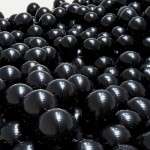
No more envying the kids in the ball room at IKEA. The National Gallery has a new work of contemporary art that’s sort of an adult version of a ball-filled room, with a subtext of deep thinking.
The installation is titled Work No. 202: Half the Air in a Given Space, and it’s byMartin Creed, who won Britain’s sometimes-controversial Turner Prize in 2001 for Work No. 227: The Lights Going On and Off, which was an empty room in which the lights went on and off. Some critics said it wasn’t art at all. One artist was so outraged she threw an egg at it.
WATCH THE VIDEO! It is lovely.
Rachel Whiteread is Britain’s greatest living artist
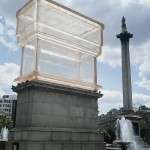
Her magnificent sculptures conjure up vanished lives, lost voices and forgotten loves – and sit easily alongside modern masters.
The Art Of Social Climbing
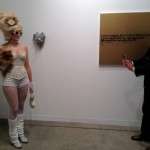
Out of place at fancy galleries? More used to drinking Sternberg than Dom Pérignon? Then read BAPS’ top tips for becoming a social climber in Berlin’s art world.
Or at Art Basel Miami Beach …
Philanthropist Michael Audain’s Whistler art museum gets its architects
Philanthropist, developer and art collector Michael Audain’s plans to build an art museum in Whistler, B.C., are progressing, with the selection of Vancouver-based Patkau Architects for the project.
Sarah Thornton – Top 10 reasons NOT to write about the art market
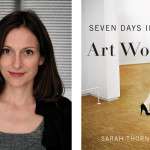
Canadian name-brand art reporter, Sarah Thornton, has pulled a Greg Smith, today, penning a screed for TAR Magazine entitled “Top 10 reasons NOT to write about the art market.” In it, the “Seven Days in the Art World” author concludes that the subject is too corrupt to report on and therefore she will shift away from this kind of journalism. Among her complaints: art market coverage gives “too much exposure to artists who attain high prices,” and “the most interesting stories are libelous.” Also — and this is our favorite — “The pay is appalling,” she writes.
Painting by Proxy
David Hockney recently touched off a controversywith a poster advertising his new exhibition at London’s Royal Academy of Arts that read: “All the works here were made by the artist himself, personally.” When the BBC journalist Andrew Marr asked Hockney if the statement was a dig at Damien Hirst, who employs up to 100 craftsmen to fabricate works that Hirst designs, Hockney nodded, and said, “It’s a little insulting to craftsmen… I used to point out at art school, you can teach the craft, it’s the poetry you can’t teach. But now they try to teach the poetry and not the craft.”
Lunch with the FT: Jay Jopling
The art dealer talks about his rise from selling fire extinguishers to making household names of Britain’s YBAs.
Standing on bohemian, buzzing Bermondsey Street in south London, outside Europe’s biggest commercial art gallery, its owner Jay Jopling gazes through a row of upright, painted steel fins that demarcates the courtyard. “I wanted a low wall, to be welcoming, open, but the local planning department wouldn’t allow it,” he explains. “I never forget walking down Cork Street [in Mayfair] as a student and the gallerists watching me, sizing up whether I could afford pictures or not. All my galleries have big glass doors. This building is simple, democratic – an open front, a white cube in the middle. It’s very transparent. It isn’t just for people buying art.”
Adel Abdessemed: Who’s afraid of the big bad wolf
War, violence, death – these aren’t pretty topics. Nevertheless they’re topics that are explored in Who’s afraid of the big bad wolf, an exhibition of artwork by Adel Abdessemed. Despite the dark subject matter of the artwork, people were laughing and having a good time at the opening for the exhibition at David Zwirner Gallery.
Full circle: the endless attraction of Damien Hirst’s spot paintings
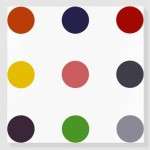
The titles of Damien Hirst‘s spot paintings give them a slightly menacing, as well as a dangerously attractive, air: Cocaine Hydrochloride, Morphine Sulphate, Bovine Albumin, Butulinium Toxin A. Their relentless, insistent brightness feels almost bad for you. No wonder one group of paintings is called Controlled Substances. Yet they have no discernable secrets, and that’s part of the deal. Nothing more is revealed, however long you look. They’re as unsatisfying as cigarettes, calming but addictive. Avoid prolonged exposure.
Hirst, Globally Dotting His ‘I’
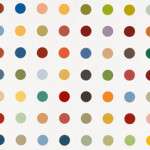
Thanks to the Gagosian art empire, a ludicrous number of paintings by Damien Hirst are on display right now: 331 of Mr. Hirst’s implacably cheerful “spot” abstractions spread among Gagosian’s 11 galleries in 8 cities on 3 continents.
The good news, of course, is that they’re not all in one place. And none involve dead animals, maggots, encrusted diamonds or vats of formaldehyde. They’re mostly just grids of repeating, neatly made circles, each a different color. How bad can it be?