The secret stories that works of art can tell – ABMB

Our selection of pieces with back stories that add interest as well as value.

Even though we are at an art fair, there is more to the works on show here than their price tags. There are many personal stories behind the paintings, sculptures and photographs on sale. Art historians are often interested in these stories, as they can reveal telling details about artists’ lives and ways of working, and about the history of the collectors, museums and institutions that owned the works.


Just how fresh can you get? – ABMB

Art created to be unveiled at the fair proves popular in Miami— but not everyone is impressed.

Be careful not to stand too close to the works on show at Art Basel Miami Beach—the paint may not yet be dry. Dozens of artists including Marilyn Minter, Luis Gispert, Ryan Trecartin and Lizzie Fitch have created works especially for this year’s fair, sometimes adding the final touches inside the convention centre.

The substance beneath the style – ABMB

Miami is still partying, but galleries have institutional collectors in mind.

t is currently in vogue to dismiss Miami as a hedonistic party town where art plays second fiddle to the fizz and glamour of this week’s soirées. The sheer number of events organised by brands promoting booze, bags and luxury goods has recently sparked criticism from art-world figures and leading newspapers including the New York Times, which ran a story headlined “At Art Basel Miami Beach, Squeezing Art Out of the Picture” last weekend.

Those who fear the demise of meaningful creative content, however, would do well to actually look at the art on show.

Report From Art Basel: A Frenzied Race to Move Monotonous Art

Back-pats were flying at yesterday’s VIP opening of Art Basel Miami Beach. Several booths had already sold out by midday, and there was no shortage of interest from swarms of bees collectors. The fair’s success was summed up by a dealer from Andersen’s Contemporary—a six-year ABMB veteran and Frieze and Armory exhibitor—when he told us, “Art Basel is just the biggest. End of story.”

What the Hell Is Food Stamp Art Doing at Art Basel?

Thanks to Paula Cooper Gallery, ABMB visitors have four more days to take in the most offensive artwork in the fair: Meg Webster’s “Food Stamp Table.”

Comment:  Paddy Johnson and ArtFCity usually get it right, but not here, we say.  We think these issues do need to be raised, even at an art fair.

Kanye West’s “Bound 2″: Blame It on the Collector Class

Watching Kanye West’s “Bound 2” is about as joyous as romping through a stock photography website. The generic sprawling sunsets, mountain vistas, and gradient backgrounds are airless. Our two protagonists are large as gods, with Kim Kardashian reclining in the buff—though her nipples are airbrushed—playing a human hood ornament atop Kanye West’s motorcycle. These two celebrities, and a growing cadre of other stars, are unlike their predecessors; they like art, and they’re getting treated like artists.

Jake and Dinos Chapman: Come and See, Serpentine Sackler Gallery

The Chapmans not only are what they are, but they embody what they are to perfection. And just when you think you may have outgrown them yourself – like you might a lover whose jokes have grown wearisome, but really, it’s you, it’s you – they hijack your affections once more by being both brilliant and funny and more brilliant and funny than you ever remember them being. They are a vital, unstoppable force.

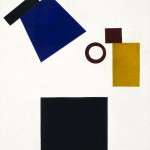
Being Kazimir Malevich, in Amsterdam

All eyes were on the Rijksmuseum when it re-opened in April after a 10-year refurbishment, but across the Museumplein, Amsterdam’s gallery of contemporary and modern art, the Stedelijk, was already settling into its new look, unveiled six months before. With its world-beating collection and extended galleries, it is already an attractive destination, but a remarkable exhibition of the art of Kazimir Malevich and his contemporaries makes the Stedelijk reason enough to hop to Amsterdam right now.

Lunch with the FT: Jake and Dinos Chapman

The not-so-young British artists on provocation, prostitution and spicy soup

Jake picks up a paper napkin. “The second that Martin Creed does that” – he crumples up the napkin – “then it’s worth £50,000 or whatever. The point is there has to be some sort of syndicative agreement that if he or she does it” – he gestures at other diners – “nobody is going to pay 2p for it. The point is that the collectors, these are people who have made their money by hanging on to money. They’re not the kind of people who just say, ‘Of course I’ll pay 50 grand for that.’ No, these are people who know the intrinsic value of everything they see. So when they see that” – holding up the crumpled paper ball – “what they’ve done is recognise that this has some kind of symbolic acceleration to high value. They can see the trick.”


Billion-Dollar Question: Can Contemporary Art Keep Climbing?

Words like “surreal” and “dizzying” were used a lot over the last couple of weeks to describe the atmosphere at major fall auctions of Impressionist, modern and especially contemporary art at Christie’s and Sotheby’s, as prices for individual works shattered records, hitting new nine-figure highs, and overall sales of contemporary art surged to a new record.

Did Someone Say Schnabel? The “Me Generation” Retakes the Art World

“A bunch of rubbish” was the verdict, offered only half in jest by the predictably dyspeptic English journalist. He was surrounded by huge paintings covered with shards of broken crockery and slathered with crudely painted images. Yes, rubbish, but is that not the quest of the avant-garde, to magically spin art from dross like some aesthetic Rumplestiltskin?

Oops. I left my millions …

A View Inside the Art World:  Author Henry Alford attended the record-breaking auctions of modern art at Christie’s and Sotheby’s, but to watch, not buy.  Henry’s hilarious commentary in the NYT on his experiences at the Christie’s including at the preview auction brunch:

“Are you having fun?” he asked me.  “I am,” I said. “But for a group that can supposedly pony up a few million dollars to buy art, these folks are very aggressive in a buffet line.”

How to Love a Fake – a response

We sometimes think of paintings as like autographs. It’s only Mick Jagger’s autograph if he signed it, with his very hand. And it’s only a Vermeer, say, or a Rothko, if Vermeer or Rothko themselves actually made the pictures.

This makes good sense when it comes to autographs. A signature is a person’s mark. By affixing our mark, we sign the deal; we make the commitment; we write the check. An autograph matters because it certifies.

But none of this is true of paintings. (read on)