SELFIE POETICS

In “Selfie Poetics,” Andrew Durbin considers the recent rise of the selfie and poetics in the art world, rethinking how artist-poets self-image through language on the Internet. Against coherency, selfie poetics not only disrupt traditional notions of the poetic, they revise our definition of the self-portrait, too, reimagining our destabilized subjectivity as critically dependent on Unicode, social media, apps, and a circulating network of bots who constantly threaten to write our poems for us.

With Blocks And Bricks, A Minimalist Returns To The Gallery

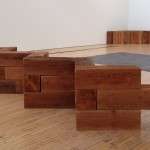
Carl Andre is credited with changing the history of sculpture.

Now nearly 80, Andre once scrounged industrial materials — timber, bricks, squares and ingots of metal — and arranged them on the floor. No pedestals, no joints and no altering of the surfaces.

In 1970, the Guggenheim Museum in Manhattan gave the young artist a retrospective. The minimalist sculptor’s career was going well.


It’s almost as if Carl Andre became a serious sculptor by accident. In the late 1950s, new to New York City, he was sharing a studio with the noted painter Frank Stella, who forbade Andre to paint.


All Aboard That “Great Koonsian Adventure”

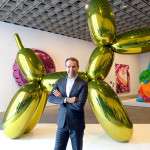
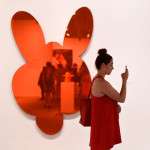
Everything about the Jeff Koons retrospective at the Whitney Museum of American Art is over-the-top. That includes the press-conference-cum-love-in that opened Tuesday’s media preview, during which museum director Adam Weinberg whipped himself into a subdued but hyperbolic frenzy, rhapsodizing about how Koons’s artistic career had a partial genesis in a 1974 Jim Nutt exhibition Jeff saw, age 19, at the Whitney; calling Koons “one of the defining artists of our time”; and rattling off the many ways in which his career has been a “study in contradictions,” with work that ping-pongs from one polarity to the other (“accessible yet esoteric… innocent and erotic…”). Curator Scott Rothkopf was up next, delivering lines that, out of context, might cause any Martian visitors in the audience to wonder what the hell this peculiar human race was getting up to (we’d soon see, he explained, that “the balloon dog had company with the mermaid-troll.”) Koons himself took the podium among the click-clack of cameras, discussing his career in terms of a journey, explaining that art has “taught [him] how to feel” and enabled him to “become a better person.” He was enthusiastic and polite, as if he were dedicating a ship. The ship was Jeff. And then we were off, scattering through four floors of “the great Koonsian adventure,” in Weinberg’s summation.

What’s With Wade Guyton and the Market, An Analysis

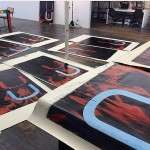
It’s hard to tell whether Wade Guyton is inadvertently steering the conversation away from his art and toward his market or whether the artist has simply fallen prey to the Barbra Streisand effect where the more one tries to deflect attention to an event, the greater the interest. By now we’re all familiar with Guyton’s Instagram threats against the buyer of one of his sought-after flaming U works. The artist pulled back the curtain via a few picture posts to suggest he was creating a whole series of works from the previously unique printing of an image file. The implicit threat was that these works might find their way out of the studio and into the hands of collectors. (Though it isn’t clear that such an event would devalue the work that eventually sold within a hair’s breadth of $6m.)

Now the story that is reverberating from ArtBasel is another tale of Guyton trying to orchestrate his own market. Here’s what Carol Vogel wrote late last week: read on …


Berlin Biennale Tells Tales Old and New

The week leading up to the press preview for the 8th Berlin Biennale for Contemporary Art marked a change of seasons. (Disclosure: Biennale curator Juan Gaitan is a friend, and participating artist Judy Radul is my partner.) Gone were the cold winds and grey skies of winter; in their place, golden mornings, tawny afternoons and balmy evenings. Like the spargel that pokes from the earth each April through June, Berliners emerge similarly, exchanging their woollens for short pants and cotton dresses, their S-Bahn tickets for bicycles, dinners at home for those taken on restaurant patios below. Although “Berlin in the spring” does not have the same resonance as Paris during that season, the city is no less in awe of itself, no less indifferent to what it has been through and what lies ahead. 

Buy! Sell! Liquidate! How ArtRank is shaking up the art market

Controversial website ArtRank treats art like a commodity – tipping investors off about who’s hot and who’s toxic. Site founder Carlos Rivera talks bubbles, bonuses and backlashes.

A few years ago, Carlos Rivera was a virtual unknown, even in the art circles where he earned his living. He was just another gallerist, running a West Hollywood outlet called Rivera & Rivera, mostly putting on photography group shows.

Now, however, Rivera is making waves with his ArtRank service, which makes “buy” or “sell” judgments on contemporary artists, in the same way that stockbrokers rate shares. For $3,500 a quarter, ArtRank’s clients get snappy – some might say brutal – investment advice based on information such as past sales, studio output, upcoming shows and posts on Instagram and Twitter. The service, which he says uses complex algorithms developed for investment banking, is limited to 10 subscribers at a time; when Rivera threw the list open in April, there were, he says, more than 80 applications.


Whitney concludes Uptown exhibition programming with Jeff Koons

NEW YORK, NY.- The Whitney Museum of American Art will debut the most comprehensive retrospective ever devoted to the groundbreaking art of Jeff Koons. This unprecedented exhibition will be the artist’s first large-scale museum presentation in New York and also the first time that a single artist’s work will fill nearly the entire Whitney Museum. Organized by curator and Associate Director of Programs Scott Rothkopf, the exhibition surveys more than three decades of Koons’s art and includes approximately 120 works across a variety of mediums. On view from June 27 through October 19, 2014, this landmark retrospective will be the Whitney’s grand finale in its uptown Breuer building before the Museum opens its new facility downtown in spring 2015. 

Daily Pic: Dennis Oppenheim’s Evanescent Take on Land Art

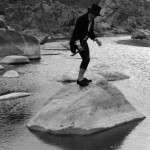
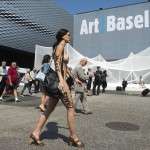
Sure, I thought the Art Basel fair was mostly a waste of time for true art lovers … even as I found plenty of fodder there for the Daily Pic. In this last item sourced from the fair, I give you a still from vintage footage of Dennis Oppenheim’s “Whirlpool (Eye of the Storm)”.

Blake Gopnik, Blouin Artinfo

Ways of Seeing Instagram

Richard Prince is making art by recycling Instagram screenshots. Dealers are hawking art via Instagram. The Met has even retained an Instagram guru “to play catch-up to figure out how best to exploit this online pictorial medium.”

A four-year-old app is dominating the art conversation as no purely art-related topic is.


Perhaps it’s not surprising that the average person would be more interested in their friend’s Instagram account than, say, Sigmar Polke at MoMA—but as far as Google knows, “Instagram” has been a more interesting subject to the masses than “art” itself since sometime last year. A force that important in visual culture is probably worth having a theory about. And in fact, rather than just being swept along by the stream of images, it may possible for art—and art history—to add something to understanding the photo-sharing obsession.

Art Basel Turns Away Nude Performance Artist

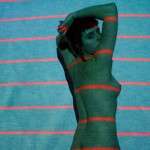
Milo Moiré, a Swiss performance artist you may remember for creating a painting from paint-filled eggs she dropped out of her vagina outside Art Cologne, paid a visit to Art Basel in Basel on June 19. Or at least attempted to.

After having her skin painted with the names of the articles of clothing she wasn’t wearing (“pants” on her legs, “bra” on her chest, “jacket” on her arms), she took the bus to Messeplatz and attempted to buy entry to the fair, only to be told to go get dressed and return.

According to Le Matin, the performance artist acquiesced, pulled on a dress, and went on to explore the fair without incident. Not exactly a surprising or dramatic denouement, but certainly in keeping with Switzerland’s international reputation for neutrality.


The Best Artworks of Art Basel 2014 – Artspace’s view

With an overwhelming array of booths by top international galleries filling two full floors, Art Basel presents so much first-rate art that it’s hard to believe such visual splendor is only on view for a few days every June, to be immediately dispersed onto the walls of collectors around the globe. Artspace toured the fair to tease out 15 particularly exciting pieces that we wish we could look at all year round (preferably in the cozy privacy of our own home).

Franz West review – his sculptures look like they’ve wandered in, up to no good

Showing the Austrian maverick at the temple to Britain’s greatest female sculptor reveals what a complex and joyous artist he was.

If you stand among Barbara Hepworth‘s carved and rounded plaster and wood shapes at the Hepworth in Wakefield for long enough, you feel that time will wear a hole right through you. Hepworth’s art seemed to aim for a kind of timelessness. But time is all I feel among these soothing shadows and hushed planes. I feel eroded in their presence.

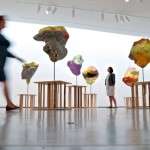
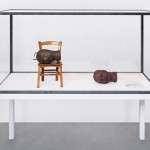
Among these prototypes for her bronzes sit three rough, crumbly hollow lumps. The invigilators might want to keep an eye on them. They look like they’ve wandered in, up to no good, slack-mouthed and conspiring. Franz West’s uncouth papier-mâché forms are a great counterpoint to the reserve and sanded-down refinement of Hepworth.

Part of an excellent survey of the late Austrian artist’s work that has travelled to Wakefield from Frankfurt and Vienna, West’s 1988 ensemble Das Geraune (Murmuring) is the only work at the Hepworth placed in direct relationship to the British modernist. Where Hepworth’s art encourages a sort of mute contemplation, West’s is all about how objects speak and have their way with us. His sculpture, objects and collaborations with other artists feel part of the world rather than apart from it. “It doesn’t matter what the art looks like but how it’s used,” West said.


The Best of Art Basel on Instagram

For everyone not gallivanting around to the flurry of fairs, parties, and events that make up Art Basel, we’ve picked the best, most FOMO-inducing Instagram photos to make you feel (if just momentarily) like you’re right in the middle of it all. For those of you who are there? See how Klaus Biesenbach, Marina Abramović, and Simon de Pury do Basel week.

Strong and Steady Sales Continue at Art Basel

BASEL, Switzerland — The sales register continued to ring for modern and contemporary art at the 45th edition of Art Basel, though at a slower pace than the frenetic action on Tuesday and Wednesday, when attendance was limited to VIP card holding guests. Some seasoned observers say Basel is a one-day fair, meaning a lot of sales take place at the opening and then the event goes into sleep mode, but the current strength and depth of the market is extending that critical time frame.

“I was expecting today to be quiet,” said New York’s Fergus McCaffrey, “but I’ve been pleasantly proven wrong.”


At Art Basel, Works With a Museum Presence

BASEL, Switzerland — In an old market hall adjacent to the cavernous center where Art Basel, the gold standard of contemporary art fairs, is taking place, there is a happening unlike anything ever staged here. Called “14 Rooms,” it consists of 14 mini-performances created by artists including Marina Abramovic, Damien Hirst and Yoko Ono, each secreted in a small space behind mirrored doors. Open one door, and there’s a Marina Abramovic look-alike naked and astride a bicycle seat, arms outstretched. In another, identical twins sit in front of identical spot paintings by Mr. Hirst.

“Performance art is usually at the periphery, so why not put it front and center?” said Klaus Biesenbach, director of MoMA PS1 in New York, who organized the project with Hans-Ulrich Obrist, a director of exhibitions at the Serpentine Gallery in London. “It’s a temporary museum. Nothing here is for sale.”


Art Basel: Visuals With A Bit Of Drunk Texting

Ben Austin follows the pack to the Art epicentre with a satellite or two thrown in for good measure.

Isn’t there a rule about drunk texting and doesn’t that apply to writing about an art fair, anyway I really don’t care, as it is nearly 11pm, I’m due to go to the Kunsthalle for arty party fun time (as they say in Euroland), England have just lost in the World Cup and the show must go on, so says Piers Jackson in Art Unlimited, but more on that later…


A century of the readymade

Duchamp’s influence is in evidence at the fair, but can today’s artists reimagine his idea?

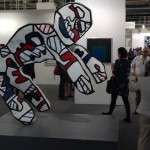
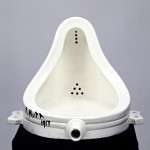
One hundred years after Marcel Duchamp invented the readymade, his influence reverberates around Art Basel. Overt references include the late Elaine Sturtevant’s Duchamp Porte Bouteilles, 1993, suspended from the ceiling at Galerie Hans Mayer (2.0/E8). The work, which sold to a private collector for €60,000, is a replica of, and homage to, Duchamp’s first pure readymade, Bottle Dryer, 1914, which the artist bought from a Parisian department store.

Feudalism returns to the art world

The Art Newspaper: What characterises the art of our time?

Harald Falckenberg: In recent years, art has become ever more dominant with large-scale public events and huge prices for important works that only a few wealthy people, leading art institutions and multi-national companies can afford. Having emerged from the 1960s avant-garde’s goal of anchoring popular and critical art beyond elitist notions, this latest development can confidently be regarded as a step back towards the re-feudalisation of art.

Is this a pessimistic view?

It’s a realistic view. Art is a mirror of society. Marcel Duchamp once said that good art always comes from the underground. This is still valid. Today’s economic and political systems are fragile and call for counter-culture interventions. I’m sure that the artist is being rediscovered as a person of resistance.

Read on …

Artists retain the element of surprise at Art Basel

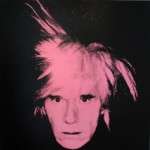
A set of vividly coloured rollers wrapped in shiny metallic sheeting is stopping visitors in their tracks at Art Basel. The work, available with Daniel Blau (2.0/D3), seems to have come straight from the studio of Jeff Koons. ButUntitled (Mylar Sculpture I-III), 1969-70, is actually by the Pop Art master Andy Warhol, known for his mass-produced silkscreens depicting 20th-century icons and US consumer goods.