Top 10 Most Expensive Living Female Artists

It is beyond a doubt that female artists have had a strong year, both in the studio and at auction.

Compared to our look over the past ten years, 2015 brings some new faces into the mix, as conceptual wunderkind Tauba Auerbach joins painters Paula Rego and Beatriz Milhazes on the hallowed list of heavy hitters at auction. Using data drawn from theartnet Price Database, it appears that Cady Noland maintains the top spot with her sale of Bluewald (1989) in May, and Yayoi Kusama‘s NO. RED B (1960) sale keeps her solidly in second place.

With its mix of painting, sculpture, photography, and installation, our list below shows a very talented pool of eclectic, and expensive, works by living female artists.
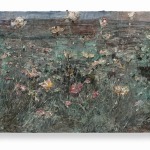
French retrospective celebrates work of German artist Anselm Kiefer

Paris – France’s Centre Pompidou opened a retrospective of the works of German painter and sculptor Anselm Kiefer on Tuesday with more than 150 works documenting his career from the late 1960’s to the present.

Visitors to the exhibition, the first of its kind in France for more than three decades, can stroll through 10 rooms of  Kiefer’s art, which explores issues such as Germany’s history and the reawakening of memory.

“What one experiences in this exhibition is a feeling of gravity, emotion at a time when events are occurring which are both international and in Paris, the issue of terrorism, anti-Semitism and Islamophobia,” said curator Jean-Michel Bouhours.

Watch the video.

Top 10 – Appropriation Artworks

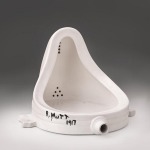
Appropriation art or the art of appropriation is is the use of pre-existing objects or images with little or no transformation applied to them. It follows in the spirit of Marcel Duchamp’s Readymades. The use of appropriation has played a significant role in art throughout the 20th century and has continued as a valid art form to the present. In the visual arts, to appropriate means to properly adopt, borrow, recycle or sample aspects (or the entire form) of human-made visual culture.  Inherent in our understanding of appropriation is the concept that the new work recontextualises whatever it borrows to create the new work.  In the past decade there has been a considerable rise in court cases citing plagiarism. Here is the Artlyst top ten most controversial works of Appropriation Art, and some of the court cases that followed.

Martin Creed, Work No. 2592 at Gavin Brown, NYC

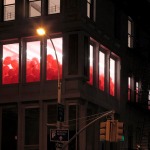
Don’t be fooled—this balloon-filled room is not a tribute to Nena’s classic hit, “99 Red Balloons”.  It is, however, an interactive art installation, “Work No. 2592” by Martin Creed, a British artist and Turner prize-winner, which is open for some child-like revelry, for adults and children alike.

Yep, it’s a ball pit for adults, but it is also a serious, very smart sculpture where Creed uses air to create the sculpture and allows the “viewer” to enter the sculpture and not just stand outside the work, viewing it externally!

This is the latest of Creed’s truly wonderful series of works also titled Half the Air in a Given Space, a brilliant work that keeps on giving.

Raw meat, live sex and snakes: the dangerous art of Carolee Schneemann

“Don’t bring your underaged children or grandchildren. Don’t bring your grandmother or other relatives. Don’t bring your out-of-town guests. The current exhibit is awful. I don’t know what it is, but it isn’t art.”

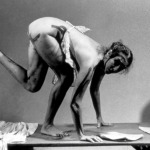
A new book about Carolee Schneemann begins with this warning from a visitor to one of her exhibitions. This review may seem harsh or hysterical, but it’s also fitting: at 76 years old, the artist still divides opinion. For the last 50 years, she has made art that tackles terrorism, war, sex, sensuality and love – “everything from the joyful to the more violent and ferocious aspects of American culture, with the outrage always coming from a very American sense of righteousness”. The book chronicles it all. It is called Unforgivable.

Schneemann’s art has always been raw and personal – and often reviled. I ask if she sees herself as fearless. “No, I think I’m stubborn,” she says. “In the beginning, I had no precedent for being valued. Everything that came from a woman’s experience was considered trivial. I wasn’t sure if my work would shift that paradigm or not, but I had to try.”

Peter Doig Paints Portals to Mythic Dimensions

A lion with a blue-plumed pirate hat, an obsidian nude with her face blacked out, a mysterious rider on horseback — the settings and characters in Peter Doig’s newest paintings, now on view at Michael Werner Gallery, are at once strange and somehow totally familiar, like scenes from myths or dreams. Some recall hypnagogic states, fragments of surreal imagery that flood the mind just before the onset of sleep. Others resemble portals to another dimension, like sections of the pristine Upper East Side gallery’s walls have been peeled back to reveal Narnia-like alternate realities.

When Doig returns to his best-known motif, the canoe, it’s as mysterious and evocative as ever, not a bit hackneyed. In “Spearfishing,” a man in a blindingly orange diving suit stands holding a spear in an emerald-green canoe, accompanied by a haunting seated figure in a golden cloak. The composition references a figurative take on Rothko’s abstract color fields; the canoe and its reflection are rendered in simple, super-saturated curved stripes, and the dark sky and water in swaths of cobalt and indigo. It could be a scene from a dark modern fairytale.

Vancouver-born Geoffrey Farmer to represent Canada at La Biennale di Venezia in 2017

As the commissioner of the Canada Pavilion in Venice, the National Gallery of Canada announces that Geoffrey Farmer will represent Canada in 2017 at the 57th International Art Exhibition – La Biennale di Venezia, in Italy.

Over his 20-year career, his installations have been acclaimed around the world and have been shown in numerous solo and group exhibitions, including at the Louvre, Paris, the Tate Modern in London, dOCUMENTA (13) in Kassel, Germany, the Migros Museum of Contemporary Art in Zurich, the Art Gallery of Ontario in Toronto, the Art Gallery of Alberta in Edmonton, the Musée d’art contemporain de Montréal, the Vancouver Art Gallery and the National Gallery of Canada. He is represented by Catriona Jeffries Gallery in Vancouver and Casey Kaplan Gallery in New York.

Shocked By Assemble’s Turner Prize Win? Here Are 9 Other Artist/Architects You Should Know

The awarding of this year’s Turner Prize to the London-based architecture collective Assemble caused a stir in Britain earlier this week—and not the usual tabloid tempest-in-a-teapot. Rather, the complaints came from the cognoscenti; some critics argued that, although the group was doing important work by renovating derelict rowhouses and setting up local enterprises in a depressed area of Liverpool, its members were not really artists. As a counter-argument of sorts, we here at Artspace have compiled an eclectic list of some notable artist-architects from across history.

Rodney Graham | Studio Visit | TateShots

Rodney Graham works across various disciplines including photography, film, performance and sculpture and is often associated with the Vancouver School. The diversity of the mediums he uses is also reflected in the multiple cultural, historical, literary and philosophic references he layers within his work.

Watch the TateShots Video.

UK’s Top Art Award, the Turner Prize, Won by Architecture Project for Derelict Houses

The UK’s Turner Prize for 2015 has been won by Assemble, a collective group of architects that has restored derelict houses.

London-based Assemble, formed by about 18 “activist architects” in their twenties, recently renovated a shabby housing estate in the Toxteth district of Liverpool, a city in northern England. Assemble was nominated both for this “Granby Four Streets” project as well as others. In Liverpool, the collective members – who had studied together before starting professional work – recycled rubble and building materials as part of an imaginative revamping of the ruined buildings.

The Best Instagrams of Art Basel in Miami Beach 2015

Pics or it didn’t happen.

It is often not enough to just say that you were there–you need to provide evidence, usually in the form of visual representation. And with so many sights, soirées, and celebrities in Miami Beach for Art Basel, photo ops abound. Whether it’s a selfie with Paris Hilton or a panoramic shot of Wynwood’s street art, there’s never a reason to not have your phone at the ready.

Just in case you weren’t in Miami this past week (or want to relive it), artnet News has chosen a few choice images below from Instagram that capture the art extravaganza that is Art Basel Miami Beach.

Off to the races: Miami Basel Begins, with Buoyant Sales Reports, a Bevy of Stella, and a Grab Bag of Celebrities

Art Basel Miami Beach opened its doors this morning to Earth’s primo art collectors, who perused the offerings from 267 galleries en route to snapping up works by blue-chip artists such as Picasso and Frank Stella, who continues his hot streak by having a dozen works spread among four different booths.

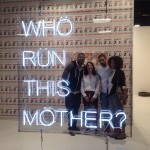
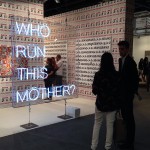
Even more eye-catching are the text-based neon works that have become a staple of art fairs in the age of Instagram. Again, this is Miami Beach, where neon seems to line even the palm trees, so this is to be expected, but the unending stream of platitudes written in glowing mercury started to cause strained corneas: Tracey Emin’s I forgot how beautiful you are at White Cube, Sylvie Fleury’s Eternity Now at Galerie Thaddeus Ropac, and—most prominently—the all-caps naughtiness of Karl Holmqvist’s Who Run This Mother at Gavin Brown’s Enterprise.

“I think this is going to be the most popular Instagram of the motherfucking fair,” said Thor Shannon, a dealer with the gallery.


Your Concise Guide to the 2015 Miami Art Fairs

You have limited time, but you need to know where to go. Don’t worry, we’ve got you covered. Here’s Hyperallergic’s take on what to expect in Miami.

Everything You Need to Know About All 20 Art Fairs at Art Basel in Miami Beach

1. Art Basel in Miami Beach (see last year’s report)
As the main event, Art Basel in Miami Beach is the country’s largest art fair, with 267 galleries from around the world showing in a massive hall featuring more than 500,000 square feet of exhibition space. Now under the leadership of new director Noah Horowitz, the fair will showcase work by more than 4,000 artists.
Miami Beach Convention Center, 1901 Convention Center Drive, Miami Beach, December 2–6, 2015. Private view December 2, 11:00 a.m.–8:00 p.m.

And there’s more …

artnet Asks: American Artist Liz Glynn

It is not surprising to learn that the Los Angeles-based artist Liz Glynn studied environmental studies at Harvard before pursuing a master’s degree at the California Institute of the Arts. Indeed, her multidisciplinary sculptures, installations and performances—which often employ found items and materials—seem to suggest the redemptive power of salvage, and are marked by an almost archeological interest in objects and stories from the past.

Earlier this month, in Paris’ art fair FIAC, Glynn installed three bronze figures from her Auguste Rodin-inspired “Myth of Singularity” series in the courtyard garden of the Petit Palais. The presentation acted as a fitting overture to a solo exhibition of her works that opened on Saturday at the Los Angeles County Museum of Art (LACMA). Amid her hectic schedule, the artist took a moment to answer artnet News’s questions.

When Conceptual Art Certificates of Authenticity Go Up in Smoke

Ashley was passionate about Conceptual art, but her pyromaniacal son had a different burning enthusiasm. After the firemen left, our client discovered that the extensive documentation on her collection had gone up in flames.

We told Ashley that certificates of authenticity are so important for Conceptual art that one of the first questions a buyer of such a piece should ask is whether the seller has a certificate—although in our experience this question often comes as an afterthought. Once a collector has a certificate, it should be stored in as safe a place as a physical artwork would be stored, and not in a loose-leaf binder with one’s business papers, as many people mistakenly do. Collectors should ensure that their heirs also clearly understand the importance of these documents.

Ulay v Marina: how art’s power couple went to war

If you do nothing else on this site, watch this Video!

bearded old man with a weathered face stands in pink knickers. As part of his performance A Skeleton in the Closet, he is writing numbers on the wall of Amsterdam’s Stedelijk Museum: 252, 253, 288, 289. The lucky spectators who made it in to the sell-out show – 500 hopefuls remain outside – try to work out what it all means.

Frank Uwe Laysiepen, who has worked for more than 50 years as Ulay, is one of just a handful of performance artists featured in art history textbooks. The only one better known is Marina Abramović: Ulay’s partner in life and art from 1976 until 1988. Since their break-up, Abramović has become famous worldwide, thanks to a 2010 retrospective at MoMA in New York, a major HBO documentary, celebrity friends including Jay Z and Lady Gaga and a line of Adidas commercials. Ulay, however, is hardly a household name.

As we said, WATCH THE VIDEO!! (and turn up the sound)!

Sotheby’s Reassuring $294M Contemporary Evening Sale

The contemporary art market settled down to a steadier pace at Sotheby’s New York Wednesday evening, turning in a solid and respectable $294,850,000 sale for the 44 lots that sold. Ten of the 54 lots offered failed to sell for a trim buy-in rate by lot of 18.5 percent. Five works sold for more than $15 million and 38 works sold for over a million dollars. Two artist records were set.

‘These are Works that I Enjoy”, Jeff Koons on his Amazing Blue Balls

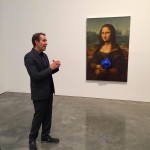
On Monday morning, the artist Jeff Koons stood in Gagosian Gallery’s West 21st Street location in Chelsea, discussing his new show at the space with a small gathering of reporters. The exhibition features work from his “Gazing Ball” series. For the show, Koons has placed blue reflective spheres on small shelves in front of very faithful reproductions of classic works from art history. (A random excerpt from my notebook regarding the morning’s proceedings: “There’s the Mona Lisa! With a blue ball!”) Koons wore a dark blue suit with a lighter blue shirt and blue shoes.

“I really enjoy this work very much,” he told the group. He spoke softly and had both the appearance and demeanor of what I can only describe as a friendly elementary-school art teacher mixed with a quirky and idealistic political candidate dropping by to casually meet with his staff at campaign headquarters on a weekend. He punctuated his speech by dramatically stressing certain words every few seconds. “I have to say that I have been able to work and participate in art in mycommunity,” Koons continued, “and I’m really fortunate to say I have the freedom to make what I would like to make. And that’s what I’ve done here. That’s what I try to at least practice. But I really wanted to contribute to the dialogue—the metaphysical dialogue about objective and subjective.” He said he wanted to make something that was both “Duchampian” and “quite intellectual.”

CHRISTIE’S ‘ARTIST MUSE’ SALE NETS $491.4 M., LED BY A $170.4 M. MODIGLIANI, THE SECOND-HIGHEST PRICE EVER REALIZED AT AUCTION

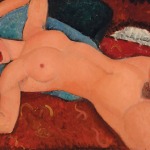
Amedeo Modigliani’s Nu Couché (1917–18) soared past its already astronomical $100 million on-request estimate en route to a record-smashing price of $170.4 million at Christie’s Monday night, making the magnificent nude portrait the second-most-expensive painting ever sold at auction—and, in a twist, a high point in an otherwise surprisingly tepid evening. The Artist’s Muse, the auction house’s latest attempt to create buzz with a “curated,” mixed-era sale, took in $491.4 million. That was higher than its $440 million low estimate, but a far cry from the total bagged by the house’s last special sale in May, “Looking Forward to the Past,” which totaled $705.8 million. (Both sales had 34 lots.)

At the bitter end, London mega dealer Jay Jopling could be seen passing the lectern on his way out of the room as Pylkkänen announced that the auction’s final lot, a Christopher Wool, had failed to sell. That work, Untitled (The Show Is Over) (1990), certainly had a fitting name, given the sale’s unraveling toward the end. But for some, the market’s not in that bad a place when a man on the phone from China spends $170.4 million dollars on a painting in a matter of minutes.