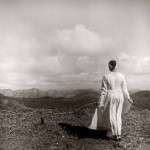
Testimony of a Cleareyed Witness

Carrie Mae Weems Self portrait 2002

Carrie Mae Weems Charts the Black Experience in Photographs

Color and class are still the great divides in American culture, and few artists have surveyed them as subtly and incisively as Carrie Mae Weems, whose traveling 30-year retrospective has arrived at the Guggenheim Museum. From its early candid family photographs, through series of pictures that track the Africa in African-America, to work that explores, over decades, what it means to be black, female and in charge of your life, it’s a ripe, questioning and beautiful show.
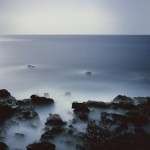

Night visions: Darren Almond’s full-moon landscapes

© Darren Almond

At least two guiding spirits hover around To Leave a Light Impression, the new show by British artist Darren Almond at White Cube, Bermondsey. The most obvious is Charles Darwin, in whose footsteps Almond followed to make several of his images. The other is the lesser-known Scottish nature writer, Nan Shepherd, whose book, The Living Mountain, provides the exhibition’s epigraph:

“So there I lie on the plateau, under me the central core of fire from which was thrust the grumbling, grinding mass of plutonic rock, over me blue air, and between the fire of the rock and the fire of the sun, scree, soil and water, moss, grass, flower and tree, insect, bird and beast, rain and snow – the total mountain. Slowly I have found my way in.”

Hedge-Funders Disrupt the Genteel Art World – video

New Masters of the ART Universe

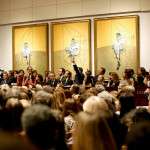
Hedge-fund managers are roiling the clubby art market – seeking “distressed” artists, paying record sums and dumping those who don’t pay off; ‘Going long on Rodin’.

Aggressive, efficientand armed with up-to- the-minute intelligence supplied by well-paid art advisers, these collectors are shaking up the way business gets done in the “genteel” art world.

Check out the Video.

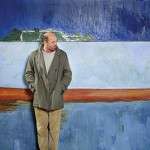
Peter Doig, the man who paints Canada from Trinidad

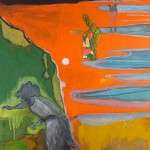
In 2007, Peter Doig went from being a painter quietly admired by collectors and curators to an art-world colossus when his work White Canoe—created 16 years earlier—was auctioned for a record-breaking $11.3 million. Soon after, both Scots and Canadians claimed the Edinburgh-born, Toronto- and Montreal-raised artist as their own—an impetus for the remarkable show No Foreign Lands, opening at the Montreal Museum of Fine Arts later this month.

Note: Use the View in Clean Reading Mode option

Bjarne Melgaard and Gavin Brown Say “Racist Chair” is Nothing Compared to Global Warming

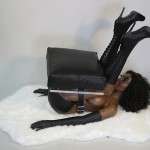
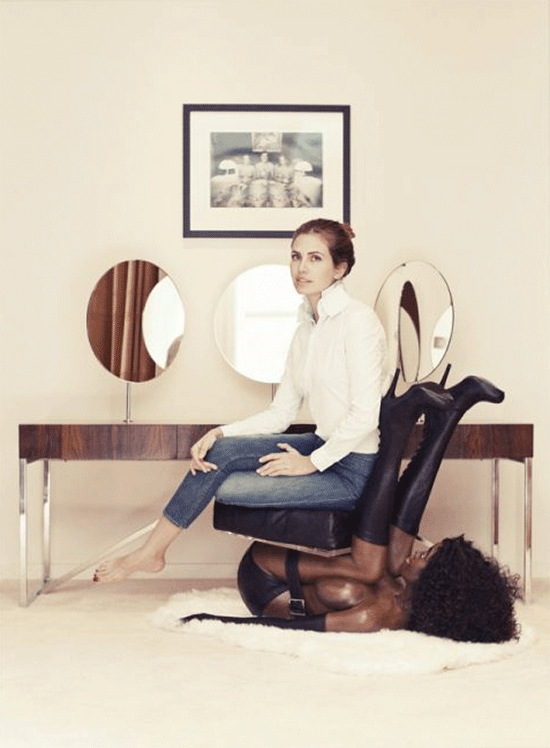
While Dasha Zhukova was all apologies yesterday concerning what some observers have dubbed the “Racist Chair” fiasco—in which Russian socialite and arts patron Zhukova was pictured on Russian fashion website Buro 24/7 sitting atop a Bjarne Melgaard sculpture of a black woman trussed up to form the shape of a chair—Melgaard and his dealer, Gavin Brown, are taking a different tack. In a statement sent to ARTINFO today, the pair called the photo of Zhukova “extraordinary” and said they “applaud both the sitter and the seated.”

It’s tough in the middle for New York, ABMB 2013

While it’s a good time to be at the very top or at the emerging end of the market, the middle tier of galleries and artists are feeling the squeeze. We ask New York’s dealers and directors what are the alternatives to the mega gallery system?

Check out the Video, it is less than 5 minutes…

Tracey Emin: confessions of a conservative artist with nothing to say

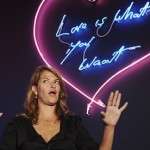
Any sense of real subversion or originality Emin ever conveyed has long since been packaged, copyrighted, and reproduced as kitsch self-caricature. An interview in the latest issue of Time Out reads like a cut-and-paste summary of previous public statements: Emin’s views on life boiled down to bullet points:

• She is oppressed as a woman artist.
• She is happy to be childless.
• She is proud that she voted Conservative.
And so forth.

Why there’s nothing racist about the ‘racist chair’

Bjarne Melgaard’s black woman in the shape of a chair – as seen in the now-notorious photoshoot of Roman Abramovich’s girlfriend Dasha Zhukova – has been totally misunderstood.

The contemporary art world likes to think it has a common touch. While classical music is for the elite and the literary novel a minority taste, the art of today speaks the demotic and gets its message heard, from Jeff Koons to Grayson Perry, from Damien Hirst to Bjarne Melgaard.

Jonathan Jones, The Guardian

Big Brother Watching Me: Citizen Ai Weiwei, BBC Four

For a film that opened with Ai Weiwei’s statement, “Without freedom of speech, there is no modern world, just a barbaric one,” there was an irony in the fact that Andreas Johnsen’s Big Brother Watching Me… started practically without words. When the artist was freed in June 2011 following 80 days in prison, one of the conditions of his release was that he would not talk to journalists. For a while we wondered if this Storyville film might be purely observational, without an utterance from its central character.

Ai Weiwei exhibit as monumental as Miami’s new Perez museum

There couldn’t be a better exhibition to inaugurate the new Perez Art Museum Miami than the traveling solo retrospective from the famous Chinese artist Ai Weiwei. Like the museum, Ai Weiwei: According To What? is monumental — physically huge, with a lot to say, and important for Miami.

Contemporary Chinese art has been a hot commodity for more than a decade, but even within this crowded field Ai Weiwei has stood out. He was a founding member of the first avant-garde art group in China, called Stars, in the 1970s, and has since then worked in sculpture, photography, architecture — and political activism. The latter pursuit, particularly his intense criticism of the Chinese government and its corruption after the massive Szechuan earthquake, led to his arrest in 2011. As a result, Ai was not at PAMM to install his show; though his art is allowed to leave China, he is not.

The Americans Are Coming: Warhol, Burroughs, Lynch

William Burroughs’s photographs offer real insight into his written work. Lynch’s and Warhol’s images pale by comparison.

“A picture just means I know where I was every minute,” Andy Warholonce said. “That’s why I take pictures. It’s a visual diary.” In this instinct, Warhol was, as always, ahead of the game. One senses that he would have been very much at home in today’s digitally driven, relentlessly mediated world where diaristic photography – the recording of the everyday – is a predominant form.

Peter Doig makes a homecoming in Montreal

At 54, Doig is one of the most talked-about and praised artists in the world, his work housed in many prestigious public and private collections. Last year two Doigs, both painted in the 1990s, sold at auction in London for, respectively, $10.5-million and $12-million. Montreal currently has bragging rights as the sole North American venue for No Foreign Lands, which recently ended a three-month berth at the Scottish National Gallery in Edinburgh, Doig’s birthplace. Indeed, the last significant Canadian Doig show, a tour of public galleries in Ottawa, Toronto and Vancouver, was in 2001 while his penultimate retrospective, in 2008, lapped just European institutions.

Building Faces Wrecking Ball. So Does Couples’ Friendship.

Two celebrated architect couples, whose careers took off almost simultaneously in the hothouse of New York City design and who supported each other’s successes, are barely on speaking terms.

One pair, Billie Tsien and Tod Williams, designed the former home of the American Folk Art Museum on West 53rd Street; the other, Liz Diller and Ricardo Scofidio, just recommended demolishing it as part of their plan to expand the Museum of Modern Art next door.

Adventures in art-market commodification, enhanced hammer edition

Back in 2012, I wrote a post with the headline “How Larry Gagosian is like Goldman Sachs”. The general idea was that both of them use their relationships and their balance sheet to make money off and/or with their clients. Since then, as Christian Viveros-Fauné says, the art world has become even more coterminous with the art market:

“Business art” has arguably come to be the dominant form of art in our time. Today, this juggernaut of commodity-based art drives not only the way art is made, but also the way it’s promoted, marketed, sold, and, ultimately, understood both by experts and the vast public.

2014: a roundup of the year ahead

As far as the art market is concerned, the phrase “economic crisis” doesn’t exist. Whilst it’s difficult to predict whether the exceptional sales figures realised by auction houses this year will be replicated – or even surpassed – in 2014, there is every reason to believe that the demand for prestigious lots will remain high. If works of the same quality as last year’s re-emerge on the market, it seems likely that buyers will respond with enthusiasm – and high sums of money.

Lost in the Gallery-Industrial Complex

Holland Cotter Looks at Money in Art

A new year. A new New York mayor. Old problems with art in New York. I have a collection of complaints and a few (very few) ideas for change.

Money — the grotesque amounts spent, the inequitable distribution — has dominated talk about art in the 21st century so far. It’s a basic fact of art history. Emperors, popes and robber barons set the model for the billionaire buyers of today. Of course, it is today that matters to the thousands of artists who live and work in this punitively expensive city, where the art industry is often confused with the art world.

The Company They Kept

Robert Duncan and Jess, and Their Wonderland of Art

If you were young, gifted and odd, San Francisco was a good place to be in the years after World War II, when big changes were brewing in American art and culture. And that city is the setting for “An Opening of the Field: Jess, Robert Duncan, and Their Circle,” an exhibition that feels like a chunk of Bay Area turf lifted from the past and set down, untrimmed and buzzing, in New York University’s Grey Art Gallery.

Isa Genzken at MoMA and the Schizoconsumerist Aesthetic

They love, love, love Isa Genzken over at the Museum of Modern Art, where the artist’s first major American museum survey remains on view through March 10, before traveling to museums in Chicago and Dallas. The 65-year-old Berlin-based German sculptor, whose 150 works fill 10 open-plan galleries on the museum’s sixth floor, is “one of the most important artists of our time,” writes MoMA curator Sabine Bretwieser in what may at first appear to be ordinary curatorial hyperbole.

‘Ileana Sonnabend: Ambassador for the New’ at the Museum of Modern Art

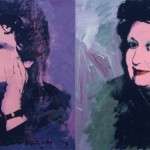
Two years ago, when the late Ileana Sonnabend’s family donated Robert Rauschenberg’s famous artwork Canyon (1959) to the Museum of Modern Art, a condition of the gift was that the museum put on a show about the legendary art dealer, who died in 2007. Curator Ann Temkin has now fulfilled that promise, …

The (Auction) House Doesn’t Always Win

Christie’s and Sotheby’s Woo Big Sellers With a Cut

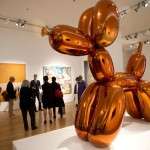
When Christie’s sold Jeff Koons’s “Balloon Dog (Orange)”for $58.4 million in November, it seemed as if the auction house had just earned a pretty penny.  After all, Christie’s, like other auction houses, typically charge commissions to buyers and sellers, which for high-priced works might be an eighth to a quarter of the gavel price.