Georg Baselitz: ‘Am I supposed to be friendly?’

From his sculpture of a Hitler salute to his comments on women artists, Georg Baselitz has always been a provocative figure. After 50 years exploring the state of Germany, he tells Nicholas Wroe why he turned to America for his new show.

In 1958 Georg Baselitz, then a 20-year-old art student recently arrived in West Berlin from East Germany, attended a touring exhibition of contemporary American painting staged at his university. “Until then I had lived first under the Nazis, and then in the GDR,” he explains. “Modern art just did not occur so I knew almost nothing. Not about German expressionism, dadaism, surrealism or even cubism. And suddenly here was abstract expressionism. Paintings by Pollock, De Kooning, Guston, Still and many others, in the very buildings where I took classes every day. It was overwhelming. And not just for me. Even the professors had not seen this sort of work before.”

A Night of Fevered Bidding on Arte Povera at Christie’s London

London—The market for the relatively esoteric Italian art movement of the mid-1960s known as Arte Povera (Poor Art) took a giant leap forward at Christie’s on Tuesday evening with a single-owner sale that earned £38,427,400 ($63,020,930). The figure compared well to pre-sale expectations of £25.7-36.5 ($42.1-59.9 million).

Of the very large number of offerings in the auction—109 lots—just 23 failed to sell, for a buy-in rate by lot of 21 percent and 14 percent by value. Fourteen lots sold for over a million pounds and twenty-two hurdled the one million dollar mark. Remarkably, thirteen artist records were set, leaving the strong impression that Arte Povera has moved several notches higher in the Blue Chip food chain.

Culture Art and design Painting The Baselitz stare: lauded German artist opens three shows in London

Gagosian will exhibit his self-portraits, British Museum has his prints and Royal Academy presents woodcuts from his collection.

London is having a Georg Baselitz moment, with three exhibitions showing different aspects of the German artist’s work and passions opening within five weeks.

Baselitz was in London on Thursday for an exhibition of new self-portraits at the GagosianLast week the British Museum opened a group show of German prints, half by Baselitz, and next month the Royal Academy presents rare chiaroscuro woodcuts from the artist’s personal collection and the Albertina in Vienna.

Great art needs an audience

Art dealers who believe galleries are no longer necessary have forgotten an essential reason why works are valued.

As the virtual replaces the physical and the world gets globalised, we’ve been hearing that art galleries, material and settled in a single place are bound to be on their way out. Collectors are now more likely to buy at a fair than from a dealer’s home base; some may do their art shopping online. A few mid-range dealers, especially, are already closing their galleries, to conduct all their business in private, at fairs, or by jpeg. Some newly prominent art middlemen, such as Vito Schnabel in New York, have never even opened a permanent space. I believe that these changes put art itself at risk.

The Dark, Deranged World of Roger Ballen and Die Antwoord

The dirty alchemy of photographer Roger Ballen in combination with frenetic rap-ravers Die Antwoord resulted in the video for “I Fink U Freeky” in 2012. Now a monograph distills the mix of the South African collaborators to its elements.

Roger Ballen / Die Antwoord: I Fink You Freeky, published by Prestel in the fall, cuts away the darkly buoyant dance beats of Die Antwoord’s Ninja and Yolandi, leaving just the photographs from Ballen that inspired the collaboration. While in the video Ballen’s aesthetic was very much present, in the book it becomes a total, silent darkness that’s even more effective and ominously arcane, dislodged from the permissibly surreal world of music videos.

Saving Face: MoMA to Preserve and Store Former Folk Art Museum’s Façade

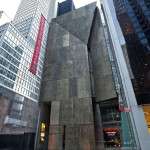
Those still mourning the loss of the Todd Williams Billie Tsien-designedAmerican Folk Art Museum at MoMA’s hands may find some (small) consolation in a new revelation: Although the building will still be demolished as planned, “We will take the façade down, piece by piece, and we will store it,” MoMA director Glenn D. Lowry told the New York Times.

Taking down the façade is going to be a surprisingly simple task; the now-iconic surface of the idiosyncratic 13-year-old building comprises 3/8-inch-thick bronze panels that are actually “very amenable to disassembly,” principal of MoMA expansion architects Diller Scofidio + RenfroAlberto Cavallero told the Times. But what the museum will do with them once they’ve been wrapped for storage is another matter.

Art Fairs: Must Galleries Adapt To Function In A Booming Market

According to ArtForum there will be nearly sixty international art fairs taking place in 2014. And there must be hundreds of other fairs around the world too. They are everywhere, and whilst not a new phenomenon their numbers have increased inexorably since the end of the 1990s.

The art world has become increasingly globalised during this period. There is more money; there are more artists, more curators, and more collectors, more everything. Art has become a commodity. It is spectacular and popular and highly marketable. And, in order to compete for the attention of ever-wider audiences, galleries have to think global too, in order to increase their reach beyond their own doors.

How to Spot and Nurture Emerging Talent – Stefania Bortolami

A widely respected tastemaker in the contemporary art scene, the New York dealer Stefania Bortolami cut her teeth with Anthony d’Offay, a legendary London dealer known for his connoisseurial eye in both art—after closing his gallery in 2001, he donated his $140 million collection to the Tate and theNational Galleries of Scotland—and in budding star gallerists. Moving afterwards to Gagosian Gallery, where she rose to be the megadealer’s second-in-command, she then opened a very different space of her own to champion a group of highly dedicated emerging and established artists.

To find out more about her exceptional approach to running her gallery, Artspace editor-in-chiefAndrew M. Goldstein spoke to Bortolami about how she identifies rising stars in the making—and then ensures that their careers don’t suddenly flame out.

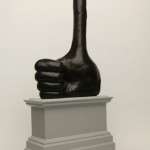
Trafalgar Square’s fourth plinth to show giant thumbs up and horse skeleton

David Shrigley admits it’s ridiculous to claim that a 10-metre-high thumbs up in Trafalgar Square will improve society, the economy and the weather – but he has to believe it.

“As an artist you have to feel your art makes the world a better place and you have to believe that quite sincerely, otherwise why would you make it?” he said after it was announced that he had been chosen to fill one of the most coveted spots for public art in the UK.

Richard Hamilton: they called him Daddy pop

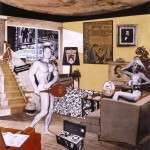
Richard Hamilton was an artist whose considerable ambition was to “get all of living” into his work. In his epoch-making collage of 1956,Just What Is It That Makes Today’s Homes So Different, So Appealing?,the living space is crowded with up-to‑the-minute objects of desire: the TV set, the vacuum cleaner, the tinned ham, the tape recorder, the body builder’s muscles, the cone-shape coolie hat perched on the sexy naked housewife on the sofa. Hamilton’s consumer’s catalogue is well observed and playful. But at a more profound level it is horribly disquieting. No other work of art of its period expresses so precisely the jarringly ambivalent spirit of the age.

When a Form Is Given Its Room to Play

‘A World of Its Own,’ Examining Photography, at MoMA.

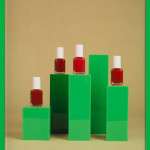
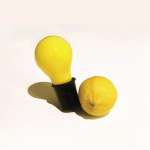
Something old, something new, nothing borrowed and not enough color. A variation on the venerable bridal dress code pretty much sums up the Museum of Modern Art’s latest foray into its photography collection, “A World of Its Own: Photographic Practices in the Studio.” In turn, the title of this fabulous yet irritating survey offers its own variation — on the name of Virginia Woolf’s famous essay about female independence, “A Room of One’s Own” — but the show itself, which opens on Saturday, dazzles but often seems slow and repetitive.

Petr Pavlensky: why I nailed my scrotum to Red Square

On a snowless but chilly afternoon early in the Moscow winter, a 29-year-old man with a gaunt, emaciated face stepped on to the vast expanse of Red Square. He made his way to a spot on the cobblestones not far from the marble mausoleum housing the waxy corpse of Vladimir Lenin, and began to undress. In less than a minute, he was naked.

A video taken using a handheld camera and posted online moments later shows tourists gawping as he sits on the ground. A police car arrives, and an officer orders the man to get up. But the man cannot get up – because he is attached to the icy cobbles with a single, long nail that is driven through his scrotum and into the stones below.

Another Record Night for Imp/Mod Sales – Sotheby’s London

Anchored by superb works on paper from a storied collector-dealer and an important restituted painting by a French Impressionist, Sotheby’s evening sale of Impressionism, Modernism, and Surrealism brought a  stellar £163,461,500 ($266,654,745) on Wednesday night, making it the firm’s highest-earning London auction ever.

Of the 89 lots offered, only ten failed to sell, for a crisp buy-in rate by lot of 11 percent and six percent by value. The tally obliterated pre-sale expectations of £90,310,000-128,410,000 ($147,322,703-209,475,233). Thirty-seven of the offerings sold for over one million pounds and 52 broke the million-dollar mark. Two artist records were set.

Final Ascent: Joseph Beuys and the Languages of Art

Mention Joseph Beuys’ name and the usual iconic gestures come to mind — the objects made from felt and fat; the scribbled-out drawings; the pioneering performances of “How to Explain Pictures to a Dead Hare” (1965) and “I Like America and America Likes Me” (1974) — all of which have borne a profound influence on contemporary art. But if you dig beneath the surface, even a little, you’ll discover how ultimately alien his art really is.

Although the over-determination of Beuys’ visual and verbal languages can be taken as material evidence of his fruitless utopianism, the strength of that belief — however misguided — is the source of their aesthetic potency. Rooted as they are in “the soil of the German language and […] the language of the German soil,” there may not be much overlap between what he poured into them and what we can comprehend, but the thin border that we share transmutes them from a German phenomenon into an experience of formidable, unaccountable lucidity.

How Joseph Beuys went from artist to philosopher

These days, when we hear an artist want to change the world, we’re often a little skeptical. Yet for the German sculptor, painter, draughtsman, teacher, theorist and political activist, Joseph Beuys (1921 – 1986), his artistic ambition was almost indivisible from a more concrete ambition to remake society for the better.

“Along with protests against the threat of nuclear annihilation and the war in Vietnam, many were seeking alternatives to the communist and capitalist social-economic systems dominating Western and Eastern Europe,” writes the art critic.

“This set the stage for Beuys’s entry into the realm of leftist politics under a new, challenging, artistic banner: social sculpture.”

First major Actionist show comes to Britain

Violent and sexual precursor to performance art is dramatically laid bare in new exhibition.

Brus and his fellow Actionists, Otto Muhl, Hermann Nitsch and Rudolf Schwarzkogler, have been explained away as the upshot of Austria’s failure to come to terms with Nazism, as an extreme manifestation of the sexual revolution, a logical extension of action painting, and as an attempt to break down the boundaries in place around gender, libido, food, personal space, and bodily fluids, in one violent release.

Yet, over 40 years later, their art isn’t readily digested or explained away.

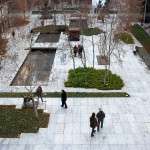
MoMA’s Proposal for Sculpture Garden Pleases and Riles

Peace and quiet can be hard to come by in the middle of Manhattan. Maybe, if the ice ever melts, you might balance a lunch burrito on your lap in the sunken plaza outside the McGraw-Hill Building. Or park yourself in a hotel lobby and pretend to be a guest.

But for many people the oasis of choice has long been the sculpture garden at the Museum of Modern Art, a soothing half-acre of stone flooring and spouting fountains that provides a brief respite from the madness of Midtown.

For a price.

Where is China’s hidden art money?

A study reveals troubling import/export anomalies between China and the US.
Money-laundering, tax evasion and the illicit transfer of cultural heritage objects could be factors explaining large discrepancies that have emerged in an analysis of art shipments between China and the US.  Read on …

The “Painting Is Dead” Versus “Painting Is Back” List

We’ve been debating painting’s death for centuries now, and it seems we can’t quit. In 1839 the late French painter Paul Delaroche first dared to say those fateful words “painting is dead.” But even now nobody can agree if it’s dead; painting’s been reborn more times than we can count, thanks to critics who declare that “painting is back.” Is there any point to this seesawing between “painting is dead” and “painting is back”? Well, I did some quick and easy Google research and came up with a brilliant conclusion: My head hurts.

Parents of the Judd-Climbing Kid Speak

Remember the kid who climbed on the Donald Judd sculpture at the Tate Modern? Well, her parents have taken to the London Evening Standard to set the record straight. They want the world to know that their daughter, Sissi Belle, was only on the sculpture for a matter of seconds and meant no harm — and that the nine-year-old is “anti-establishment” anyway.

I mean, let’s be honest here: who hasn’t fought the urge to climb all over a “jewel-colored” Judd?  Anyway, this is apparently sort of a thing that the children do, this climbing statues business. Here are some of their conquests:

“There are some beautiful statues that they have climbed, the Henry Moore at Liverpool Street, ones along the South Bank where they are interactive and the Diana Memorial.”