At White Cube, Sculptor Marc Quinn Turns Over a Thoughtful New Leaf

Marc Quinn’s last London show, five years ago, featured figurative sculptures of defiantly non-Classical subjects including pregnant men, women with penises and a lady called Chelsea Charms who apparently has the dubious honor of possessing the largest breasts on planet earth (although the fickle nature of this kind of fame means she may no longer be market leader in this regard).

Its shock approach seemed very YBA, very 90s. Looking at his latest exhibition, “The Toxic Sublime” at White Cube Bermondsey in London (through September 13), you can’t help wondering whether Quinn might have taken to heart the adverse criticism of his last show and had a long hard think about where he was heading—in terms of legacy, if nothing else. (The enfant terrible is now in his 50s.) “Toxic Sublime” is not remotely shocking; instead, it aims to please and finds Quinn confronting existential themes in a more thoughtful way.
From Duchamp to Demand: 10 Masterpieces That Show the Evolution of Conceptual Art

In a 1967 Artforum article titled “Paragraphs on Conceptual Art,” the artist Sol LeWitt gave a simple definition for what would soon become one of the crucial facets of contemporary art in the 20th century and beyond. “In conceptual art,” he writes, “the idea or concept is the most important aspect of the work….The idea becomes the machine that makes the art.” In a few short paragraphs, LeWitt cast aside concerns about aesthetics and visual expression in favor of a new way of art making, one that takes place primarily in the mind of an artist such that the making of the physical object becomes “a perfunctory affair.” Unbound from traditional art mediums, conceptual artists quickly moved into idea-privileging formats such as found objects, archival documentation, text, and video.

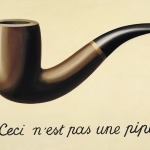
Conceptual art was very much in vogue from the late 1960s through the ‘70s, alongside related movements like Minimalism, but strictly speaking it precedes LeWitt’s famous definition. Today, we might see it as existing on a continuum from the early-20th-century works of Duchamp and Magritte to the very 21st-century art of Thomas Demand. The ten works below, each excerpted from the new edition of Phaidon’s The Art Book, offer just a slice of the depth and variety of conceptual artworks from the past 100 years.

Marc Quinn: Evolving as an Artist and Social Chronicler

LONDON — Marc Quinn led the way through his East London studio late last month, past a marble sculpture of a fetus, a photorealist painting of raw meat and a bronze statue of Kate Moss in a yoga position.

Entering his workroom, he casually walked over distorted three-dimensional canvases of seascapes strewn across the floor. He pointed to others hanging on the wall. “I took one picture of a sunrise,” he said, “then I got the photograph, printed it on canvas, and then basically I fast-forwarded it through the Industrial Revolution until now.”

The works form part of Mr. Quinn’s new exhibition, “The Toxic Sublime,” which runs through Sept. 13 at White Cube Bermondsey, in London. Each seascape is an attempt to meld the traditional romanticism of painters such as J.M.W. Turner with layers of tape, paint and imprints of drains and debris, to illustrate the environment’s degradation.

What was good for the Medicis is good for banks

Global companies with an eye on the bigger picture invest in contemporary creations.  Just beyond the turnstiles of Deutsche Bank’s London reception sits a large object resembling several huge dollops of creamy Plasticine. As the viewer comes close, it turns out to be a sculpture made entirely of dice.

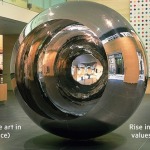
“Secretions” (1998) by British artist Tony Cragg, a trained scientist, addresses questions about the structure of the universe. But some might find the frisson of gambling it evokes entirely appropriate for the lobby of a global investment bank.   The piece, which sits alongside a polished metal sphere by Anish Kapoor and one of Damien Hirst’s “spot” paintings, is part of a collection of about 60,000 works owned by Deutsche Bank.

Companies promote the social responsibility of their art activities but corporate collecting also remains what it has always been: good for business. As Kai Kuklinski, chief executive of insurer Axa Art Group, wrote in his foreword to Global Corporate Collections: “Broadly speaking, the nature of the patronage afforded to art by both private and mercantile wealth hasn’t fundamentally changed since the height of the Medici age.”


Theaster Gate’s Ambitious New Chicago Arts Centre

In October 2012, Chicago-based artist Theaster Gates bought a 70,000-square-foot building from the City of Chicago. Constructed in 1923, the building was previously Stony Island Trust & Savings Bank, located between Chicago’s Greater Grand Crossing and South Shore neighborhoods. The city was ready to demolish it; Gates couldn’t let it go. The cost for this fixer-upper, with its grand, fluted columns and brick exterior: $1.

Gates wasn’t totally sure what he wanted to do with the bank initially. “When he acquired the building, it was much more about preserving this emblem of the middle-class black community in these neighborhoods—this symbol of the middle class and the Great Migration of the African American community that grew in these neighborhoods,” Ken Stewart, the COO of Gates’s nonprofit organization Rebuild, said. “It was over a few years from the time that he acquired the building to now that a final concept came into view.”

Instagram Takes on Growing Role in the Art Market

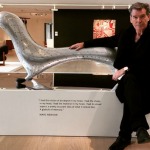
Anyone in the art market who was not already paying attention to the social media platform Instagram had to sit up and take notice in April after the actor Pierce Brosnan visited the showroom of Phillips auction house in London. Mr. Brosnan snapped a selfie in front of a work he admired: the “Lockheed Lounge,” a space-age aluminum chaise longue by the industrial designer Marc Newson. Then he added the words “let the bidding commence,” and posted it to the 164,000 followers of his Instagram feed.

And commence it did. Later that week, Phillips broke the world auction record for a design object, selling “Lockheed Lounge” for £2.4 million, or about $3.7 million.

James Lee Byars “The Figure of Death and The Moon Column” at Micheal Werner Gallery, New York and “The Diamond Floor” at Micheal Werner Gallery, London

Throughout his prolific career Byars pursued with tireless curiosity his life-long obsessions with ideal form and a personalized notion of “perfect”. Death and the eternal are related concepts Byars explored in several important performances and sculptures. These recurrent themes are given particularly poignant expression in the works on view at Michael Werner.

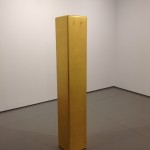
The Figure of Death (1987) is a monumental sculpture comprising ten marble cubes, stacked vertically to a height of nearly nine feet. Its austere form evokes the human figure, echoing many diverse works from throughout Byars’ career, notably his performances The Play of Death (1977) and The Death of James Lee Byars (1994). Though radically different in execution, these and other “death” works posit death as an idealized state given literal form through the body.

Similarly, The Moon Column (1990) echoes Byars’ interest in states of beauty manifest in figures of perfection. This crescent-shaped monument is sculpted from Thassos marble, a favored material of the artist because of its near-perfect whiteness and simultaneously dense and ethereal presence. As in The Figure of Death Byars balances intensely tactile materiality with evocative and idealized form to locate potential manifestations of perfection.

Art, Not Sotheby’s Profit, at Records in Fight for Works

The art market is going from record to record, so why aren’t the auction houses making more money?

Sotheby’s reported an unexpected second-quarter decline Friday in part because it lost money on a painting that sold for less than anticipated. The news sent its shares down 7.5 percent to $37.49 in New York on Friday, the lowest level in 10 months.

Fierce competition to win trophy artworks is eating into profit at the major auction houses even as paintings and sculptures by Pablo Picasso, Andy Warhol and Alberto Giacometti surge to their highest levels, fueled by growing private wealth and a six-year rally in financial markets. To snag top consignments, Sotheby’s and its rivals are offering incentives to sellers such as guaranteeing minimum prices or buying works outright in advance of an auction.

An Introduction to Process Art (Or, How Minimalism Went From Pretty to Gritty)

The common refrain, “It’s the journey, not the destination,” could make a perfect catchphrase for Process Art. A movement that arose in the 1960s and ’70s and has since expanded in definition to describe a general philosophical approach to making art, Process Art places its emphasis on the process and act of artistic creation rather than the actual finished work that comes out of it. In the hands of its original practitioners—including Richard Serra, Lynda Benglis, Robert Morris, Bruce Nauman, and Keith Sonnier—it became a way to marry the conceptual with the physical, bodily realities of working in the studio, and pull back the curtain on the process itself.

(Originally posted by Artspace on October 28, 2013)

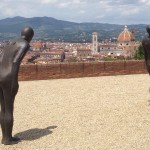
100 Antony Gormley Bodies Take Over Fort in Florence

Brunelleschi’s Dome, the architectural marvel that is in Florence’s Piazza del Duomo, may be one of the most breathtaking sights you’ll ever encounter. Staging an art exhibition that can successfully compete with a view of that iconic building is a tall order, but Antony Gormley‘s current show, “Human” is up to the challenge.

Perched on a hill overlooking the city, “Human” takes full advantage of Forte di Belvedere’s stunning vistas, placing more than 100 works from Gormley‘s “Critical Mass” and “Blockworks” series in various locations inside the fort and on the grounds.

The results speak for themselves: the Renaissance has never felt so relevant.

8 Secrets to Larry Gagosian’s Success Revealed

Larry Gagosian has built a veritable art sales empire. From humble beginnings as a poster salesman in 1970s Los Angeles, Gagosian has climbed his way to the top. He currently operates 15 spaces in New York, London, Los Angeles, Rome, Athens, Hong Kong, Paris, and Geneva, where he represents some of the biggest names in contemporary art.  What makes Larry successful?

1. Reserve personal time for your most important clients

2. Hire women  (Compare to previous article about the Guerilla Girls … ?!  Who woulda’ thot?)

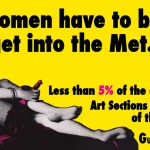
The Guerrilla Girls, After 3 Decades, Still Rattling Art World Cages

When you’ve spent 30 years wearing a gorilla mask, as the women known by the aliases Frida Kahlo and Käthe Kollwitz have, certain behavior becomes second nature. So there were Kahlo and Kollwitz, two of the pseudonymous founding members of the Guerrilla Girls, the activist, feminist art collective, preening and posing at their 30th anniversary party and retrospective in May. They sipped prosecco through straws (their gorilla lips wouldn’t allow much more) at the Abrons Arts Center on the Lower East Side, while guests gazed at walls lined with the posters protesting elitism and bias that first shook the art world in the 1980s. “Do Women Have to Be Naked to Get Into the Met Museum?” one provocatively asked. The Guerrillas’ name tags identified them as pioneering dead female artists (like Alice Neel, the portraitist, or Zubeida Agha, the Pakistani modernist) whose legacies they hope to continue.

KAHLO: How can you really tell the story of a culture when you don’t include all the voices within the culture? Otherwise, it’s just the history, and the story, of power.  We go back to the Met because we expect that it’s going to get better. And the progress that we’ve discovered is that now, there are fewer women artists, but more naked males. [Laughs]

At Seattle’s First Art Fair, Dealers Chase Elusive Tech Money

BAC’s last posting re the Seattle Art Fair …

Seattle has suffered an inferiority complex and craved a place at the international — or even national — art world table for as long as I’ve been here, and both Seattle Art Fair and Out of Sight stepped up, with remarkable esprit, to finally do something about it. Whether or not we finally have the collector muscle to sustain a fair that doesn’t fizzle after a year or two has yet to be seen (though plans are already underway for a 2016 edition), but the fair and its offshoots provided a buzz unlike anything we’ve experienced. This weekend was like witnessing a city going through puberty, and it finally kind of feels like we’re on the other side.

artnet News’ Top 10 Most Expensive Living British Artists at Auction 2015

This summer, we’re taking a look once again at the top ten British artists over the past ten years. Looking at the artnet Price Database, we kick off with the top artists by lot, and then give a list of artists by value over the same period. Comparing it to last year’s ten-year look at artnet News’ most expensive living British artists at auction, some of the same names pop up—Damien Hirst, Peter Doig, and Bridget Riley—though some of the rankings have shifted a bit. This year Doig edged out Hirst for the top slot after one of his paintings scored a record $25.9 million this past May. Among new artists who broke into the top slots this year were more YBAs including Chris Ofili and Tracey Emin. Also notable was the addition ofAnish Kapoor since many of the top prices garnered at auction tend to be for paintings rather than sculpture.  Meanwhile, perennial contemporary favorites including Glenn Brown, David Hockney, and Antony Gormley hold their respective rankings from last year.

Why do so Many Art Galleries Lose Money?

The art business is booming, but many galleries are barely getting by. One German expert thinks he knows the answers.

On Tuesday, the highly respected Wallspace gallery in Manhattan’s Chelsea neighborhood announced it would close its doors permanently on Aug. 7. The lease was up, and “it necessitated a reevaluation,” said Jane Hait, who co-founded the space with Janine Foeller. “It’s a particularly tough climate for people doing work that’s not necessarily super commercial.” The closure of such a celebrated fixture of the New York art scene underscores the fact that—despite the unprecedented avalanche of money blanketing the contemporary art world—it’s surprisingly difficult for galleries to make money.

The realities of the primary art market depicted by Resch’s data, however, are harder to argue with. It turns out that the upbeat world of biennials and art fairs and parties is in fact a cutthroat, antiquated, deeply flawed industry hampered by an obsession with keeping up appearances and an often misguided aversion to making money. No wonder a gallery like Wallspace was forced to close. “Our primary focus didn’t always correlate with financial success,” according to Hait. “It’s unfortunate, because galleries doing things like we were trying to do have a tough time staying in business.”

Seattle Art Fair Receives a Boost From Tech’s Big Spenders

SEATTLE — Paul Allen came ready to shop. Mr. Allen, a billionaire co-founder of Microsoft and one of this city’s major cultural patrons, strolled the aisles of the inaugural Seattle Art Fair on Thursday, looking to add to his formidable art collection.  “Just walking around, I’ve probably seen a half-dozen paintings that I would consider,” he said, taking a break early in the V.I.P. preview. Several staff members and his private art adviser lingered nearby. Mr. Allen had a leg up on other buyers: He founded the fair. A regular visitor to the Venice Biennale, he was inspired to start an art showcase in his hometown that would import a sophisticated, international art scene. After two years of planning, it opened here last week to ardent curiosity.

And Mr. Allen did acquire some work, including a small Wayne Thiebaud pastel of a tin of sardines. “Because I used to eat sardines with my father,” Mr. Allen explained.

New York collector Beth Rudin DeWoody, who came on a whim and wound up buying a half-dozen works from dealers from New York, Los Angeles, San Francisco, Boston and Seattle, including a piece by the local artist Jeffry Mitchell. As for prices, “it was a range,” she said. “I love finding art for under $1,000, which was very possible there.”

The Seattle Art Fair Arrives, with Dealers on the Hunt for Tech Money

A giant beach ball, a pink ice cream truck, and a winding line of people waiting to see art are not sights that people usually associate with perennially gray Seattle. But on Thursday night, most of the 4,000 people who visited the opening night of the inaugural Seattle Art Fair got to experience all three.

Iranian artist Negar Farajiani’s Made-in-China, a beach ball about 12 feet in diameter, distracted many visitors from the wait outside of the CenturyLink Field Event Center and helped set the tone for much of the pleasant, fun art inside. Spencer Finch’s sherbet-hued ice cream truck, seen earlier this summer in an exhibition organized by Creative Time in New York’s Central Park, added to the breezy mood.

[Cheerfulness and a breezy mood, but did the dealers find that tech money, that “unicorn” Greg Kucera referred to in an earlier BAC post?]


Australian gambling millionaire acquires acclaimed oil installation

Richard Wilson’s 20:50 work will leave the Saatchi Gallery in London, and head for David Walsh’s museum in Tasmania—but may go on a world tour first.

The Australian collector David Walsh has bought the oil installation 20:50 by the UK sculptor Richard Wilson, one of the most talked about art interventions of the past 25 years. The piece will be housed at Walsh’s Museum of Old and New Art (Mona) outside Hobart in Tasmania. The subterranean museum, the largest privately run space in Australia, opened in 2011.

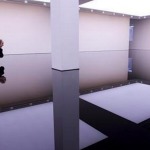
For 20:50, the gallery is filled to waist height with recycled engine oil, from which the piece takes its name. A walkway extends from a single entrance, leading the viewer into the space until they are surrounded by oil on three sides. The surface of the oil mirrors the architecture of the room.

This wonderful work was a highlight of our first trip to the Saatchi Gallery many years ago, and we enjoy it on every visit.  Read on …

7 Reasons Why the Seattle Art Fair Is Important for the Art World

Amid the seemingly endless schedule of international art fairs that take place around the world each year, all art world eyes will be on Seattle this week, where the inaugural Seattle Art Fair, opens on Thursday July 30 and runs through August 2.

Previous attempts at organizing fairs here have never really gotten off the ground for a range of reasons including being underfunded, poorly organized, or simply too regionally focused. One former committee member told us about previous show organizers being so hampered by underfunding that they were “always coming to us and encouraging us to accept a particular exhibitor just so they could pay the rent. But why would we do that?”

7 Reasons to Celebrate Marcel Duchamp on His Birthday

Marcel Duchamp was a prankster, a rabble-rouser, and an envelope pusher. Over a century after he plunged a bicycle wheel into a four-legged stool, artists are still paying homage to his life and work.

The artist, who passed away in 1968, always had a sense of humor about his work and ensured that no one could map out his oeuvre without noticing his tricks. For example, his 1964 Fountain is a “hand-crafted, editioned, gallery-sanctioned, sort-of-signed simulation of the functional urinal” that Duchamp originally presented to the viewing public in 1917.

Here are seven reasons why we love the artist, on what would be his 128th birthday.