The Met and the Now

America’s preëminent museum finally embraces contemporary art.

Gertrude Stein’s famous remark that “you can be a museum or you can be modern, but you can’t be both” sounds archaic today. Every self-respecting urban center has its museum of modern art, and climate-change-denying business leaders will spend lavishly to get their name on its walls. The fact that nobody seems to know what art is anymore makes a curator’s job all the more difficult.

Does anyone still subscribe to Alfred Barr’s definition of what he and his colleagues at MOMA were doing as “the conscientious, continuous, resolute distinction of quality from mediocrity”? Many curators would say that they do, but, as any Chelsea gallery-goer can attest, a vast amount of mediocre art is being shown these days, and some of it commands absurdly high prices at auction. The unfashionable, élitist notion of quality doesn’t really go away, and our need for museums to sift, select, and make illuminating judgments about recent art has never been more acute.

The Met is taking a risk in its effort to view modern and contemporary art through the lens of its historical collections, and vice versa, but no other museum could do it, or do it as well. At the very least, the effort should remind us that all art was contemporary once, and that, if it’s good enough, it stays that way.
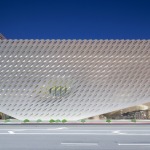
Crunching the Numbers Behind the Boom in Private Art Museums

What kind of person opens a private contemporary art museum? According to a new reportby the art collector database Larry’s List and the Chinese art market site Artron, he’s probably in his 60s or his 70s; he’s probably from South Korea, the US, or Germany; he probably founded his museum in the last 15 years; and he’s most likely a “he” — women account for just 18% of private contemporary art museum founders.


Elmgreen & Dragset create a fictional art fair in Beijing

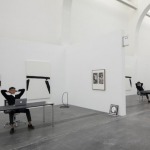
The maverick Scandinavian artist duo Elmgreen & Dragset focus on an art world staple—art fairs and their enduring popularity—in their latest show, The Well Fair, which opens at the Ullens Center for Contemporary Art (UCCA) in Beijing on Sunday (24 January-17 April).

The artists have transformed the main hall of UCCA into a fictional fair by building multiple rows of rectangular booths, mimicking the generic architecture of art fairs worldwide.

Michael Elmgreen says: “In each booth we have created a narrative, a whole small-scale solo show, so that the exhibition contains multiple solo shows with different concepts and stories.” Two adjacent stands staffed by dealers played by identical twins, showing the same works hung in an identical fashion, are a comment on the generic, conveyor-belt aspect of art fairs. UCCA staff, meanwhile, double up as fair guards and information desk staff.

Stephen Colbert Interviewed the Guerrilla Girls

Did anyone catch the Guerrilla Girls’ brief appearance on The Late Show with Stephen Colbert? Masked members of the anonymous feminist art collective gave a short introduction to what they do, and gave some really good answers as to why we should care about what museums collect.

When Colbert asked about the important of even noticing the gender of artists—something many museum attendees probably never consider—”Frida” responded, “Art should look like the rest of our culture… you know, unless all the voices of our culture are being heard in the history of art it’s not really the history of art”

That’s pretty much the recurring answer to every topic raised, from art history: “for years kings and queens told us what art was all about, now we aspire to a democratic society and art should be about all of us,” to contemporary museum acquisitions being governed by a handful of billionaires with “cookie-cutter” collections.

There weren’t many eye-openers here, but it’s pretty impressive that the Guerrilla Girls’ feminist introduction to museum politics made its way into the mainstream media.

Watch the video!

Do You Have to Be Rich to Make It as an Artist?

Art is a self-starting, entrepreneurial activity, and what is true of entrepreneurs in general is perhaps true of artists. “[T]he most common shared trait among entrepreneurs is access to financial capital—family money, an inheritance, or a pedigree and connections that allow for access to financial stability….,” Quartz recently explained, debunking the cult of the entrepreneur as visionary risk-taker. “When basic needs are met, it’s easier to be creative.”

Nothing Remains: David Bowie’s Vision of Love

On the title track of “Blackstar,” the David Bowie record released just a couple of days before his death on January 10th, Bowie sings, “I’m not a pop star.” True, he was an attractive celebrity with hit records, great hair and a vaguely gender-bending past. But for me, and for his millions of fans, he was someone who simply made life less ordinary. Indeed, Bowie’s music made me feel alive for the first time. And if that sounds like overstatement, then perhaps you don’t get what music is about and what it can do.

Please watch the David Bowie Blackstar video, I Can’t Give Everything Away, truly “art” at its best!

Seeing more and feeling less
Saying no but meaning yes
This is all I ever meant
That’s the message that I sent.

David Bowie Allowed His Art to Deliver a Final Message

In the video for David Bowie’s “Lazarus,” released last week, the mythic singer and rock ’n’ roll shape-shifter, ever thin but bordering on gaunt, is blindfolded and writhing in a hospital bed. “Look up here, I’m in heaven,” he sings. “I’ve got scars that can’t be seen.” In the end, a shaking Mr. Bowie retreats backward into a darkened armoire.

Mr. Bowie, who in his 50-year career reimagined the worlds of pop music, art and fashion, told very few people about the cancer that preceded his death on Sunday, at 69, a year and a half after his diagnosis. Even those working closely with him on a sudden burst of new projects were surprised to learn he had been dying.

At the same time, it turns out, he was telling everyone through his art.

Look up here, I’m in heaven / I’ve got scars that can’t be seen

Sotheby’s Shares Rise on its Acquisition of Art Agency, Partners

In a dramatic development for the auction industry, Sotheby’s announced on Monday that it had acquired Art Agency, Partners, a two-year old, New York-based art advisory company, for $50 million plus built-in performance fees that could elevate that number to $85 million over the next four years.

“AAP’s profitable business helps drive initiatives that are imperative for Sotheby’s growth,” said Tad Smith, Sotheby’s president and CEO, in a prepared statement. He predicted that the acquisition would “improv[e] our leadership position at the high end of the fine art market, [bolster] our private sales capability, [give] us new growth opportunities in advisory services, and reinforc[e] the client-first culture in all we do.”


Anish Kapoor & Rembrandt

Three works by the celebrated British artist Anish Kapoor are on show in the Gallery of Honour at the Rijksmuseum until 6 March 2016. The three painted reliefs created from layers of red and white resin and silicone evoke images of bloody, sinewy lumps of meat. These extraordinary visceral works will enter a visual dialogue with Rembrandt’s late works, such as ‘The Jewish Bride’, ‘The Syndics’, ‘Titus Dressed as a Monk’ and ‘Self-Portrait as the Apostle Paul’.

 Watch the Video!

Sotheby’s Acquires Art Advisory Firm Art Agency, Partners

In a somewhat surprising move, Sotheby’s announced today it will pay $50 million in cash to acquire the art advisory firm Art Agency, Partners and create a new Fine Art Division run by AAP’s Amy Cappellazzo and Allan Schwartzman. The deal could reportedly total $85 million if the performance benchmarks over the next five years.

The left-field acquisition seems to underscore the uncertainties about how Sotheby’s, and auction houses in general, should thrive in changing markets. In an interview on Artspace early last year, Cappellazzo was asked about her new employer’s prospects.

“In the old days, these were simply agent-based auction businesses, but the more the auction houses use their own capital the more that changes the type of business they are in,” she said. “Sotheby’s has a very robust lending program, and both houses do more that looks like private equity. But as you look at the overall industry, you have to be very savvy and have a little bit of a crystal ball to imagine where it’s is going.”

7 Video Art Masterpieces You Need to Know Now

Video art has been with us for nearly half a century, a fertile ground for artists to experiment with new modes of aesthetic experience. As media culture expanded to nearly every corner of our society over the course of the 20th century, artists in turn refined and emboldened their approaches to the medium. The following works, each excerpted from Phaidon’s Body of Art, represent just a few of the high points of recent video art.

Alec Soth’s Case Studies of America

“Our vision of America is so shaped by television and movies. All we see are Hollywood starlets and New York cops. We sometimes forget that there are whole other lives being lived in the middle of America. And some of these lives are really inspiring.”

—Alec Soth, as told to SeeSaw Magazine in 2004

20 Great Exhibitions in Europe We’re Excited About in 2016

Looking at the year ahead, we have put together a preview of the best exhibitions to look forward to in Europe in 2016. The good news is, as far as art goes, it looks like it going to be a cracking year.

From artnetnews.

Why Experts Say the Latest Copyright Lawsuit Against Richard Prince Matters

Yet another lawsuit has been filed by a photographer against a major artist, and the case could have a major impact on the interpretation of copyright and intellectual property law.

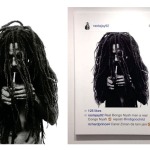
Photographer Donald Graham has brought suit against Richard Prince for using a photograph of a Rastafarian in his 2014 Gagosian Gallery exhibition “New Portraits,” which presented prints of other people’s Instagram posts, with comments by Prince. Prince obviously has a taste for this kind of image; the major lawsuit Cariou v. Prince (in which French photographer Patrick Cariou sued Prince and his dealer Larry Gagosian for copyright infringement) centered on Cariou’s pictures of Rastafarians.

The new case is distinct from distinct from Cariou v. Prince in some important ways. In phone conversations and e-mail exchanges with artnetnews, three attorneys who focus on intellectual property law outlined its significance.

Clyfford Still’s Radical Repetitions

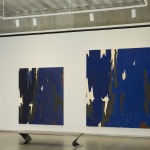
DENVER — The current exhibition at the Clyfford Still Museum (CSM), Repeat/Recreate, has been on the institution’s wish list for nearly 10 years, since well before it even opened. The museum controls 94% of Clyfford Still’s life’s work, yet the show required 12 lenders to gather pairs and triplicates for their first public display together. The result is a curatorial and institutional triumph.

Multiples illuminate Still’s creative process. Scale is not directional, with the second version becoming either larger or smaller. His choice of media, likewise, can at first be oil (“PH-111,” 1952) and then shift to pastels (“PP-135,” 1956), challenging the assumption that oil is the pinnacle of painting. Many Old Masters, most notably Rembrandt, made multiples, and Abstract Expressionists continued this practice. Robert Motherwell’s Elegies to the Spanish Republic series or Willem de Kooning’sWoman series are just a few examples. The myth that Abstract Expressionists were impulsive producers of spontaneous and unique works is debunked by the very presence of duplicates and triplicates. Still once said, “I do not intend to oversimplify — in fact, I revel in the extra-complex.” Like his process, this exhibition is a reminder that an artist’s life’s work is more important than the individual image.

Outraged Photographer Sues Gagosian Gallery and Richard Prince for Copyright Infringement

Renowned photographer Donald Graham brought a federal complaint against Gagosian Gallery, Larry Gagosian, and artist Richard Prince on December 30 for unauthorized use of one of his famous images,Rastafarian Smoking a Joint, in the 2014 show “New Portraits.” Along with the black-and-white image of a Rastafarian man lighting a marijuana cigarette, which is the subject of the suit, the show featured images that had been taken from Instagram posts, blown up and modified with some commentary added by Prince.

The allegations Graham has made against Gagosian and Prince echo copyright charges brought by photographer Patrick Cariou in 2009, when Prince used images from his “Yes Rasta” series in paintings for his 2008 “Canal Zone” show at Gagosian Gallery. The court ultimately held that most of Prince’s works, but not all of them, were protected under the fair use clause and in March 2014, Prince settled with Cariou.

Why Clyfford Still’s art stayed hidden for 30 years

Painter finally set to take his place alongside Rothko, Pollock and other abstract expressionist pioneers.

Following his death in 1980 all the works by Abstract Expressionist painter Clyfford Still that had not previously been shown or exhibited were immediately put into storage and sealed off from public view. They have remained under lock and key for the past 30 years – one of the most closely guarded secrets in the art world. Until now. In the heart of Denver Colorado now stands the Clyfford Still Museum which opened its doors last month, finally allowing the world to see the 825 paintings and 1575 works on paper (amounting to 94 per cent of the artist’s total output) produced by an artist who Jackson Pollock considered to be one of the three men (along with Mark Rothko and himself, of course) responsible for changing the very nature of painting.

David Anfam – “Still, perhaps like no other artist, gives me an instant high”!

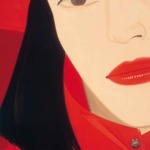
Alex Katz, The Prince of New York City

It is easy to forget just how really good a painter Alex Katz can be. This is because he makes everything look so easy and natural. Coming of age during the early 1950s, at the height of Abstract Expressionism, the idea of showing struggle and existential angst became anathema to him. This is what he had in common with his friend and early champion, the poet Frank O’Hara.

In a small show of eight paintings and cut-outs, Alex Katz at the Met, currently at The Metropolitan Museum of Art (October 9, 2015–June 26, 2016), one sees that being good wasn’t enough for this artist. Done between 1957 and 2014, and spanning nearly sixty years, the selection highlights the artist’s innovative examination of the relationship between the figure and the surrounding space.

No wonder so many poets have written so eloquently about Katz — from Frank O’Hara, James Schuyler and John Ashbery to Bill Berkson, Carter Ratcliff and Barry Schwabsky.

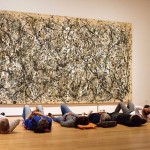
Review: Drips, Dropped: Pollock and His Impact

Any exhibition of older art drawn from a museum’s permanent collection is a palm held out for us to read, a snapshot of the museum’s sense of its role over time, its present ambitions and its view of art history. Place two such exhibitions side by side and an especially intense and revealing frisson can occur.

Thus we have the palpable electricity between “Jackson Pollock: A Collection Survey: 1934-1954” and “Take an Object,” two shows at the Museum of Modern Art. The Pollock is a dazzling 58-work account of that leading Abstract Expressionist’s achievement, with special focus on the development of his signature drip paintings in the mid-1940s. “Take an Object” is a survey of worldlier, more externalized art-making by 20 post-Pollock artists from the United States and Europe, made between 1955 and the mid-70s. It takes its title from a notebook entry by Jasper Johns: “Take an object. Do something to it. Do something else to it. [Repeat.]”

These shows say a lot about postwar history and the Modern’s representation of it; moreover, they define a watershed moment when painting began to share the stage with a new kind of art-making that was emerging.