Changing order of names is deliberate at Griffin Art Projects

The news release about Griffin Art Projects caught my attention not only because it was about a new gallery opening in Metro Vancouver. What I noticed was how one sentence was worded.

Here’s what it said: “The inaugural exhibition has been drawn from the collections of Brigitte and Henning Freybe and Kathleen and Laing Brown . . . .”

What was different was that the women’s name was first in both cases. That looked to me like it was deliberate. I wondered why so I asked Helga Pakasaar, the curator of the inaugural exhbition in the gallery.

“Well, they preferred it that way,” she said.


The New Vancouver Art Gallery: A Generous Building

When the Vancouver Art Gallery revealed their conceptual design for a new building earlier this week, it was evidently a far cry from their current neoclassical courthouse.  Gone are the ionic columns, ornate marble and porticos; instead, Swiss architectural firm Herzog and de Meuron has developed a soaring, wood-wrapped structure with boxy levels that recalls West Coast Modernism taken to new heights.

Caoimhe Morgan-Feir spoke with Kathleen Bartels, director of the Vancouver Art Gallery, and Christine Binswanger, partner at Herzog and de Meuron, about the proposed use of the new building, looming funding issues, construction deadlines and the public’s initial reactions.

BAC:  We must say, it is nice to read an article that isn’t totally focused on the fundraising, giving it a negative slant.

Mapplethorpe Print at Center of Culture Wars Returns to Public Eye

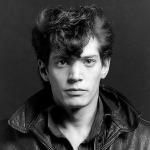
Twenty-five years ago this month, a Cincinnati jury wrote an exclamation point into the story of the culture wars that were raging through art museums and academia. The jury acquitted that city’s Contemporary Arts Center and its director of criminal obscenity charges for exhibiting a group of photographs by Robert Mapplethorpe, graphic sexual images that became a watershed in debates about what constituted art, what kinds of art should be supported by government money and who should have the power to decide such questions.

Among the handful of these images carried through the halls of Congress by Senator Jesse Helms — the standard-bearer opponent of taxpayer support for what he called “filthy art” — was “Man in Polyester Suit”: a tightly cropped picture of the torso of a black man wearing a three-piece suit, with his large penis hanging out, like a Montgomery Ward catalog hacked by Tom of Finland, with an assist from Duchamp and Groucho Marx.

What Becomes of the Broken Hearted?: ‘ART BREAKERS’ and the Art World’s Reality TV Problem

The art advisor is a bit of a grab bag of roles—curator, interior designer, dealer, buyer. The line dividing these roles is ever hazier because the sole aim of nearly every art professional is to make a lot of money, and many of them do. Let’s think of advisors as opportunistic personal shoppers for the culturally aspirational, or, for those inclined to see their collections as a future financial investment, something like a hedge-fund manager, using art as capital.

The most common refrain of advisors, though, is that they provide “access.” “The most important thing an art advisor can provide is access,” the advisor Mark Fletcher told the New York Times in 2006. Brosseau reiterated this point to me in a brief phone conversation before her show aired. “I think the art world can be intimidating to people not in it,” she said. “And people don’t feel confident trying to enter into it. We’re hoping to inspire people to feel a little bit more welcome.” The notion of giving people access to the art world is the default sales pitch of a variety of recent art-world business ventures, most of them run by advisors like Brosseau and Gaffney, and it is both condescending and accurate. By selling the need for access, advisors merely perpetuate the notion of insularity.

All in all, not a terrible business model.  As for the show, what can I say?

Wish we could watch this show, no telling what we might learn, but our cable provider doesn’t carry Ovation HD TV…!

2015 Turner Prize Show is Earnest and Experimental but Ultimately Anticlimactic

On Wednesday, the 2015 Turner Prize exhibition held its preview at Tramway, the Glasgow art institution that’s hosting the prize this year.Sarah Munro, the outgoing director of the venue, and Paul Pieroni, co-curator of the exhibition, welcomed the throngs of arts journalists that included the top national newspapers and leading art magazines.

Expectations were high. The Turner Prize, the UK’s most famous art award, which celebrates its 32nd anniversary this year, still commands much media attention and speculation.


North Shore art collectors open new gallery

Brigitte and Henning Freybe will show work that might not be shown otherwise.

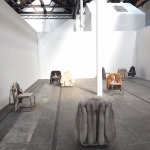
A new public art gallery opening Saturday in North Vancouver is dedicated to showing the work of private collectors.

It’s called Griffin Art Projects and is an initiative of Brigitte and Henning Freybe, two of Metro Vancouver’s major art collectors. The opening exhibition features work from the couple’s private collection as well as the collection of Kathleen and Laing Brown. Both the Freybes and the Browns live on the North Shore and have been collecting art for more than 40 years.

In an interview in the new gallery, the Freybes talked about why they started Griffin Art Projects and why they collect art.

Auction Houses Jockey to Lead Sales in First Big Market Test

Art auctions used to be a gentlemen’s business. Now the gloves are off.

As art sales face their first major test since the August financial market rout, auction houses are jockeying not only for trophy artworks but also for the best positions to highlight them at the November auctions in New York. The result is a shakeup in a schedule that for years was tightly coordinated, with Christie’s and Sotheby’s traditionally alternating who goes first. Even the weekends are no longer off limits; in a surprising move, Phillips, the smallest of the three, switched its main sale to a Sunday.

“It is ruthless out there,” said Wendy Cromwell, a New York-based art adviser. “You need to do what you need to do in order to get the consignments you want.”


Anish Kapoor on Vandalism, Instagram, his Moscow Retrospective, and more …

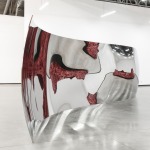
ARTnews: During the walkthrough of the exhibition just now, you pointed to the “S-Curve” sculpture and said that, ‘In the age of Instagram, this is a selfie object.’ Now that you are on Instagram, have you enjoyed seeing the interaction between the art and viewer evolve?

Anish Kapoor: I do see that. People look with their phones. It’s not really necessary to look at it with their eyes at all, and it’s the bizarrest thing! I’m old-fashioned enough to be uncertain about it, at least.

Anish Kapoor Forced by French Court to Remove Anti-Semitic Vandalism from Versailles Sculpture

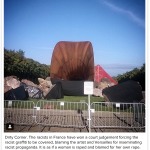
Anish Kapoor returns to Versailles tomorrow, September 22, to commence his artistic intervention on the sculpture Dirty Corner, which has been vandalized three times since its installation in the gradens of Versailles in June.

But the artist, who initially announced that he would leave the massive steel artwork untouched after it had been smeared with anti-semitic slogans in early September, is not acting of his own accord, but rather obeying a court order.

A Versailles court ruled on Saturday, September 19, that the anti-semitic graffiti must be wiped off “without delay” from the sculptures and surrounding stones after right-leaning politician Fabien Bouglé filed a complaint with the local public prosecutor against the artist andCatherine Pégard, president of Versailles, contesting their decision to keep the graffiti as a sign of disgrace and as a reminder of the “dirty politics” that inspired the vandalism.


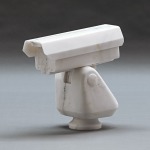
They’re Watching us in Museums: Travor Paglen’s Show at Metro Pictures Takes on Surveillance

Last Thursday afternoon, I received an email from the artist Trevor Paglen. I’ll respect his privacy and not reveal the contents of the message, or the Gmail account he uses, but I’ll tell you about his sign-off. Instead of the standard message, “Sent from my iPhone,” or some cute variation on that along the lines of “Sent via my carrier pigeon,” Trevor Paglen’s final dash reads “Sent from a tracking device.”

I was looking at the email on my own tracking device, and if the NSA wanted to know what I was doing at that exact moment for some odd reason, it could easily track my Uber and figure out I was headed from my apartment to Metro Pictures in Chelsea, where Paglen’s latest show is currently on view. The show confronts surveillance head-on, with the works displaying a direct approach to the largest domestic spy program in history. Paglen, at times, makes some of the frillier big-ticket shows in the neighborhood seem a bit frivolous.

Paglen has the bonafides to do this kind of thing.

‘These Pictures would Not have been Possible Ten Years Ago”: Woflgang Tillmans on his New Show at David Zwirner Gallery

Many of Wolfgang Tillmans’s photographs begin with the German artist asking himself, “Can I do this?” Last week, at a preview of “PCR,” his new show at David Zwirner, in New York, Tillmans pointed out two new photographs of Sunset Boulevard, in Los Angeles, as examples of that process. One of the images is a night scene that he shot in the passenger seat of a car. In it, a billboard for an exhibition of Rolling Stones photographs bears a slogan that seems to say it all about the show’s interest in what Tillmans called “super ‘now’ moments”: “It’s just a shot away.”

“To take a picture from a car at night should be an impossibility without flash,” Tillmans said at the preview. “In a lot of these pictures, there’s some aspect of new technology. These pictures, for example, would not have been possible ten years ago.”

How to Keep Your Artists Happy: A User’s Guide for Dealers

It’s hard to keep young up-and-coming artists happy, especially if they come with the nickname “generation me.” Whether it’s due to restlessness or a better opportunity, gallery representation can resemble a game of musical chairs. Remember when Julian Schnabel left Mary Boone, who gave him his first show in 1979, for Pace in the 1980s?

In another boom market, there are a number of reasons why an artist decides to leave a gallery. But before your coveted millennial artist jumps ship, artnet News decided to share our insights about how to keep the ones worth keeping on your gallery roster.

1. Pay your artists on time.

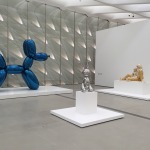
The New Broad Museum Brings LA Lots of Blue-Chip Art and a Few Surprises

The wait is over. After a 15-month delay, ballooning costs, and lawsuits, the Broad Museum is finally set to open this Sunday in downtown Los Angeles. The new 120,000 square foot institution houses the postwar and contemporary art collection of Eli and Edythe Broad. For the past four decades, the couple has had an outsized influence on the cultural life of LA. Eli Broad was a founding chairman of the Museum of Contemporary Art (MOCA) in 1979; he lent his financial support to the Hammer Museum in the 1990s; he was responsible for the Broad Contemporary Art Museum pavilion at the Los Angeles County Museum of Art (LACMA) in the 2000s; and bailed out MOCA when it was on the verge of bankruptcy in 2008. Some of these relationships eventually soured, ending in controversy, such as his decision to simply loan his works to LACMA, not donate them, as was widely assumed. It was not a huge surprise then, when he announced in 2008 that he would be building his own museum, one where he presumably wouldn’t have to deal with competing institutional interests.

Royal Academician Ai Weiwei Opens Landmark Survey At Royal Academy Of Arts

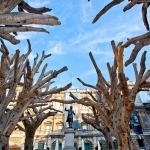
The Royal Academy of Arts will present a landmark exhibition of the Honorary Royal Academician, Ai Weiwei. Although Ai is one of China’s leading contemporary artists, his work has not been seen extensively in Britain and the Royal Academy will present the first major institutional survey of his artistic output. The exhibition will include significant works from 1993 onwards, the date that marks Ai Weiwei’s return to China following more than a decade living in New York. Ai Weiwei has created new, site-specific installations and interventions throughout the Royal Academy’s spaces.

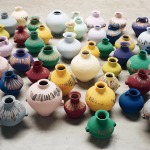
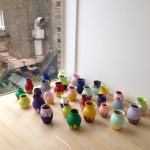
On his return to China in 1993, Ai began to work in a direction that was both embedded in Chinese culture and reflected the exposure he had had to Western art during his twelve year sojourn in the US. Citing Duchamp as ‘the most, if not the only, influential figure’ in his art practice, Ai continues to engage with creative tensions between complex art histories, conceiving works with multiple readings in the process. To this end he employs traditional materials and interventions with historic objects throughout his work from Neolithic vases (5000-3000 BCE) to Qing dynasty (1644-1911) architectural components and furniture. By creating new objects from old, Ai challenges conventions of value and authenticity in modern-day China. These artworks include Table and Pillar, 2002, from his Furniture series, and Coloured Vases, 2015.

Ai Weiwei review – momentous and moving

If there were any who doubted Ai Weiwei’s work matched his reputation, this rollercoaster of a show – racing between his time in jail, the Sichuan earthquake and 3,000 crabs – should silence them.

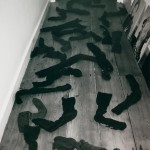
Three-thousand porcelain river crabs clamber over one another in a great red, green and white sprawl of twitching legs and claws. Porcelain sunflower seeds are one thing, crabs another. Good thing they’re not quite real.

This is but one small moment in the largest show Ai Weiwei has held in Britain. Not exactly a retrospective, it is certainly the best show of his work I have seen anywhere, as well as being the best thing I’ve seen at the Royal Academy, London, for years. It is filled with surprises, shocks and tremors. Its effect is cumulative. Those who have doubted Ai’s integrity and seriousness (I have never been among them), or his qualities as an artist, should find plenty to pause at here.

Wolfgang Tillmans Opens Up on His Art, His Influences, and His Personal Tragedy

The German artist Wolfgang Tillmans came of age in the 1980s, long before the existence of digital photo-sharing platforms, but he has always seen photography as an inherently social medium (and one that’s as sensitive and fragile as human relationships). In this interview with artist, writer and Index magazine publisher Peter Halley, excerpted entirely from the Phaidon Contemporary Art Series book Wolfgang Tillmans and re-published here on the occasion of his latest show at David Zwirner in New York, Tillmans reflects on his early career and his influences from Super-8 home movies to club culture.


Ai Weiwei review – momentous and moving

Three-thousand porcelain river crabs clamber over one another in a great red, green and white sprawl of twitching legs and claws. Porcelain sunflower seeds are one thing, crabs another. Good thing they’re not quite real.

This is but one small moment in the largest show Ai Weiwei has held in Britain. Not exactly a retrospective, it is certainly the best show of his work I have seen anywhere, as well as being the best thing I’ve seen at the Royal Academy, London, for years. It is filled with surprises, shocks and tremors. Its effect is cumulative. Those who have doubted Ai’s integrity and seriousness (I have never been among them), or his qualities as an artist, should find plenty to pause at here.

The word for crab, hie xie, is a homonym for harmonious, we are told, and much bandied about in Chinese government circles. There’s not much harmony here among the crustaceans. The word is also used a lot on the internet in China, as slang for censorship. Thinking Ai might shut up after his 81-day incarceration in 2011, and the bulldozing of his newly completed Shanghai studio by the authorities, the Chinese government got it wrong.

The road to Ai Weiwei

Having settled in at the RA, Marlow is about to launch his first major exhibition: the work of Ai Weiwei, the Chinese dissident artist who was imprisoned without charge in 2011 and released on condition that he should give up his passport. A thorn in the Chinese government’s side for two decades, he has made sculpture, woodwork, photography, video and installations, often on a massive scale, while effectively under house arrest.

The exhibition, described by the London Evening Standard as ‘the most anticipated art show of the year’, is a huge enterprise — a single-artist show that will occupy the Royal Academy’s main galleries, as did the works of David Hockney, Anish Kapoor andAnselm Keifer in recent years — and the first major institutional survey of Ai’s work ever seen in the UK.

‘Why Ai Weiwei?’ asks Marlow. ‘First, he’s one of the most celebrated artists in the world, but few people in the UK have seen his work, aside from his Sunflower Seeds at the Turbine Hall. Second, Royal Academicians have made him an Honorary RA in support of his political position and the restraints on his creative freedom. Third, since he wasn’t travelling, I thought he might have time to do it.’


Ovation’s Reality Show on Art Advisors Looks Horrible (but we’re going to be watching…)

Get ready for Art Breaker$, Ovation’s new reality television show, focusing on two New York art advisors. Miller Gaffney and Carol Lee Brosseau are making a pretty hard sell in a promo video, in which they introduce themselves and together proclaim, “We’re the top art advisors in the country!”

“We travel the world in search of the chic-est galleries and the hottest artists,” they chirp.

Read on, and don’t miss the promo video!!

Review: Picasso, Completely Himself in 3 Dimensions

Many exhibitions are good, some are great and a very few are tantamount to works of art in their own right — for their clarity, lyricism and accumulative wisdom.

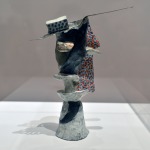
The Museum of Modern Art’s staggering “Picasso Sculpture” is in the third category. Large, ambitious and unavoidably, dizzyingly peripatetic, this is a once-in-a-lifetime event. It sustains its vision through a ring of 11 grand spaces on the museum’s fourth floor, tracing the serial genre-bending forays into three dimensions wrought by this 20th-century titan of painting. Each bout lasted a few years and was different from the one before, and each has been given its own gallery, more or less.

With one stunning exception — the voluptuous saturnine Marie-Thérèse Walter — the women in Picasso’s life don’t herald stylistic changes in the round as they tend to on canvas. In sculpture, the materials become the muses.