Kapoor’s vagina isn’t shocking. French art has always been a hotbed of amour

French conservatives are outraged over Anish Kapoor’s work in Versailles. But he’s not the first artist to bring sex into the country’s establishment.

Anish Kapoor is putting the vagina in Versailles. Why on earth are the French so shocked? What has happened to the nation that gave us Courbet’s explicit painting The Origin of the World, among other masterpieces of French sauce?

Kapoor is an artist who defies the classical rules of symmetry and order that prevail at Versailles: an artist of carnal mayhem and rollicking cosmic comedy. He is also an artist with a love of life. Lighten up, this is the joyous Rococo reborn.

Artists have done vaginas to death – will someone please tell Anish Kapoor

The sculptor has produced a brutish, gaping funnel sculpture called Dirty Corner for the Versailles gardens. Oh dear, is this how men still see women?

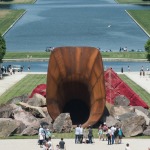
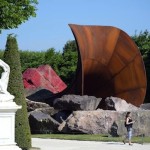
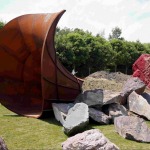
Anish Kapoor has made another whacking great sculpture for the Versailles gardens, called Dirty Corner. And it’s meant to be Marie Antoinette’s vagina. I know the queen had her faults, but it’s a very odd vagina – a vast, brutish, metal, grubby-looking, gaping funnel into a black hole. I must say I’m a bit fed up with this sort of idea of a vagina. I thought we’d done all that to death more than half a century ago, when Lady Chatterley’s Lover had just come out in paperback; everything long and pointy was a penis and every orifice was a vagina.

Olga, an artist and female critic, thinks this one is more like the entrance to a storage unit. She is right. Oh dear. Is this how some men still see women? As dirty storage units? And I thought feminism had got somewhere. We still have a million miles to go.

Michele Hanson

Public Outrage Erupts in France Over Anish Kapoor Vagina Sculpture at VersaillesPublic Outrage Erupts in France Over Anish Kapoor Vagina Sculpture at Versailles

Paris might be the world’s most romantic city, but when it comes to talking about sex, Parisians are proving a little prudish (see Paul McCarthy Beaten Up over Butt Plug Sculpture and Artist Enacts Origin of the World at Musée d’Orsay—And, Yes, That Means What You Think).

One of Anish Kapoor‘s sculptures at his newly-opened solo show at Versailles is causing a stir for its anatomical implications (see See Anish Kapoor’s Gruesome, Chaotic, and Mesmerizing Sculptures at Versailles).

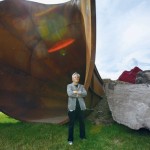
Dirty Corner, a 60-meter steel tube flared like a French horn with its opening facing the palace, allows visitors entering the gardens a view into its dark, cavernous interior.

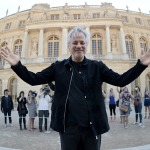
Anish Kapoor: superstar sculptor who loves to court scandal

The huge installations by the artist inspire both admiration and disapproval and his latest work, Dirty Corner, at Versailles is causing more discord than ever.

Like some corporate-sponsored mega rock band on a mammoth world tour, there is a type of international artist whose epic-scale installations are must-see events in a string of major cities. One such visual superstar is the Indian-born British sculptor Anish Kapoor, whose grand projects tend to be discussed in terms of their dimensions: height, length, tonnage.

His large signature sculptures have been seen in New York, London, Chicago, Istanbul, Jerusalem and Delhi, among other places. On Tuesday, his latest work officially goes on view at the Chateau de Versailles outside Paris.  It is in these immaculate gardens that Kapoor has set Dirty Corner, a massive steel funnel with limbs of broken stone that the artist described in one French publication as “le vagin de la reine qui prend le pouvoir” or, excuse my French, the vagina of the queen taking power.


In Philippe Parreno’s ‘H{N)Y P N(Y}OSIS,’ Art Is the Big Idea

When he was young, the French artist Philippe Parreno had a fantasy in which he would open his mouth and a beam of projector light would shoot out, casting his thoughts onto whatever was in front of him, medium and message in one human head. “My imagination would just be easy and available,” he once told the computer scientist Jaron Lanier.

When the Park Avenue Armory opens “H{N)Y P N(Y}OSIS,” Mr. Parreno’s largest installation to date in the United States, on June 11, it will be the first time American audiences have been ushered fully into his world, one infused with foreboding doses of postmodern French philosophy — Georges Bataille, Gilles Deleuze — but also with the immersive, compellingly creepy feel of a good dystopian science-fiction movie.

He was thinking about incorporating a firefly animation into the Armory exhibition, he said, but was not sure yet if he would. “Or at least I’m not going to say yet if I will,” he said slyly, adding, “An exhibition needs a bit of liturgy and it also needs a bit of chance.”

See Anish Kapoor’s Gruesome, Chaotic, and Mesmerizing Sculptures at Versailles

On June 7, Anish Kapoor‘s newest sculptural interventions will be unveiled at the Palace of Versailles (see Anish Kapoor Tapped for 2015 Solo Show at Versailles).

Kapoor’s installation is part of a series of contemporary art exhibitions at Versailles that began in 2008 with a controversial Jeff Koons show, and has since included artists Xavier Veilhan, Takashi Murakami, and Joana Vasconcelos (see Versailles President Catherine Pégard on Anish Kapoor, Lee Ufan, and the Palace’s Artists).

The Art of Dissent

Ai Weiwei and Jacob Appelbaum are artists, journalists, dissidents, polymaths — and targets. Their respective governments, China and the United States, monitor their every move. They have been detained and interrogated. Ai cannot leave China, and Appelbaum is advised not to return to the United States. They are separated from their families. Ai has been imprisoned and beaten by the police. Yet each continues his work and speaks out against government wrongdoing.

Like the red lanterns Ai hung under every surveillance camera the government installed outside his studio, “Panda to Pandaplayfully acknowledges and rejects state power.

40 Percent of World Gallery Art Sales Made at Fairs and Other Key Findings in the TEFAF Art Market Report 2015

The TEFAF Art Market Report, delivered by Dr. Clare McAndrew of Arts Economics, is considered the authority on data relating to auctions, art fairs, and market trends (see Clare McAndrew Explains How She Prepares the TEFAF Art Market Report). It’s presented in conjunction with the opening of the TEFAF art fair in Maastricht.

Sales at art fairs totaled 40 percent of all dealer sales, a shy six percent behind in-gallery sales. The margin separating both sectors has significantly narrowed over the last 10 years. (See What Sold at Frieze London 2014?, FIAC Is the Art Fair Europe Wants, and Europe’s 10 Best Art Fairs in 2014.)

Mclean’s Magazine: It’s a collage, an installation, a play!

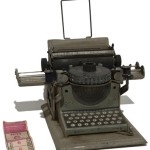
Laing and Kathleen loan “Notes for Strangers” (and “Void numbering project (continuous)“) to the Geoffrey Farmer exhibition How Do I Fit This Ghost in My Mouth? opening at the Vancouver Art Gallery May 29, 2015.

Joanne Latimer:

“Okay, so nobody can accuse the Browns of buying art to match the couch.”

Glass tea house Mondrian pavilion by Hiroshi Sugimoto opens in 56th Venice Biennale

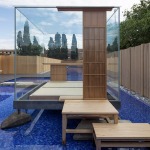
Situated on the island of San Giorgio Maggiore in Venice, the ‘glass tea house mondrian’ by japanese artist hiroshi sugimoto unites wood, glass and water as a pavilion, holding the traditional japanese tea ceremony within its transparent walls. the temporary structure, presented at the venice architecture biennale 2014 as part of the activities of le stanze del vetro, consists of two main elements: an open-air landscape courtyard and an enclosed glass cube. the garden follows a path leading along a forty-foot-long reflecting pool completely covered in bisazza mosaic from the fondazione bisazza, guiding the visitor to a lucent space, inside which the cultural ritual is performed. the pavilion hosts two visitors at once, together with the master of the tea ceremony, while the other spectators — up to a maximum of 30 — can take part by watching around the perimeter of the volume.

Just one more very good reason to make it to Venice this year!!


Police Shut Down Mosque Installation at Venice Biennale

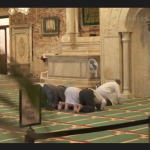
The police in Venice closed an art installation in the form of a functioning mosque on Friday morning, after city officials declared the art project a security hazard and said that the artist who created it, Christoph Büchel, had not obtained proper permits and had violated laws by allowing too many people inside the mosque to worship.

The provocative project, made inside a long unused Catholic church, serves as Iceland’s national pavilion for the 56th Venice Biennale and was intended in part to highlight the absence of a mosque in the historic center of Venice, a city whose art and architecture were deeply influenced by Islamic trade and culture. The issues the installation raised also went to the heart of the debate raging across Europe about Muslim worship and culture as immigration from Islamic countries rises.

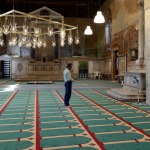
Mr. Büchel, 48, has become known for such projects, transforming art spaces and other public institutions with hyper-realistic, walk-in installations that skewer the hypocrisies and political contradictions of the art world and the world in general. He transformed the church visibly and boldly into a mosque, adorning its Baroque walls with Arabic script, covering the floor with a prayer rug angled toward Mecca and hiding centuries-old crucifix motifs behind a towering mihrab, or prayer niche.

The Danger Artist

Our final (so far) column on Chris Burden, by Peter Schjeldahl – you should read it.

Burden adventured alone in wilds that aren’t outside civilized life but that seethe within it. He coolly structured convulsive experience.  His mastery of form made him a poet, as in a piece that I knew from hearsay and wrote about, for The Village Voice, in 1981:

Last year Burden invited a group one afternoon to the palisades in Santa Monica overlooking the Pacific. There a powerful telescope was set up, directed by an assistant. Looking through it, they saw, far out to sea, someone (Burden) paddling a kayak in a dazzle of light from the declining sun, a lone, tiny, laboring silhouette appearing and disappearing in the sparkle. This went on for exactly two hours. Then the telescope was whisked away and everybody went home.

Burden is still paddling out there, in my mind’s eye. It was too much to expect that, even being dead, he would be gone.


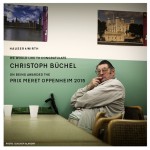
Christoph Büchel: The Mosque. Icelandic Pavilion at Venice Art Biennale 2015

Swiss artist Christoph Büchel was selected to represent Iceland at the 56th Art Biennale in Venice, Italy. His idea was to transform a church, Santa Maria della Misericordia at Campo de L’Abazia, into a mosque. Accordingly, the show is called The Mosque: The First Mosque in the Historic City of Venice and has been realized in close collaboration with the Muslim Communities of Venice and Iceland.

Christoph Büchel: The Mosque: The First Mosque in the Historic City of Venice (Moschea della Misericordia). Icelandic Pavilion at Venice Art Biennale 2015. Preview, May 9, 2015.

Agnes Martin: the artist mystic who disappeared into the desert

In the summer of 1967, Martin left New York and went off-grid before reappearing in New Mexico. The art she made there – with its buoyant bands of colour – offer no clues to the turbulent life of an artist who was diagnosed with paranoid schizophrenia. Ahead of a major retrospective, Olivia Laing celebrates her visions of pure joy.

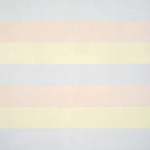
Art must derive from inspiration, Agnes Martin said, and yet for decades she painted what seems at first glance to be the same thing over and over again, the same core structure subject to infinitely subtle variations. A grid: a set of horizontal and vertical lines drawn meticulously with a ruler and pencil on canvases six feet high and six feet wide. They came, these restrained, reserved, exquisite paintings, as visions, for which she would wait sometimes for weeks on end, rocking in her chair, steadying herself for a glimpse of the minute image that she would paint next. “I paint with my back to the world,” she declared, and what she wanted to catch in her rigorous nets was not material existence, the Earth and its myriad forms, but rather the abstract glories of being: joy, beauty, innocence; happiness itself.

After that, she set down her pencil. Her final days, in December 2004, were spent in the infirmary of the retirement home, surrounded by a few of her closest friends and family members. In his memoir, Glimcher describes sitting and holding her hand, singing her favourite “Blue Skies”, a song they’d often sung together while she drove him through the mountains, her foot on the gas, exhibiting a queenly disregard for speed limits and stop signs. Sometimes she’d chime in from her bed with a couple of wavering lines: “Nothing but blue skies / From now on.”

‘Shot in the Name of Art’

What does it take to get shot in the name of art? For the late conceptual artist Chris Burden, who did just that, it required courage, vision and an excellent triggerman. One willing to accept the risk that if he missed his target by inches, art could morph into homicide.

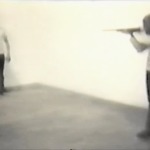
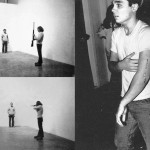
So when Mr. Burden, who died on May 10, decided to create “Shoot,” back in 1971, he made sure to find both a trained marksman and a trustworthy friend. Under the auspices of performance art, a handful of friends gathered in a makeshift art gallery and watched a long-haired man train his .22-caliber rifle on Mr. Burden.

As Mr. Burden’s profile in the art world grew, the national media discovered “Shoot,” and the video became central to his growing reputation. Documentation of the performance is now collected in major museums.

Chris Burden died on Sunday, May 10, 2015.

Stroke of genius: Peter Doig’s eerie art whisks the mind to enchanted places

Amid the impostures that sometimes pass for 21st-century art, Doig’s record-breaking compositions are jewels of imagination and haunting vision.

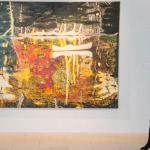
It must be the most expensive canoe in history. This week in Manhattan a painting by Edinburgh-born Peter Doig of a small white boat lost in a tangle of weeds and tree stumps in some remote wilderness went under the hammer for $26m (£16.6m) in a sale that puts him unquestionably in the top financial echelon of living artists. It is the latest chapter in the most unlikely and heartwarming success story in 21st-century art.

Doig is the painter of the global age, a traveller without a destination, between cultures, between jobs, looking for paradise and finding a prison on the horizon. His art portrays the dreams we share, the freedoms we crave, on the beach with a can of Trinidad’s favourite beer, Stag, as another sun goes down. Out on the silent water is an acid casualty in a canoe. Long may the art market fund his ghostly voyage.

Performance Art Legend Chris Burden Is Dead at 69

Performance artist and sculptor Chris Burden, who may remain best known for a performance in which he had himself shot in the arm, died today at his home in Topanga Canyon, California, at age 69. The cause was malignant melanoma, according to the artist’s friend Paul Schimmel, as reported in the L.A. Times.


Due to Burden’s willingness to endure physical suffering and even injury in his 1970s performances, those performances are still bracing. Burden had a friend shoot him in the arm (Shoot (1971)), had himself confined for nearly a week in a locker (Five Day Locker Piece (1971), his master’s project at the University of California Irvine), had himself shocked (Doorway to Heaven(1973)), and had himself crucified on the roof of a car (Trans-fixed (1974)). To create Through the Night Softly (1973), he crawled across broken glass.

The New Yorker magazine critic Peter Schjeldahl called Shoot both a classic and an atrocity. In response to the critic’s question as to why he created such works, Burden told Schjeldahl, “I wanted to be taken seriously as an artist.”

Artist draws controversy turning church into Venice’s first mosque

In a tranquil corner of Venice’s Cannaregio district stands a handsome church with an icing sugar white baroque facade. Its origins stretch back to the 10thcentury, but the last mass was celebrated here in 1967, since when, deconsecrated and in private hands, it has stood silent and unused.

On 9 May, however, as the 56th Venice Biennale opens, Santa Maria della Misericordia will become a religious and public space once more: reborn as a mosque, the first in the city’s long history. Venetian Muslims, as well as Muslim visitors to the city, will now be able to walk to Friday prayers instead of taking an hour-long trip to the nearest mosque, in the industrial heartlands of the Veneto mainland. Behind the venerable doors of the church is now a recognisable mosque, complete with wudu area to wash in, prayer carpet, mihrab – indicating the direction of Mecca – and calligraphic cartouches.

The Mosque is the official national pavilion of Iceland at the biennale, and the artist behind the transformation is the Iceland-based, Swiss-born artist Christoph Büchel – whose previous artistic projects have included the transformation of a grand gallery on Piccadilly in London into a fully functioning community centre.

One of the most controversial and highly anticipated national presentations at the biennale, the project is, said Büchel, anchored in Venice’s historic connections with the east. It was in this city, for example, that the first printed edition of the Qur’an was made in the 16th century; and the Fondaco dei Turchi, an elegant palazzo on the Grand Canal, was once the city’s ghetto for Ottoman traders.

10 Tips To Make Art Fairs More Fun

As any seasoned art lover knows, art fairs are a double-edged sword: while attending them is an easy way to see and sell art, they aren’t always the most enjoyable experience (see 11 Art World Rules Decoded for 20-Something Newbies) thanks to myriad factors like inconvenient locations, overcrowded aisles, and the sheer amount of ground you have to cover. But with the major fairs growing in attendance each year and smaller satellites springing up seemingly overnight, art fairs have become a force to be reckoned with. Here’s how to make the most of them.

10 Reasons To Be Excited About The New Whitney Museum

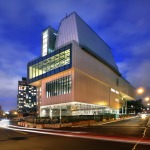
The new home of the Whitney Museum of American Art, in all its 28,000 tons of glory (as architect Renzo Piano pointed out during the preview Thursday), opens to the public May 1 in Manhattan’s Meatpacking District (see Does the New Whitney Museum Herald a Golden Age for New York Institutions?).

artnet News joined the preview, along with hundreds of other members of the press. Our hot take? The new Whitney is a great success, with spacious, welcoming galleries and a lively opening show that packs in plenty of work without seeming crowded. Visitors had the opportunity to peek into the theater, classroom spaces, and a conservation lab that now measures 3,000 square feet, as opposed to about 400 square feet at the museum’s former Brutalist digs in the Breuer Building, according to Whitney Museum conservator Matthew Skopek, who giddily chatted with this reporter near works by Robert Gober and Mark Rothko on display there.