Ellsworth Kelly on His Singular Career, and the “Great Joy” of His Art – Video

A towering figure of the postwar era, Ellsworth Kelly charted a singular and often solitary artistic path. He ventured to Europe twice—first as a camoufleur for the Ghost Army during World War II, then as a questing painter on the G.I. Bill—and brought back a bright and lively new style of American painting, seductive in its grace and generous in its joy. Steeped in the intellectual rigor of Malevich yet bursting with the splendid colors ofKandinsky and Léger, Kelly’s shaped, often monochromatic canvases and reliefs were unlike anything else when they debuted in the 1950s.

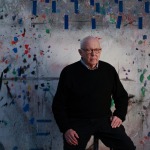
This summer, to mark the completion of Phaidon’s definitive Ellsworth Kelly monograph, Artspace enjoyed the privilege of being one of Kelly’s guests, sitting down with him in his spare, light-flooded studio to discuss his art, his career, and his inspirations. Here, in one of the artist’s final interviews,Artspace editor-in-chief Andrew M. Goldstein spoke to Kelly about his life’s work.
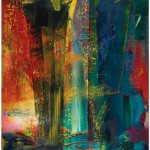
21st-Century Painting You Need to Know Now

It seems like only yesterday that we were anxiously anticipating the shift into a new millennium, with all the hopes and fears that come with the changing times. With 2016 fast approaching, now is the perfect time to look back on the highlights of the past 15 years of painting to see how far we’ve come and to guess at where we’re going. These 12 paintings, excerpted from Phaidon’s The Art Book30,000 Years of Art, and Body of Art, represent a selection of contemporary painting masterpieces from the twenty-first century.

Artist Ellsworth Kelly, Master of Hard-Edge Abstraction, Dead at 92

The American painter and sculptor Ellsworth Kelly passed away on Sunday at the age of 92. Kelly died of natural causes at his home in Spencertown, New York, his gallerist Matthew Marks announced. He is survived by his husband Jack Shear and his brother David.

Kelly is considered one of the most influential American artists of the 20th century, known for his colorful geometric abstractions.

“I think he bridged European and American modernism,” Marks toldthe Guardian. “He was a real American original.”

The Most Innovative Art Collectors of 2015

Judging from the number of seven, eight-, and even nine-figure prices at auction this past year, there is clearly no shortage of trophy-hunters around the world to continue powering the global art market boom.

While money—and lots of it—is clearly a key prerequisite for collectors to play at the top level of the art game, we’re also interested in surveying the landscape to find out which players are adopting the most-innovative approaches to collecting, whether its keeping an eye out for the freshest work from cutting-edge talent, curating radical new shows or implementing new display formats, or finding and creating new spaces to explore ideas. Here is artnet’s selections for the most innovative collectors of 2015.

Top 10 Most Expensive Living European Artists at Auction in 2015

Although modern European artists were the big performers at auction in 2015, contemporary art remains the most profitable market segment by far.

Buoyed by increased participation of international collectors from emerging markets, media attention driven by large price tags, and the perception of glamour generated by events such as Art Basel Miami Beach, the market for contemporary European artists remained strong in 2015.

We analyzed the numbers from the artnet Price Database and collected the top ten most expensive living European artists at auction this year, and it appears male artists continue to gain ground over their female counterparts.

9 Wacky and Wonderful Found-Object Sculptures From Across Art History

When Marcel Duchamp made his “Fountain” by elevating a men’s room fixture to a plinth in a gallery, he encouraged artists to consider the selection of non-art goods as part of the creative act. The gesture may not look as radical a century on, but it continues to inspire; today, you might walk into a gallery and see Darren Bader‘s cats or tacos. The works below, excerpted from Phaidon’s The Art Book30,000 Years of Art, and Body of Art, each exploit the arresting presence of the found object.

Ellsworth Kelly, Who Shaped Geometries on a Bold Scale, Dies at 92

Ellsworth Kelly, one of America’s great 20th-century abstract artists, who in the years after World War II shaped a distinctive style of American painting by combining the solid shapes and brilliant colors of European abstraction with forms distilled from everyday life, died on Sunday at his home in Spencertown, N.Y. He was 92.

Although he was interested in history and concerned about his place in it, he spoke of his own work as existing “forever in the present.”

“I think what we all want from art is a sense of fixity, a sense of opposing the chaos of daily living,” he said. “This is an illusion, of course. What I’ve tried to capture is the reality of flux, to keep art an open, incomplete situation, to get at the rapture of seeing.”

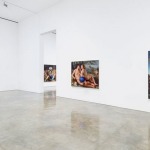
The Top 10 Exhibitions in Europe in 2015

It’s hard to believe, but the year is almost over. Another 12 months have whizzed past us, with their usual load of openings, exhibitions, biennales, and art fairs.

In this article artnet news goes down memory lane to remember some of the best exhibitions that took place in Europe in 2015, in no particular order.

One of the World’s Great Collections of Modern Art …?

Inside the rotunda of the Tehran Museum of Contemporary Art, a circular walkway spirals down from the street level, like an underground version of Frank Lloyd Wright’s Guggenheim Museum in New York. A series of galleries branches out from there, giving up astonishing secrets from one of the finest—if forgotten—collections of 20th century art in the world. A show this fall included abstract expressionist paintings by Kandinsky, Motherwell, Pollock, Rothko, and Stella, to name just a few from the museum’s vault. Sculptures by Ernst, Giacometti, Magritte, and Moore are on permanent display in the garden. The corkscrew-shaped foyer wraps around a giant Calder mobile—its playful red shapes glinting in midair beneath the stern glares of Ayatollahs Khomeini and Khamenei in portraits above.

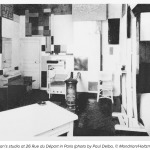
The Geometric Aesthetics of Piet Mondrian’s Studios

Mondrian wrote in 1927 about his ideas on his rather extreme interior design:

The interior of the home must no longer be an accumulation of rooms formed by four walls with nothing but holes instead of doors and windows, but a construction of coloured and colourless planes, combined with furniture and equipment, which must be nothing in themselves but constituent elements of the whole. And the human being? In a similar fashion, the human being must be nothing in himself, but rather a part of the whole. Then, no longer conscious of his individuality, he will be happy in this earthly paradise that he himself has created.

Defying Fears of a Cooling Market

“Buy the best, forget the rest” has become the conventional wisdom for collectors in today’s investment-minded art market. But what does “the best” mean? Clearly it meant different things to the 77,000 people who flocked to Art Basel Miami Beach this month.

The fair, the last major event of 2015 for the hectic contemporary art market calendar, defied reports of bubbles bursting and demand cooling.

On the one hand, toward the top of the price scale, the New York dealer Van de Weghe sold a 1954 Francis Bacon painting, “Man in Blue VI,” to an American collector for $13.5 million, almost twice the $7.7 million it made at Christie’s in 2013. And on another, there were artists’ estates. At a time when some collectors are becoming more risk-averse, fresh pieces by highly regarded, deceased artists have an obvious allure.

The 18 Most Appalling International Art World Scandals of 2015

It seems as if there’s never a quiet moment in the art world, especially during boom times. There are record-breaking auctions,controversial exhibitions, and even violent episodes by artists, as well as trolling by the general public.

Here’s a quick guide to some of the more scandalous news reports that have happened over the course of this year.

Gerhard Richter Says He’s Shocked by the State of the Art Market

The most expensive living artist in Europe, Gerhard Richter, criticized the art market and denounced the hype surrounding contemporary artists, including himself, as a “cult of personality.”

Speaking to the German weekly Die Zeit, the 83-year-old painter said the exorbitant prices his artworks achieve at auction were proof of how “insanely the art market has developed,” and how the prices have nothing to do with the work.  He expressed his disbelief at the fact that even his signed postcards were being sold on the market and fetching high prices, calling it a “frightening development.”

In Search of Lost Time: How the Art World Dispensed With Chronology in 2015 (and Why 2016 Will Be the Year of the “Historical-Contemporary”)

Although it may seem strange to devote a year-end roundup to the subject of atemporality, 2015 found the art world in a state of chronological confusion.

The year began, so to speak, in December of 2014 when the Museum of Modern Art opened “The Forever Now: Contemporary Painting in an Atemporal World,” which ran through April of this year and aroused skeptical responses from critics who found its purported “a-historical free-for-all” more of a collection of marketable paintings of the moment.

As 2015 progressed we saw the museification of Chelsea’s mega-galleries intensify, Morandi at David Zwirner being the latest example. Even the ephemeral art form of wall painting was ripe for restaging at Gagosian, where Roy Lichtenstein’s “Greene Street Mural” was paintstakingly re-created under the supervision of the artist’s former studio assistant.

The Art of Espionage: Six Contemporary Artists Who Think Like Super-Spies

Voyeurism is, for many artists, a necessary part of the creative process. But some take the act of watching the unaware a step further, into surveillance or espionage. As the 2011 SF MoMA and Tate Modern show “Exposed: Voyeurism, Surveillance, and the Camera Since 1870” reminded us, these activities have been going on in art for at least a century—and right now, in our age of Edward Snowden’s revelations and our daily self-tracking through social media, they’re rampant.

Still others see spycraft as a necessary form of “adult disobedience,” to quote John Waters’s commencement speech for the 2015 graduating class of the Rhode Island School of Design, in which he also advised the students to “Spy. Be nosy. Eavesdrop.” Below are a few other artists who seem to be heeding his call.

The Most Important Art Essays of the Year

This time last year, my editor asked me to put together a list of the most important essays of 2014, and I drew a blank.

I asked around. By far the most common answer I got from peers was, “Nothing comes to mind.” Even the professionals, who’ve got their eyes glued to this stuff like Malcolm McDowell in A Clockwork Orange, have trouble keep track amid the digital crush of “content.”

In the end, I culled a list of essays from last year that I thought were worth bookmarking. Still, the exercise made me think about the value of reflecting on what is worth saving. So this year I’ve tried to write a column each month remarking on some of the writings that I liked from around the web (I miss a lot of stuff that’s only available in print, I know, but I want to at least provide a resource that artnet News readers can use).

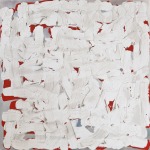
White Light/White Heat: Why Robert Ryman’s Subtle Monochromes Dazzle Anew at Dia

Is Robert Ryman, the master of the white-on-white painting for the past half-century or so, a covert “Light and Space” artist? The Dia Art Foundation’s new exhibition in Chelsea, “Robert Ryman: Real Light, 1958-2007,” certainly encourages us to see him this way—as another example of the California-centric, Minimalism-influenced movement that includes James Turrell, Robert Irwin, and Doug Wheeler and that seems to have attained a broader cultural currency in recent years (to the point where there’s now a Turrell homage in aDrake video).

Per the artist’s preference, Dia’s Ryman exhibition—his first in a New York museum since a 1993 MoMA retrospective—is illuminated entirely by daylight. Seeing his nuanced variations on the monochrome under these highly changeable conditions, below skylights veiled in billowing white fabric and dangling light bulbs that remain unlit, gives rise to all sorts of perceptual guessing-games.

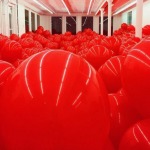
Crowds are Going Crazy Over Martin Creed’s Balloon Installation

British artist Martin Creed’s short-lived but much loved installation titled Work No. 2592 at Gavin Brown’s Enterprise on New York’s Lower East Side is open until Saturday, and people cannot seem to get enough of the bright-red balloons that half-fill the space at 291 Grand Street.

The playful installation by the 2001 Turner Prize winner has been delighting adults and kids alike and has spawned myriad Instagram posts and videos, depicting the red balloon-packed room from every conceivable angle. “Instead of being airy they are claustrophobic and yet quite fun,” Adrian Hamilton wrote at the Independent, when Creed’s Work No. 200 debuted at the Hayward Gallery last year.

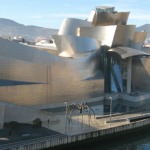
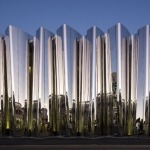
The 10 Best Cultural Buildings of 2015

Museums and galleries bring out the best in ambitious architects. Here are 10 of the best cultural buildings of the year, from Renzo Piano’s Whitney in New York to Pattersons’ Len Lye Centre in New Plymouth, New Zealand.

Joseph Kosuth’s Art of Bright Ideas

For artist Joseph Kosuth, neon isn’t a means for glitzy spectacle; for him, it is a serious instrument for conveying deep philosophical ideas. He can’t help it, however, if spectacular sights arise from a long career’s worth of rigorous thinking.

All reflect the probing and playful work of Mr. Kosuth, who helped pioneer the movement known as conceptual art beginning in the mid-1960s. Some of his early touchstone works are on view in the big retrospective, which closes after Saturday, while others can be seen in a smaller show uptown at Castelli Gallery, running until Feb. 19. Those works charted a course that led Mr. Kosuth to the conclusion that, in art, ideas are more important than objects.

“If you begin with the presumption that artists work with meaning, not with forms and colors, you get a whole other approach for seeing art,” said Mr. Kosuth, 70 years old. “The idea was to get rid of the aura around the work of art. It’s a burden, and we don’t need it.”