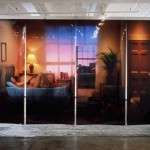
Both Sides Now: Michael Snow in Philadelphia

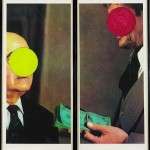
Michael Snow is an unusual case of an artist best known for his least conventionally accessible works. Snow’s legacy will always be defined by in his groundbreaking structuralist films, especially the 1967 masterpiece Wavelength, even as opportunities to experience those works as they were meant to be seen become increasingly rare. (Snow has wryly addressed this phenomenon with the digital re-cut WVLNT (Wavelength For Those Who Don’t Have the Time) in 2003). However, the 84-year-old artist has a wide-ranging practice that includes painting, sculpture, photography, installation, and experimental music.

Snow has been tirelessly active in the art world for more than half a century, and yet much of his work remains little-known and under-appreciated—in part because he’s never slowed down enough for his various bodies of work to be fully assessed. This makes his oeuvre particularly ripe for “rediscovery” via retrospectives in major institutions justifiably eager to celebrate Snow’s diverse achievements for a wider public. In 2012, the Art Gallery of Ontario showcased Snow’s sculptures with its lauded exhibition “Objects of Vision.” Now, the Philadelphia Museum of Art’s “Photo-Centric” shines the spotlight on a selection of his photographic work from 1962 to 2003.

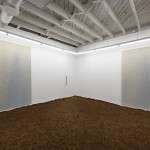
Ai Weiwei, Darling Dissident, Presents Largest Ever Show in Berlin

The Berlin show is vast, Ai’s largest ever, spanning 32,300 square feet in the Martin-Gropius-Bau. Most of the works are new, tracing the time since his relationship with the government went sour ahead of the 2008 Olympics. They also tend to take a more personal tone, playing up (for better or worse) the celebrity status that he has garnered, particularly since his arrest, and which has since clouded much of the judgments of his oeuvre. Some older, rarely-seen pieces like One Man Shoe (1987) from his very first show at New York’s Ethan Cohen also crop up. More or less, though, 2008 is a central jumping off point.

Saltz on Stefan Simchowitz, the Greatest Art-Flipper of Them All

The past year has seen collectors and auction houses creating their own art market. They’re essentially bypassing dealers, galleries, and critics, identifying artists on their own, buying works by those artists cheaply in great numbers, then flipping them at vastly higher prices to a network of other like-minded speculator-collectors. Thus, we’ve seen the rise of artists in their early 20s, male painters mainly, about whom the sole topic of conversation and interest is profit margins.

This annoying trend has been discussed in fits and starts — until this weekend, when the Artspace online magazine published Andrew Goldstein’s very long interview with the self-described “great collector” Stefan Simchowitz. (I’m one of his targets, though I don’t really care about that.) In 5,000 words, he manages to embody everything that’s gross about this new breed. Call it the New Cynicism.

Like many other middling collectors, Simchowitz is simply attracted to art that looks like other art. In this case, it’s easy-to-digest academic abstraction.  What he does have is a knack for hype.

Robert Mapplethorpe: Paris welcomes an erotic great – thanks to Patti Smith

This photographer once dismissed as a shallow sensation-seeker of the 80s is getting the recognition he deserves with a show at the Grand Palais, Paris’s high temple of art – and it’s all down to Smith.

The Grand Palais in Paris is one of Europe’s most serious exhibition spaces. It is where France honours its great artists. This week, it opened a big exhibition dedicated to a US artist who has often been dismissed as a shallow sensation-seeker of the 1980s. Why is Robert Mapplethorpe, who died in 1989, getting this high-level retrospective now? Does he deserve it?

This dark angel of beauty more than deserves his exhibition in Paris.

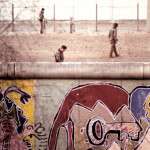
Thierry Noir: the first graffiti artist fired up by the Berlin Wall

Monstrous as the Wall was, it offered artists like Noir – and musicians like Bowie – a dark subject matter that is lacking in safe consumerist societies.

Has culture ever recovered from the fall of the Berlin Wall? Seriously. The division of Berlin and state surveillance endured by people trapped in the eastern half of the city was the most visible and symbolic anguish of the cold war. The end of the Wall in 1989 was a sunny day for humanity. But in its monstrous strangeness, this scar running through a city had provided artists, novelists, musicians and film-makers with adark subject matter and surreal inspiration so often lacking in the safe, consumerist world of the postwar democracies.

Phyllida Barlow: Dock, Tate Britain

A joyous celebration of ad hoc creativity fills the Duveen Galleries.

The revamping of Tate Britain has produced such an atmosphere of understated elegance that one hardly dares breathe for fear of displacing a particle of dust. An air of suffocating sterility has seeped into the displays, which are so tastefully arranged that even the most passionate works are drained of emotion; and without a ripple of feeling ruffling the exquisite calm of these genteel waters, British art appears unrelentingly polite – and provincial.

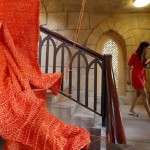
Thank heavens for Phyllida Barlow who manages, single-handedly, to energise the space by filling the Duveen galleries with an installation that is riotously impolite, determinedly crude and magnificently potent. Dock refers as much to industrial architecture, piers, bridges and shipping containers as to the history of sculpture. Yet with slick fabrication techniques and hi-tech gizmos noticeably absent, it is highly traditional – in the best possible sense.

The Sacred Cows of the Art World (Or, Why Everyone’s So Nervous About Stefan Simchowitz)

The herd is spooked. That’s one interpretation of why there has been so much outrage over the the borderline heretical views that the collector Stefan Simchowitz espoused in Artspace‘s recent interview with him—what he said has evidently struck a chord that resonates jarringly with collectors, dealers, artists, curators… everyone, really. A collector who has amassed a hoard of recent art, much of it (Oscar MurilloParker Ito, etc.) stratospherically in demand by the market, Simchowitz is unabashed in his almost evangelical enthusiasm for flipping art (for profit and to buy more), outright disdain for the traditional gallery system, and libertarian-scented strategies for advancing what he sees as artists’ best interests. From the conversation that has blossomed online, it seems many people don’t know what to think, falling somewhere between Simchowitz’s extremism and thesurging response led by Jerry Saltz that frames the collector as a radioactive threat to art. But is he such a threat, top to bottom, through and through?

Ai Weiwei sends 6000 stools to Berlin

We always knew Ai Weiwei was a fan of Marcel Duchamp. The Chinese artist’s massive bicycle sculptures made reference to both a mode of transport commonly associated with Chinese peasantry, and also Duchamp’s first readymade,Bicycle Wheel (1913), consisting of the front forks and wheel of a bike fitted into a wooden stool.

Now the Chinese artist has drawn on the stool part of that French surrealist’s pioneer work for his latest exhibition, the largest ever devoted to Ai, which opens in Berlin this Thursday. The show, entitledEvidence, is at Berlin’s Martin-Gropius-Bau exhibition hall, and consists of either entirely new works, or pieces never seen in Germany before. The exhibition is huge, taking up 3,000 square metres in total and running across 18 rooms. The most spectacular work, installed in the main atrium, is Stools (2014).

Martin Creed: First Major Survey A Multi Sensory Fun Fair

Unknown, alien objects disorientate you from your very first steps: once you’ve navigated past the dog-eared sofa that curiously blocks the entrance, Work No.1092 (2011) hurtles worryingly close above your head (or for taller visitors, could well threaten decapitation). It’s exciting, but witty too – the 12-metre long neon sign , spelling ‘Mothers’, dwarfs you and ruffles your hair. What a way to show the significance of the maternal presence in life.

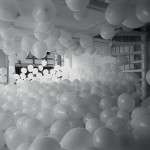
Much found here is playful, and thought-provoking, while at times like the whimsy of Grayson Perry and Jeremy Deller. You’ll find his famous Work 1813 The lights Going on and off, paintings that he has does blind, tongue-in-cheek neon slogans, while Work No. 200 ‘Half the air in a given space’ (2004) sees half of the air in a room is contained by balloons. The title is high-concept – something that comes with the YBA territory – but the experience is a riotous and chaotic dose of entertainment.

Why Art Doesn’t Pay

Over Facebook, I asked an informal question about who pays artists. I wasn’t surprised by the results. Many artists, including those still in school, tend to pay other artists, actors, and writers who’ve assisted with the production of a work. Even those with limited means tend to exchange work, materials, or other barterable goods. Contrast this with the fact that when a non-profit or museum pays artists and their assistants, it seems like a rare, almost noble deed.

There are expectations in the arts, as with any other industry, to value the time, effort, and labor of others. It’s just harder to figure out how to go after fair payment by arts institutions when the promise—of even a meager stipend—remains an uncommon practice.

7 Artists Who Were Arrested for Their Art

Chris Burden
In 1972, visitors attending Burden’s show at Mizuno Gallery in Los Angeles were treated to what appeared to be a crime scene, with a covered cadaver lying on La Cienega Boulevard, surrounded by police flares. In fact, it was the artist himself “making a piece of sculpture,” as he later put it. He was arrested for sparking a false emergency, and after three days of deliberation the jury failed to reach a decision and the judge dismissed the case. In the end, the ordeal granted Burden a degree of infamy that ultimately helped his career.

Women of the Art World Unite! Finding Inspiring Heroines From Paris to Art Dubai

March 8 was International Women’s Day, and though few people remember this occasion in America, in Russia we celebrate it as a major national holiday. Every March since my Soviet childhood I was reminded to appreciate all the intelligent and hard-working women who have played a pivotal role in my life and generally made our world a better place. This month my travels took me West to East—from New York to London to Paris to Dubai to Baku to Moscow—and everywhere I went I kept bumping into the wonder women of today, who are curating, creating insightful and powerful artworks, and building art fairs, galleries, museums, and nonprofits.

Cultural Entrepreneur Stefan Simchowitz on the Merits of Flipping, and Being a “Great Collector”

If you bring up the name Stefan Simchowitz in the company of art dealers, collectors, advisors, or other professionals, you are bound to get a vigorous reaction. A producer of Hollywood movies like “Requiem for a Dream” and a co-founder of MediaVast, the photo-licensing site that was sold to Getty Images in 2007 for $200 million, Simchowitz is one of the world’s most successful—and controversial—collectors of work by emerging artists. He also works as an art advisor to a coterie of enormously rich young mavericks from the tech sector and entertainment business, both flush fields that have been traditionally difficult for the art market to penetrate. How has he accomplished this? By positioning himself, convincingly, as a disruptor almost entirely at odds with the art establishment.

Howard Hodgkin: ‘Once I stop painting, they should start measuring my coffin’

He may be in his 80s and in need of a wheelchair to get about, but Howard Hodgkin still paints with staggering power. Jonathan Jones meets a ‘living master’.

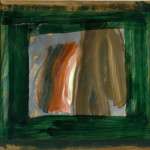
Howard Hodgkin sits in a wheelchair in his studio. Light falls through the glass roof on to big boards propped against white-washed brick walls. One by one, his studio assistant starts moving them to reveal a glistening array of new paintings. It seems banal to call them beautiful – but that’s what they are.

“When I was young,” says Hodgkin reassuringly, “I used to mind people describing my pictures as beautiful. I don’t any more.” Why did he mind? “I used to think that it meant the subject was neither here nor there.”

Hodgkin paints what most people would call abstract art. Yet he insists that every slither of luscious colour refers to a particular place and time. His serpentine brushwork is not decorative. Each painting has a “subject”, as he puts it.


Holding the Gaze: The Sexual Power of Jordan Wolfson’s Animatronic Doll

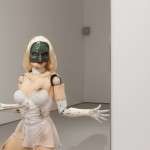
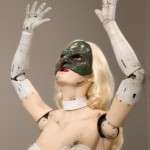
“I don’t want to tell you this work is about women,” said artist Jordan Wolfson over the phone, “because I don’t think that’s true.” Wolfson, a 33-year-old artist who works in video, performance, and sculpture, was on a lunch break at a special effects studio in Los Angeles where he was developing his latest work, an animatronic sculptural woman that will be on display at David Zwirner gallery, engaging with visitors one-on-one beginning March 6. Despite his statement, the doll is the result of an attempt, “in a way,” to explore the gaze, a concept with psychoanalytical roots that is most associated with the feminist notion of gender power imbalance that occurs in film, renaissance painting, and other media when viewers are asked to identify with the male perspective, and hence the objectification of women. What happens when the gaze is held by the sexual object?

Is Jordan Wolfson’s Art Meaningless?

“Do you think I’m rich?” asks a male voice.
“Yes,” says a female voice.
“Do you think I’m a homosexual?”
“No.”

That exchange is the sole dialogue in Jordan Wolfson’s 14-minute video “Raspberry Poser”, currently projected on massive wall at David Zwirner, and the only clue Wolfson offers to his intentions. That is, if it’s a clue at all. In a recent Art in America interview, Wolfson told readers that his nihilistic montage of suicidal cartoons, viruses and upscale urban settings is about nothing. “I don’t mean for there to be meaning in the work, to me that’s just value,” he said. “This work is not about adding any value.”

“Peter and Jane” (not their real names) Go to the Gallery …

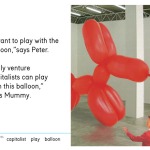
We Go to the Gallery, is a book which is a riff on what’s popularly known in the UK as the Peter and Jane series — early readers that have been published by the Penguin UK imprint Ladybird Books since the 1960s.  The Peter and Jane books show the siblings of the same names, plus their Mummy, Daddy, and dog, living out perfectly average, harmless situations in order to teach kids key words and the process of reading. In this book, an “uncannily brilliant” re-creation of the originals, the family instead goes to an art gallery, where things go hilariously off the rails. In one scenario, Peter smiles awkwardly in front of a photograph of a man smoking a cigarette and wearing a dress. “The man is a woman. The woman is a man. Peter is excited. Peter is confused. Peter doesn’t know what he wants,” says the accompanying text. (New words to learn: man, woman, confused.)

Moscow’s Garage Center for Contemporary Culture will become Garage Museum of Contemporary Art

MOSCOW.- Moscow’s Garage Center for Contemporary Culture today announced that beginning on 1 May, it will become Garage Museum of Contemporary Art. The announcement was made following Garage’s 2nd International Conference—The Reflexive Museum: Responsive Spaces for Publics, Ideas, and Art—which brought together thought leaders from around the globe on 20-21 March for discussions about what it means to build a responsive institution focusing on current debates around notions of ‘the public’, the museum as a repository of experience, and the development of cultural spaces as laboratories for art production and creative thinking.