From Flamethrowers to Acid Attacks, 8 Ways Artists Have Waged War on Canvas

Since the dawn of the avant-garde, artists have striven to challenge the boundaries set by conventional painting—the traditional use of oil, acrylic, tempura, and other mediums designated by the Academy as appropriate for dignified employment on canvas. Modern art, especially, unleashed an onslaught of new and unusual art processes, beginning with the Cubists’ magpie use of collage and texture-rich materials like sand and sawdust. This restless sense of innovation and nonconformity has continued apace since, leading artists to concoct increasingly unusual—and sometimes violent—ways of engaging with their canvases.

Yves Klein, Robert Rauschenberg, Andy Warhol, Lucio Fontana, and more.

Know Your Critics: What Did Meyer Schapiro Do?

Although Meyer Schapiro (1904-1996) was one of the most influential art historians of the 20th century, his legacy is hard to quantify. He was a professor at Columbia University from 1928 until his death; he also lectured at New York University in the early 1930s and thereafter at the New School. For an academic, Schapiro had a uniquely extensive reach through his lectures, partly because of his involvement with the vital New York art scene of the time, which was beginning to challenge Europe on the field of avant-garde artistic development.

What follows is a brief look into Schapiro’s profound, if elusive, legacy.


Know Your Critics: What Did Harold Rosenberg Do?

Known for his support of “action painters”—his term for the Abstract Expressionists—Harold Rosenberg (1906-1978) was, along with Clement Greenberg, at the center of mid-century American art criticism. Together, these two critics developed the vocabulary and analytic tools to understand Abstract Expressionism, and to explain its advancements to the rest of the world. There was, however, a catch: they had differing views on why, exactly, this new art was important—and it was in large part their rivalry gave a sense of immediacy to their essays on the new American art. It also pushed them to be exceptionally prolific. Dogged antagonists, they published their essays in combat with one another, and released their anthologies in a syncopation of one-upmanship.

What follows is a rundown of Rosenberg’s theories, as well as how they clash with Greenberg’s.

Masterworks vs. the Masses

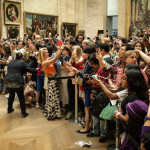
PARIS — One cloudy afternoon this month, the line to enter the Louvre stretched around the entrance pyramid, across one long courtyard and into the next. Inside the museum, a crowd more than a dozen deep faced the Mona Lisa, most taking cellphone pictures and selfies. Near the “Winged Victory of Samothrace,” Jean-Michel Borda, visiting from Madrid, paused amid the crush. “It’s like the Métro early in the morning,” he said.

Seeing masterpieces may be a soul-nourishing cultural rite of passage, but soaring attendance has turned many museums into crowded, sauna-like spaces, forcing institutions to debate how to balance accessibility with art preservation.

How the Düsseldorf School Remade—and Redeemed—German Photography

When reading art history, it’s easy to slip into imagining the artist alone in a dingy garret, awaiting the world to recognize his artistic glory. But the idea of individual genius is somewhat of a romantic conceit. In most cases, artists were also once students, perhaps plodding through school exercises, or emulating a mentor.

Take the exalted alumni of the Kunstakademie in Düsseldorf, Germany. In the last quarter of the 20th century, the university program in the Rhineland nurtured a remarkable number of young talents who would rise to be towering figures—particularly in the field of photography.

Known for its distinctly dispassionate documentary style, this group became known as the Düsseldorf School of Photography, and their vaunted roster includes Andreas GurskyCandida HöferThomas RuffThomas StruthElger EsserJörg Sasse, and Axel Hütte, among others.


How to Pronounce the Most Deceptive Gallery Names

The becalmed days of summer are upon us, with the art world gearing up for its annual August disappearing act and the antic joys of summer shows beginning to wane. Sure, you could use this time to simply head to the beach and forget about it all for a while. Or… you could muscle up for September by filling the embarrassingly gaping holes in your artspeak fluency, ensuring that you avoid the contretemps of mispronouncing the names of some of the biz’s most important galleries. To assist in this noble effort, Artspace has compiled a handy guide—the latest in our series—to mellifluously saying the thornier names properly, so you never find yourself tongue-tied at the art-fair booth.

Know Your Critics: What Did Clement Greenberg Do?

Possibly the most renowned art critic in American history, Clement Greenberg (1904-1994) held sway for years in the postwar period over not only the popular perception of contemporary art being made in this country but also how the artists themselves thought about it and brought it into being in their studios. While his reign eventually came to an end, with opinion turning against his dogmatic edicts, his ideas—which he published in the pages of the Partisan Review, the Nation, and Commentary—remain a critical touchstone for anyone trying to grasp the Abstract Expressionists, the Washington Color School painters, and others who were engaged in formalist, “non-objective” art, as abstraction was called back then. What follows is a précis on Greenberg’s key accomplishments. 

Kazimir Malevich: prisoner, revolutionary, suspected spy … artist

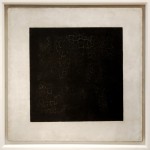
At the heart of Kazimir Malevich’s art is a statement so final that everything else orbits it. Emphatic, plain and declarative, his Black Square has a modest, expressionless presence. It seems like a last word. But what was it? An abstract icon? A tombstone for pictorial art? The portrait of an idea? Or a thing in itself? Perhaps not even Malevich knew.

What do you say when you have said the last word? One solution is to keep on saying it. Existing in several versions – the first was painted in 1914 or 15, the last in 1929 – Malevich’s Black Square is both beginning and end. There’s depth in the black. It seems to be as much volume as surface. It is simple, it is complicated, and Malevich said that it had been painted in a sort of “ecstatic fury”, though each version seems calm and emphatic. The painting looks back at you, blankly, saying nothing, giving nothing away.


Or almost nothing.

New Museum Curator Natalie Bell on How to Understand Contemporary Arab Art

Over the past decade, the Middle East’s participation in the international art world has increased dramatically. Across the Gulf states, world-class museums have been built at a galloping clip, art fairs have blossomed, and Qatar has emerged as quite possibly the largest buyer of contemporary art on the planet. Middle Eastern artists have become stars on the biennial circuit, won major awards (e.g. Emily Jacir‘s 2008 Hugo Boss Prize), received solo shows at eminent museums, and landed blue-chip gallery representation. However, there’s no escaping the fact that art from the region—particularly outside ofIsrael—has never received the same degree of curatorial or market attention in America as other emergent global powers. No New York museum, for instance, has staged a significant survey of Arab contemporary art. Until now.

On Kawara, Artist Who Found Elegance in Every Day, Dies at 81

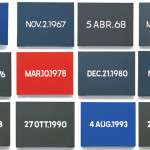
On Kawara, a Conceptual artist who devoted his career to recording the passage of time as factually and self-effacingly as art would allow, died in late June in New York City, where he had worked for 50 years. He was 81.

Working in painting, drawing and performance, Mr. Kawara kept himself in the background and almost never gave interviews. The rare published photographs of him showed him from the back. Toward the end of his life, he stopped attending his own openings.

He belonged to a broadly international generation of Conceptual artists that began to emerge in the mid-1960s, stripping art of personal emotion, reducing it to nearly pure information or idea and greatly playing down the art object. Along with Lawrence Weiner, Joseph Kosuth, Hanne Darboven and others, Mr. Kawara gave special prominence to language.

Keeping the viewer focused on time’s incremental, day-by-day omnipresence was one reason for Mr. Kawara’s deliberately low profile and his habit of listing his age in exhibition catalogs in terms of the number of days he had been alive as of the show’s opening date. In the catalog to a show at the David Zwirner Gallery, an otherwise blank page titled “Biography of On Kawara” put the count at 26,192 days on Sept. 9, 2004. Last week the gallery calculated he had reached 29,771.


Why the World’s Most Talked-About New Art Dealer Is Instagram

Standing before Marc Quinn’s looming Myth Venus sculpture in front of Christie’s Rockefeller headquarters last night was a masked protester holding a large poster that readF*** U. It was a parody of Wade Guytons 2005 Untitled that sold for $3.52 million just hours later at the live-streamed “If I Live I’ll See You Tuesday” auction, which included 35 contemporary artworks from blue-chip names such as Richard Prince, Jeff Koons, Martin Kippenberger and Alex Israel, all handpicked by contemporary art expert Loic Gouzer, with the majority of the production on his—and Christie’s—Instagram accounts.

Guyton, who makes his art on inkjet printers and photocopiers, had used his own Instagram account over the weekend in what was quickly interpreted as a subtle threat, rather than just a cheeky response, to the auction by printing and photographing dozens of prints using the same file that produced his original inkjet on linen Untitled. He could flood the market, if he wanted to. But he didn’t and the auction, which “witnessed worldwide participation” according to Christie’s and surpassed its pre-sale target of $92.9 million to total a record-breaking $134.6 million, saw Israel’s Sky Backdrop sell for five times its estimate at $1.25 million in what was the artist’s first appearance at auction. Meanwhile Kippenberger’s Untitled sold for the world record price of $18.6 million. “Christie’s is taking contemporary art and making it go to prices that it shouldn’t,” the anonymous protester told the New York Observer. “By the time they’re 30, these artists aren’t going to have anywhere to go.” But if Gouzer’s auction has taught us anything, it is that what artists will have is Instagram.

Inside artist Louise Bourgeois’ New York home

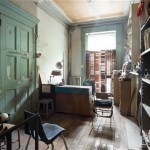
Untouched since the day she died, Louise Bourgeois’ New York home-cum-studio offers an intimate portrait of the artist.

At 13ft wide, the townhouse in New York that was both home and studio to Louise Bourgeois is almost as tiny as the artist herself. It was here, on the site of an old apple orchard, half a mile from the shore of the Hudson river and Chelsea’s elevated railway, that Bourgeois moved back in 1962 when she was 51 years old. It was here too that she died almost half a century later at the age of 98.

The transition from domestic to work-space was engineered with maximum efficiency. When her husband died in 1973, she got rid of the dining table, then the stove, and turned their bedroom into a library for her self-help and psychology books.


Why Germany would win the World Cup of modern art too

Beuys, Richter, Kiefer, Polke, Ernst … such a formidable lineup shows up British contemporary artists for the commercial, over-hyped and celebrity focused lightweights that they are.
Germany has proved its global footballing eminence by winning the 2014 World Cup, yet soccer is just one of many things Germans excel at. There’s also art.

What is the most exciting show coming up in Britain this autumn? No question – it is the German artist Anselm Kiefer’s exhibition at the Royal Academy. Kiefer is one of the most imaginative, original and serious artists alive. History hangs like snow-laden fir branches in the haunted forest of his art. He is a magic realist whose way of seeing makes most of our feted British artists look silly.

In fact, England (or even the whole of Britain) would have little chance against Germany in an artistic World Cup. Against a team of modern German artists that could boast the likes of Kiefer, Gerhard Richter,Joseph Beuys Sigmar PolkeMax Ernst, Kurt Schwitters and Otto Dix, who could we put up? Overpaid stars like Damien Hirst and Marc Quinn, plus a few old-timers such as Stanley Spencer (whose name actually sounds like a 1930s football player) and Henry Moore (surely a Leeds goalkeeper in the days of long shorts).


A Warhol With Your Moose Head? Sotheby’s Teams With EBay

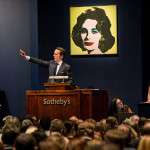
Convinced that consumers are finally ready to shop online for Picassos and choice Persian rugs in addition to car parts and Pez dispensers, Sotheby’s, the blue-chip auction house, and eBay, the Internet shopping giant, plan to announce Monday that they have formed a partnership to stream Sotheby’s sales worldwide.

Starting this fall, most of Sotheby’s New York auctions will be broadcast live on a new section of eBay’s website. Eventually the auction house expects to extend the partnership, adding online-only sales and streamed auctions taking place anywhere from Hong Kong to Paris to London. The pairing would upend the rarefied world of art and antiques, giving eBay’s 145 million customers instant bidding access to a vast array of what Sotheby’s sells, from fine wines to watercolors by Cézanne.


Damien Hirst Blocks Sale of Early Spot Painting

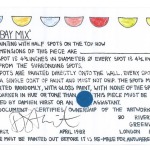
An early Damien Hirst painting titled Bombay Mix has become the source of controversy London, reports the BBC. The artist is blocking the sale of the piece, claiming that his company, Science Ltd, still holds the certificate for the spot painting, which was painted directly on the wallpaper of a London house in 1988, and is therefore the piece’s owner.

Originally a birthday gift for the owner of the house, Jamie Ritblat, from his parents, the painting stayed behind when the home was later sold. In a statement, Science Ltd claimed that Riblat gave back the certificate authenticating the work “a number of years ago.”

Meanwhile, Jess Simpson, who has owned the home with her husband Roger since 2005, has removed Bombay Mix, mounted it on an aluminum backing board, and framed it in the hopes of selling it. In doing so, she has run into firm opposition from the artist and his team.

“We’re not really into Damien Hirst so we didn’t really think it’s a fantastic piece of art that we can keep; we thought ‘what are we going to do with it?’” she told the Telegraph.


Scanner Room – the Video

“Scanner Room” – an installation designed specifically for the gallery space that engulfs this space completely, creating an environment constructed by light and filled with it. The form is minimalist, its most important element is a constant, monochrome flow of light that materializes and diffuses itself subsequently. The space has been created for people to be inside it; and in this case the visible is only the beginning of an individual experience that may be colored with different emotions and states of consciousness.

Usually, scanning is used to represent images or to read encoded, written messages. Therefore, overexposure to light may be treated as a kind of a potential introspection, a state of concentration, a meeting and exchange with one’s own self. Its intensity develops with time and may get you close to meditation, but it can also take the form of a momentary flash of light, a transient feeling or image. The Artist often tries to reduce the initial idea of her artwork, searching for its optimum form based on clarity, simplification and focus. Similarly to her previous works: Cave, Iridescent and Enter me, she designs a space of experience constructed at the intersection between visual, architectural and sculptural actions.

Watch the vimeo Video and


The Overwhelming Whiteness of Black Art

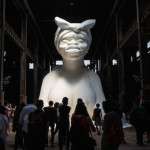
If you go to Kara Walker’s new exhibit, “A Subtlety,” at the Domino Sugar Factory in Brooklyn, a lot will overwhelm you. You’ll likely wait outside in a line that snakes down Kent Street, across from rowhouses that were once owned by Puerto Rican families and now fetch millions. You’ll sign a waiver absolving the show’s curators of legal responsibility for the asbestos and lead that you’ll inhale while you’re in the dilapidated 158-year old factory. And, once inside, you’ll see at least a dozen “sugar babies” made of molasses and resin—molds of black children literally melting before your eyes. You’ll smell the molasses as you walk through the exhibit anchored by a 35-foot tall sphinx made of what the artist has called “blood sugar” and sculpted into the shape of a naked mammy. You’ll also see white people. Lots of white people.

This is not a bad thing. In fact, it’s reassuring that so many white people have a vested — or at least passing — interest in consuming art that deals with race. At the same time I found it unsettling to view art by a black artist about racism in an audience that’s mostly white. It reinforced the idea that black people’s histories are best viewed but not physically experienced.