
The Generalist: An Afternoon with Roberta Smith

According to the New York Times’ chief art critic Roberta Smith, she only gives one talk and she’s been giving it for the last 30 years. “I give it a new title every so often,” she quipped last week .

Smith’s glibness may appear off-putting, but in person it was anything but. I interviewed her a few hours before her lecture and she began, warmly and playfully, by issuing the same proviso, adding, “so I don’t know what you could ask me that I won’t be talking about later.” There was, it turned out, lots to discuss, with little overlap. Both experiences were riveting and convivial.
New York’s 11 Most Beautiful Public Art Shows for Spring

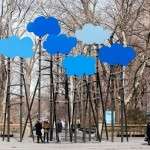
In spite of countless false starts and snowy regressions, it is technically spring in New York now (really!), and it is therefore open season for public art. The city’s parks are quickly filling with public art as outdoor exhibitions open in Manhattan, Brooklyn, and Queens. From a reclining giant in Queens and a deconstructed duplicate of the Statue of Liberty strewn between Brooklyn and Manhattan, to sculptures commemorating outmoded technologies on the High Line and in Madison Square Park, there’s something for everyone in every area of the city this spring.

On Art and Investment, Ben’s view

Money continues to pour into art, and with it, stories multiply about art’s manipulation by callow titans of finance. Speaking of the recent decade, one pundit said not so long ago: “The conversation has turned from ‘Is art an asset class?’ to ‘Art is an asset class,’ and then to ‘How do we take advantage of art as an asset class?'” Art funds, for example, promise to allow the non-expert to benefit from the soaring market without having to actually know anything about the subject, while tax-exempt “freeports” swell with works purchased but never displayed.

The specter of “art as investment” provokes the excitement that comes from being able to pick out a clear villain: what could be a better example of the evils of capitalism for art than the businessmen subordinating aesthetic virtue to the icy logic of profit? In a recent essay, sharp-eyed artist and art theorist Melanie Gilligan emphasizes that the age-old commodification of art has taken “a new turn” because works have become terminally “financialized.” She encourages us to see the “connections between capital’s looting of the forces of production and art.”

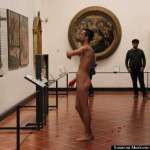
Naked Man Strikes Goddess Pose In Front Of Botticelli Painting

Museum-goers were treated to a shocking display at Florence’s Uffizi Gallery on Saturday when a visitor stripped naked before Sandro Botticelli’s “Birth of Venus.”

As the naked man faced the Botticelli painting, he struck the same pose as the goddess depicted in the 15th-century work. He then scattered rose petals around himand took a knee in front of the famous artwork, according to local reports.

Why Gagosian is the Starbucks of the art world – and the saviour

Art dealer Larry Gagosian pushes the best work – Richard Serra, Cy Twombly, Richard Wright, Urs Fischer – and fills the gap in our public galleries with real taste and belief.Is the Gagosian empire like the Starbucks of contemporary art? A megalomaniac attempt to corner the art market?

It may seem so, but this chain store of aesthetic delights is one of the best things happening to art right now. Gagosian is a force for good. This wealthy and powerful commercial enterprise acts as a genuine patron of the best in 21st-century art. Gagosian has standards, and they are impressively high. If you want to see the most serious art of today, it’s a good bet you will find it in your local Gagosian.

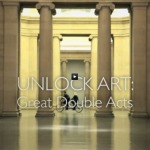
Double trouble: Art’s most controversial duos – video

One great rock duo – the Kills’ Alison Mosshart and Jamie Hince – explore the greatest duos in art.  Featuring double-acts such as Gilbert and George, Jake and Dinos Chapman, Marina Abramovic and Ulay, and Lucian Freud and Leigh Bowery, they examine this most intense bond as part of the Tate Unlock Art series.

Watch the Video.

The Art of Curation – Hans Ulrich Obrist

Behind every great artist is a great curator. But what do they actually do? Serpentine superstar Hans Ulrich Obrist reveals the delights and dangers of his craft – while Yoko Ono, David Shrigley and more pick their all-time favourite show.

Diaghilev and Cocteau tried to explain what they did with the words: “Etonnez moi!” Astonish me. I’ve never had an art practice, and I’ve never thought of the curator as a creative rival to the artist. When I became a curator, I wanted to be helpful to artists. I think of my work as that of a catalyst – and sparring partner.

Joseph Beuys talked about expanding the notion of art. I’m trying to expand the notion of curating. Exhibitions need not only take place in galleries, need not only involve displaying objects. Art can appear where we expect it least.

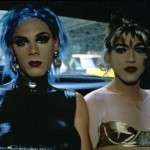
Nan Goldin: ‘I wanted to get high from a really early age’

Photographer Nan Goldin burst on to the art scene in 1986 with The Ballad of Sexual Dependency, hugely influential images that chronicled the druggy New York demi-monde she and her friends inhabited. Now 60, her latest work is all about children. So has the queen of hardcore photography finally mellowed?

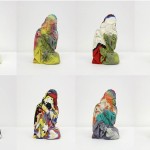
Mike Kelley’s riveting adolescent stage

By 1991, Mike Kelley had emerged as a crucial artist in Los Angeles, at the head of a pack that had pushed into prominence in the previous decade.

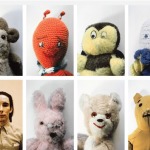
His riveting sculptures reassembled from ratty stuffed animals, crocheted dolls and other tattered children’s playthings that he scavenged from thrift shops were also generating considerable critical attention far beyond the city.

Then 36, Kelley was invited to participate in the Carnegie International exhibition in Pittsburgh, one of the oldest and most respected surveys of its kind. Carnegie guest curators Lynne Cooke and Mark Francis were born in Australia and Britain, respectively — one sign of an international resonance at the core of Kelley’s art.

At the end of the month the narrative comes full circle, when the full career retrospective organized by Amsterdam’s Stedelijk Museum — and already seen there, in Paris and in New York — arrives at the Museum of Contemporary Art.


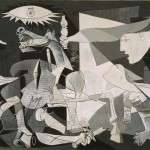
The 10 greatest works of art ever

From mysterious 30,000-year-old cave paintings to a ‘cathedral of the mind’ by Jackson Pollock, art critic Jonathan Jonesnames his favourite artworks of all time – and where in the world you can see them. What would make your top 10?

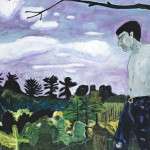
Peter Doig: Early Works review – ‘A show all would-be artists should visit’

In laying bare his first pieces, the British painter reveals how he bubbled over with excitement in his student days – and teaches a valuable lesson in how artists can find their signature style.

It takes a special kind of courage for a famous artist to drag 40-year-old apprentice pieces out of the attic and make an exhibition of them. Yet that is exactly what the celebrated painter Peter Doig has done for his new show Early Works.

Battle Lines for Change

‘Witness: Art and Civil Rights in the Sixties,’ at the Brooklyn Museum.

A change is gonna come,” the soul singer Sam Cooke promised in his 1964 hit song. And so it did. Officially, it arrived fast, with the signing into law of the Civil Rights Act that year. In reality, its progress was killingly slow, and by then already a decade old.

Today, half a century on, Cooke’s promise is far from being a done deal. But if you happen to have heard the song when it was new, you can still feel the bittersweet ache of faith it evoked in a harsh but acutely utopian time.  The same ache runs, from beginning to end, through “Witness: Art and Civil Rights in the Sixties” at the Brooklyn Museum, a vivid record of that time as seen through some of its art.

Speculating on Trophy Art

LONDON — Works by contemporary artists born after 1945 generated $17.2 billion in worldwide auction sales last year, a 39 percent increase from 2012, according to figures just released by the French database Artprice. Last November, a triptych by Francis Bacon sold for $142.4 million, a record for any work of art at a public sale. And a handy new website,www.sellyoulater.com, now advises speculators on which hot young artists to buy, sell or “liquidate.”

Inevitably there’s talk of a bubble. Art is a notoriously volatile investment that has suffered spectacular collapses, as seen in the great Impressionist boom and bust of 1990-91, and in 2008-9, when contemporary works by Jeff Koons, Damien Hirst and other fashionable names halved in value after the fall of Lehman Brothers.

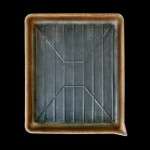
Darkroom Developer Trays as Portraits of the Artists

Disposable and deteriorated, the developer trays used by photographers are usually discarded. Brooklyn-based photographer and printer John Cyr has discovered the beauty in these battered trays, where so many images first appeared.

Connecting Polke’s Dots: MoMA Decodes the Work of a Tricky Postwar Master

The late German artist Sigmar Polke was not the type to make things easy for anyone.

After trying to interview him in Los Angeles in 1995, reporter Kristine McKenna wrote that she felt like Margaret Dumont “trying to get a straight answer out of the Marx Brothers.” That same year, British critic Adrian Searle showed up at Polke’s Cologne studio but returned to the airport without ever finding him. “I think I wept,” he later wrote. (Polke sent a photo of himself doing a Nazi goosestep and scrawled “Sorry” on the back.)

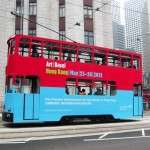
Five Theories on Why Art Basel in Hong Kong Is Moving to March Next Year

In the weeks since Art Basel in Hong Kong announced that its 2015 edition would take place nearly two months earlier than in the past, various lines of speculation about the rationale behind the move have been buzzing. With the vast amount of advanced planning that goes into pulling off a major art fair, the packed schedules of the appropriately enormous convention centers, and an already overcrowded art world calendar, a move of such magnitude cannot be taken lightly.

artnet News spoke with Art Basel in Hong Kong director Magnus Renfrew to test out some hypotheses on why mid-March might be the right fit.

What Is Post-Internet Art? Understanding the Revolutionary New Art Movement

Could it be? Are we already post-Internet?

It’s a bemusing term you may have heard floating around the art world recently, and now a new exhibition called “Art Post-Internet” at Beijing’s Ullens Center for Contemporary Art—organized by critic/curator Karen Archey with writer/gallerist Robin Peckham—has set out to encapsulate the budding movement, which may be the most significant of its kind to emerge in a while. The key to understanding what “post-Internet” means is that, despite how it sounds, it doesn’t suggest that the seismic technological developments associated with the Net are finished and behind us. Far from it.

The Dangers of Data Mining in the Art Market, etc.

The season of art market performance reports is upon us, and keeping up with them all can be an all-consuming—and sometimes baffling—affair. In the last month various entities have declared 2013 to have been both the best year ever and the second best year ever for art sales, while also (erroneously) declaring art to be that year’s worst performing alternative asset class, ranking behind wine, stamps, cars, and other collectibles in profitability. Of course, part of the problem is that each firm defines its markets differently—sometimes looking at just the auction sector, sometimes trying to compare year over year sales figures for individual artists. But casual readers—and journalists in the financial press who know little of the art market, but nonetheless breathlessly tout the numbers—should consider a host of hidden conflicts and biases that render most of these statistics next to meaningless.

Perhaps the most reliable broad-based report comes from the European Fine Art Foundation—organizers of the TEFAF fair that opened this week in Maastricht—which pegged last years art and antiques market at about $66 billion, just shy of the all time record of $67 billion achieved in 2007, right before the crash.

The 10 weirdest artworks ever

From sexy heels trussed and presented on a silver platter to Damien Hirst’s formaldehyde shark, a tour through some of the strangest, most shocking surrealist art around.  Check it out.

Art World Places Its Bet

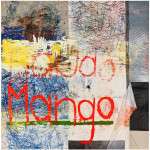
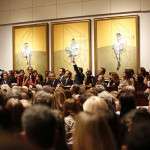
LONDON — Before a standing-room crowd at Christie’s here last month, the bidding opened on an abstract painting filled with black scratching, “Burrito” scrawled across the top in bright yellow. The auctioneer announced that there were already 17 telephone and absentee buyers vying for the canvas, made three years ago by Oscar Murillo, who just turned 28.

While Mr. Murillo is little known outside clubby contemporary art circles, and he has his share of skeptics, his fans have called him “the 21st-century Basquiat.” That night, after fierce competition, “Untitled (burrito)” sold for $322,870, more than six times its high $49,000 estimate. Only two years ago, Mr. Murillo, who was born in Colombia, was waking up at 5 a.m. to clean office buildings to cover his expenses at the Royal College of Art in London. Now, he is represented by David Zwirner, one of the world’s most prestigious galleries, and when a choice canvas comes up at auction or through private sale, it can fetch more than $400,000.