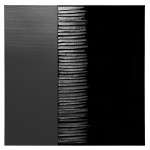
Pierre Soulages, Happy to Stay in the Dark

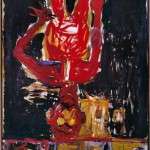
“What do you think about the future?,” Hans Ulrich Obrist asks French painterPierre Soulages in the catalogue for his current double exhibition at Dominique Lévy and Emmanuel Perrotin galleries. “It doesn’t belong to me,” he answers. That’s an astute assessment of the work, even if it is also part of the stubborn charm of his black paintings.

See the 25 Best Booths at Art Basel 2014

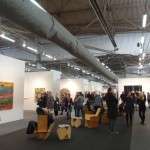
Visiting Art Basel can be a dizzying experience: so much to see, so little time . . .  And with 285 exhibitors from 34 countries, the 2014 edition is a killer. To give you a taste of what’s on offer, the artnet News team on the ground shares its highlights.

Lisson, Pace, Ropac, Marian Goodman, Gagosian, Hauser & Wirth, White Cube, Luisa Strina, Perrotin, and more …


A Collector’s Tips for Art Basel Newbies—and Why Not to Despair if You’re Not Going

What advice would you give to younger collectors who are going for the first time or haven’t been to an art fair before? 

Well, first of all, enjoy it. Really enjoy the art fair experience. It’s unique and it’s different from the gallery exhibition or the museum experience. Also, really take advantage of everything that Basel has to offer, because one thing I’m always surprised by is how many people go to art fairs all around the world and don’t take advantage of the art community in the particular host city. Do studio visits, go to the local galleries. Try and go to as many local collections as you can and see how other people live with their art and see what kind of art they collect. The collections in Basel are unbelievable. They’re world-class selections in a beautiful setting, in someone’s home. Another thing about Basel that is fun is everyone is there.


‘Chelsea’s Not Going Anywhere’: Alex Logsdail Talks Lisson’s Upcoming New York Gallery

There may not be many Americans at Art Basel compared to the droves of Europeans, but this morning, the buzz here briefly centered around New York City when Lisson Galleryannounced plans to open a brand spanking new 8,500-square-foot space in Chelsea, constructed under and around the High Line. Nearly 50 years after Nicholas Logsdail opened Lisson’s outpost in London, they will now have a permanent place across the pond.

The gallery will be run by Mr. Logsdail’s son, Alex, the young dealer who’s helmed Lisson’s Lower East Side office since it opened in 2012. After hearing the news, we dropped by their booth to find the dapper Alex standing with colleagues near a table with champagne, appropriately enough. He was clearly excited about the project.

“We’ll have these really monster skylights—like, really—and it’s the whole block, all the way through,” Mr. Logsdail said.


Now East meets West (at Art Basel)

Why there are more and more works by Asian artists at the fair, many of them on Western galleries’ stands.

The VIPs who came to the opening of Art Basel yesterday found more works by Asian artists than ever before—and many have been strategically placed to capture the interest of collectors. Unlike previous editions of the fair, where works by artists from the Far East were limited to those on view with the emerging Asian galleries on the fair’s first floor and a few specialists on the ground floor, it now seems that nearly every gallery has an Asian work to show. This is despite the fact that there are ten fewer galleries from Asia at the fair (21 in total) compared with last year.

One reason for the increased number of Asian works is that international boundaries are less relevant in today’s expanded art world. “Collectors no longer pigeonhole artists as Chinese or Japanese, Western or not-Western; they can see stylistic relationships,” says Lock Kresler of New York’s Dominique Lévy (2.0/F4).

‘Perfectly unfashionable to be fashionable again’

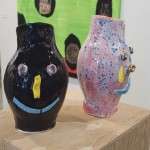
Artists and curators have embraced ceramics, but collectors need a little more convincing.

Are ceramics, long relegated to the realm of craft, finally getting their due? Clay and porcelain works by artists including Josh Smith, Mai-Thu Perret, Rachel Kneebone and Thomas Schütte are in abundance at Art Basel this year, and sales were brisk yesterday on the first of the fair’s two VIP days. The medium “is perfectly unfashionable to be fashionable again”, says Tom Dingle of Thomas Dane gallery (2.1/M15). Handmade and richly textured, works in clay contrast with the oversized, slick paintings and chrome sculptures that predictably clamour for attention on many galleries’ stands.


Daily Pic: Tino Sehgal Has the Best Thing in Basel

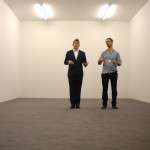
At the giant Art Basel fair that opens tomorrow in Switzerland, the best thing to be seen has nothing to do with the thousands of deluxe art objects being offered on the sales floor. It sits in a building off to one side, where, as part of a performance-art project called “14 Rooms,” the brilliant artist Tino Sehgal is presenting a piece starring the roster of dealers whose job it is to sell his work. Putting them on stage two at a time for something like an hour or more per pair — they spell each other, relay-race style, over a nine-hour shift — Sehgal gets them to talk about the tricky act of selling performance work like his, including of course the actual performance they are a part of in Basel. This new work thus becomes a sort of sales pitch for itself.

Sharing Cultural Jewels via Instagram

On a recent spring morning, some 90 minutes before the Metropolitan Museum of Art opened, Dave Krugman, a 26-year-old photo retoucher from Bushwick, Brooklyn, ushered six friends into its cavernous halls through a side door near East 81st Street.

Unimpeded by crowds, they roamed the world-famous exhibitions. Mr. Krugman photographed his fellow adventurers posing above the main staircase, standing stone-faced in front of an ornately carved Roman sarcophagus and strolling past the pool around the Temple of Dendur.

The rapid rise of social media has created many unusual alliances, but few are more curious than those the bushy-bearded Mr. Krugman has formed with some of the leading cultural institutions in New York. He has earned his V.I.P. access because he is helping them — free of charge — build their profiles on Instagram, an app for sharing photos and videos.


Art Basel Kicks Off With a Big Bang of Serial Sales

BASEL, Switzerland — The 45th edition of Art Basel, Europe’s premier modern and contemporary art fair, opened to an elite group of art world players with a big bang of serial sales, indicating the continuing strength of the global art market.

Sterling Ruby’s large-scale “BC (4805)” fabric, glue, paint, dyed canvas on panel abstraction from 2014 sold at London/Berlin Spruth Magers’s stand minutes after the 11 a.m. stampede, for $245,000.


There appeared to be a genuine hunger for quality, as evidenced by the modestly scaled Gerhard Richter “Abstraktes Bild” from 1997, at New York’s Dominique Levy Gallery, which sold for “north of $6 million,” according to Lock Kresler, who will run Levy’s new operation in London’s Mayfair next year. The Richter appeared in the 1987 Venice Biennale and at the artist’s solo show at the Anthony d’Offay Gallery in London in 1998. “Three or four people were seriously looking at it,” said Kresler, before one of them pulled the trigger.

Zombies on the Walls: Why Does So Much New Abstraction Look the Same?

For the past 150 years, pretty consistently, art movements moved in thrilling but unmysterious ways. They’d build on the inventions of several extraordinary artists or constellations of artists, gain followings, become what we call a movement or a school, influence everything around them, and then become diluted as they were taken up by more and more derivative talents. Soon younger artists would rebel against them, and the movement would fade out. This happened with Impressionism, Postimpressionism, and Fauvism, and again with Abstract Expressionism after the 1950s. In every case, always, the most original work led the way.

Now something’s gone terribly awry with that artistic morphology. An inversion has occurred. In today’s greatly expanded art world and art market, artists making diluted art have the upper hand. A large swath of the art being made today is being driven by the market, and specifically by not very sophisticated speculator-collectors who prey on their wealthy friends and their friends’ wealthy friends, getting them to buy the same look-­alike art.


The great art fair scramble

Moving the opening of the Venice Biennale to May has set the cat among the pigeons.

When it was announced that the Venice Biennale was shifting the date for the opening of its 2015 edition to 9 May (with previews from 6 to 8 May), it sent the whole art market into a frenzy. The new date is a full month earlier than usual, and as the art world is largely articulated, every other year, around Venice, the change means that the Biennale, auctions and a number of fairs across the world will be crammed into the same fortnight in May.

To complicate the situation, Art Basel in Hong Kong (ABHK) then changed its dates from May to March, going head to head with other fairs. There was a scramble to find new dates between these events, while dealers, curators and collectors found themselves facing a travel schedule of Byzantine complexity. 

Art Collectors of Our Time: A Field Guide

In the cultivated wilds of the art world, one complex beast—omnivorous yet finicky, gentle-seeming yet quick to strike—sits at the center of the ecosystem: the collector. Often found at watering holes known as art fairs, where they feed on champagne and aesthetic goods (often shiny ones), these curious specimens of fascination come in many discrete breeds. Here, for those bold enough to venture into these creatures’ habitat, is a field guide to art collectors.

Read on …

How To Get a Coveted VIP Card for Art Basel

Let’s face it, in today’s cutthroat contemporary art market, it’s not enough that you’re a millionaire, or even a billionaire, when it comes to collecting art for your homes. These days it’s all about access.

Whether you are sitting in the auction salesroom fighting for an eight-figure Francis Bacon or jetting off to Switzerland for next week’s premier international art fair, Art Basel, the odds are you’ll still have  to beg, borrow or steal to get your hands on a “First Choice” VIP card. Why bother? Status, baby, status! And of course to rub shoulders with your peers and get to see and buy art before everyone else.


Read on …

8 Tips For Buying Art at an Art Fair

In many ways, the sales power and popularity of art fairs has been reshaping the role of everyday gallery life. It’s not uncommon these days to hear about galleries selling more works at art fairs than at gallery exhibitions. Indeed, a fair’s fast paced nature and the sheer number of works available for sale offer a unique opportunity for a collector, whether a renowned one or a “new kid on the block.”

But attending a fair can be overwhelming for art buyers. Below are eight tips for buying art at an art fair.

Makes a lot of sense to us …


Five notable works at Douglas Coupland’s VAG exhibit

Douglas Coupland opens his new exhibit at the VAG. Douglas Coupland opens his new exhibit at the VAG. The Vancouver Art Gallery presents Douglas Coupland: everywhere is anywhere is anything is everything from May 31 to Sept. 1.


Douglas Coupland: The future is everything (with video)

Douglas Coupland’s new exhibition at the Vancouver Art Gallery crackles with creativity, invention and insight.

Coupland’s work in “everywhere is anywhere is anything is everything” combines an incredible pop art sensibility that delights in combining colour, shape and form with a surprising and subtle mix of ideas.

In the first major survey of his work running until Sept. 1, the Vancouver-based artist takes on Canadian identity, art history, popular culture, the tensions between utopia and dystopia, time, the impact of 9/11, our society’s dependence on oil and the memories in his own brain, to name just a few of the themes
.

Inside Douglas Coupland: art, chaos, lots of Lego at Vancouver Art Gallery

Douglas Coupland has been collecting the stuff for years: toy guns, adding machines, little astronaut figures, tiny cribs and toilets, a giant molar, a punching bag. They came from Craigslist, dumpsters, garage sales, eBay. Now gathered in an enormous installation – white items on white shelves; colourful trinkets on black shelves; a precarious Tower of Babel constructed with children’s blocks; odes to Japan, Germany, Coupland’s childhood piano teacher and what he calls “hillbilly culture” – they have become a depiction of Coupland’s brain: a fascinating, cluttered mess that is both tempered and augmented by distraction.

“[The show] really is, in kind of like a John Malkovich way, being inside my own head,” Coupland told The Globe and Mail, as he sat perched next to an installation of three enormous Tide, Downy and Pennzoil bottles.

Hallelujah! Why Bill Viola’s Martyrs altarpiece at St Paul’s is to die for

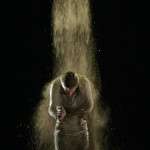
Forget the bloody martyrdoms and hot pincers … Viola’s glorious new video installation is a hi-tech Caravaggio that redefines religious art.

Bill Viola has created a powerful modern altarpiece for St Paul’s Cathedral that perfectly suits the restrained spirituality of this most English of churches.

Coming into Christopher Wren’s great building on a weekday morning when crowded buses surround this London icon, you notice how ascetic its atmosphere is. Greek mosaics and the perfect geometry of a dome that suggests the clockwork universe of Wren’s contemporary Isaac Newton make St Paul’s a place of cool, even philosophical, prayer.

Watch the video!


New exhibition by Ai Weiwei opens in the Yorkshire Sculpture Park’s newly refurbished 18th century chapel

WAKEFIELD.- Yorkshire Sculpture Park announces an exhibition by Ai Weiwei, opening in the Park’s newly refurbished 18th century chapel following a £500,000 restoration. The project, the first by Ai Weiwei in a British public gallery since Sunflower Seeds at Tate Modern in 2010, is accompanied by poetry readings from the works of celebrated poet Ai Qing, Ai Weiwei’s father. Ai Weiwei in the Chapel opened to the public on Saturday 24 May 2014. Iron Tree, 2013, a majestic six-metre high sculpture is presented in the chapel courtyard, while the installation Fairytale-1001 Chairs, 2007-14, is presented inside the chapel with three other works: the porcelain Ruyi, 2012; marble sculpture, Lantern, 2014; and Map of China, 2009. The sculptures shown within the chapel relate to ideas about freedom and to the individual within society, whilst also connecting with the history and character of the building.