10 Gallery Shows You Need to Pay Attention to This Fall

There have been persistent murmurs in the art world about the imminent (market) demise of the so-called Zombie Formalism movement, a kind of colorful, undemanding type of abstract painting that’s commanded astronomical prices for the past few years. Dire predictions and a few disappointing auction results aside, the evidence is hardly overwhelming.

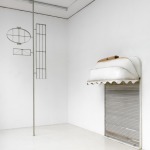
And yet, looking ahead to the fall’s most anticipated openings, there appears to be a preponderance of shows that feature gallerywide installations, immersive video art, and site-specific objects, most of which are about as living-room-wall-friendly as a grenade.

“It seems painting is not the medium of choice at the moment, especially abstraction,” says art adviser Eleanor Cayre. “A lot of people are starting to take video more seriously.”
Can an Artist Take on the Government (and Win)? A Q&A With Trevor Paglen

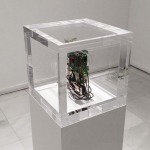
Trevor Paglen has tracked secret spy satellites, photographed so-called “black sites” like Area 51, cataloged hundreds of classified codes for military operations and their associated (and often bizarre) patches, and blasted images into space for the benefit of future civilizations or a visiting alien species. With a Ph.D. in experimental geography (it’s more than just maps) from the U.C. Berkeley and an M.F.A. from the School of the Art Institute of Chicago, Paglen approaches art with a steadfastly interdisciplinary and collaborative mindset, combining his academic training with an eye for aesthetics and a healthy dose of post-9/11 paranoia. His work has become increasingly relevant as questions about privacy and state power has moved from the fringes into mainstream political discourse, positioning Paglen as a central member of the artistic vanguard taking a hard look at the technological forces shaping the 21st century.


Intensity is the Best Politics: Hermann Nitsch in New York

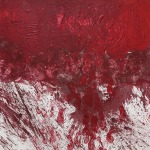
From his earliest performances and actions in the 1960s involving animal remains through his infamous multi-day, multimedia festivals staged at an Austrian castle, Hermann Nitsch has remained a figure of boldness and controversy. Earlier this year a major show at Museo Jumex in Mexico City wascancelled — but no such fate has befallen the artist’s solo at Marc Straus Gallery in New York, which opened Wednesday and features uncompromisingly confrontational paintings (made with acrylic pigments and, in a few cases, some actual blood). Scott Indrisek sat down with the 77-year-old artist to discuss religion, wine, crucifixions, and why Nitsch considers himself to be on the same side as the animal-rights activists.


Anish Kapoor must reconsider – Dirty Corner should be cleaned

Public art often gets scarred by battles over its meaning or right to exist, but the vandals who daubed antisemitic graffiti on his sculpture are idiots who picked the wrong target.

Anish Kapoor, it turns out, is not only a brilliant artist but a brave one. Faced with an antisemitic attack on his open-air sculpture Dirty Corner, he has chosen to defiantly leave the ugly, vicious daubings as they are, to let his art bear the scars of contemporary Europe’s darkest impulses: a dirty corner indeed, stained by racism and ignorance.

It is the second time this sensual, suggestive work of art has been vandalised – and of course there’s a very laudable political logic in Kapoor’s decision to let the rancid markings stay. “The vandalised sculpture now looks like a graveyard,” he says, in explanation of his decision to let racism and intolerance “expose itself fully, in full view for all to see”.

Kapoor should reconsider. He is giving bigots the oxygen of publicity and letting them ruin a beautiful work of art. Dirty Corner deserves to be cleaned and properly protected by the French police. That would be the true victory for culture over barbarism. Even better, make it a permanent addition to Versailles. It is lovely enough.


Martin Creed at Hauser & Wirth Zürich / Interview

“It’s very important not to trust yourself” says Martin Creed in this interview on the occasion of the opening reception of his solo exhibition at Hauser & Wirth Gallery in Zürich. The show features works made in wood, plastic, neon, wool, canvas and carpet tiles. On the opening night, several performances were shown. In addition to the interview, this video provides you with an exhibition walk-through, the full-length version (see below) includes a part of the gig Martin Creed and his band performed at the Löwenbräu Season Opening Summer Party.


Is this guy for real …?  We think so!  Watch the videos, you might too.

Anish Kapoor ‘queen’s vagina’ sculpture at Versailles vandalised again

Sculpture officially called ‘Dirty Corner’, in Palace of Versailles gardens, was attacked in June then cleaned but this time graffiti will stay ‘to bear witness’.

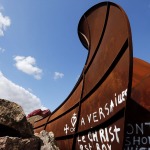
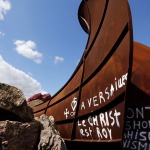
A controversial sculpture by artist Anish Kapoor, on display in the gardens of the Palace of Versailles – and informally dubbed the “queen’s vagina” – was vandalised again on Sunday, this time with antisemitic graffitti, officials said.

The giant sculpture was attacked in June and then cleaned, but Kapoor said that this time the graffitti would remain on the work, to bear witness to hatred.

Officially known as “Dirty Corner”, the sculpture comprises a huge steel funnel, which the 61-year-old British-Indian artist has described as “very sexual”.

It and the rocks around it were sprayed in white paint with phrases such as “SS blood sacrifice”, “Queen sacrificed, twice insulted”, “the second RAPE of the nation by DEVIANT JEWISH activism”, and “Christ is king in Versailles”, the palace management said.


Emerging Art Cools Down

LONDON — The art market is a notoriously opaque business. And over the past couple of years the highly speculative trade in emerging artists has given off plenty of heat. In 2014, recently made works by young abstract painters like Oscar Murillo, Lucien Smith, Alex Israel, Mark Flood and Christian Rosa were being “flipped” at auction for eye-watering multiples of the artists’ original gallery prices.

But in the past six months or so, this volatile sector of the market, where insiders continually scour Facebook and Instagram for the next Damien Hirst, has undergone a correction. The global economic outlook has become less certain, and so have buyers of emerging contemporary art. In February 2014, a 2012 “Rain” painting by Lucien Smith, 26, one of about 200 made by the New York artist by spraying paint on a canvas with a fire extinguisher, was sold at a Sotheby’s auction in London for 224,500 pounds, about $372,000, more than 30 times its original purchase price. This May, at Phillips in New York, a Smith “Rain” painting of the same size and year was auctioned for $62,500.

See These Awe-Inspiring James Turrell Works Around Europe You Probably Didn’t Know Existed

James Turrell’s work is as instantly recognizable as it is undefinable, existing somewhere between land art, light art, sculpture, and installation.

Turrell has been exploring the nature of light and space since the 1960s, and in that time has created works all over the world from Yucatan to Japan, not to mention his yet-unfinished opus magnum, the Roden Crater in the Arizona desert. But if you are living in Europe, there are also many Turrell works closer to home you may not know about. We picked out our favorites and they are all spectacular, enjoy!

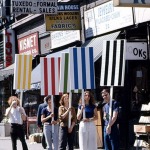
Daniel Buren on his Career, Luxury Collaborations, And Why he “Hated” the Venice Biennale

At 77 years old, Daniel Buren has lost none of his disruptive streak and continues to talk frankly.  Throughout his career, Buren has challenged the viewer’s concept of space with his in-situ works. In 1971, in the Guggenheim Museum, he controversially installed a 66 x 32 ft. canvas banner with his signature vertical stripes, which dissected the exhibition space under the rotunda in two, obstructing at times the view of other artists’ works in the group show. Their negative reaction was so strong, that the work was taken down before the opening. His first permanent public commission, “The Two Plateaux,” 260 black and white columns of different heights was installed in 1986 in the courtyard of the Palais Royal in Paris and immediately generated an art-or-eyesore controversy.

Asked to describe his work to a neophyte, Buren quips he couldn’t possibly: “I’m working with space, but that doesn’t tell you much.” Seated in one of Cabanons’ tents, bathed in yellow light, Buren talked to ARTINFO about his career, ‘that’ Guggenheim failed exhibition, why he “hated” the current Venice Biennale and why he agreed to collaborate with Hermes and Louis Vuitton.


The great debate: why galleries could take even more money from their artists

This was the controversial suggestion of a recent survey. We asked its author and four art-world figures to comment.

A Twitterstorm erupted in the US last month over the findings of survey of 8,000 art galleries based in the US, UK and Germany. Cultural researcher and Larry’s List co-founder Magnus Resch found (no surprise here for those in the know) that running an art gallery is tough, with more than half turning over less than $200,000 a year and 30% running in the red.

It’s his solutions, many of them classic business techniques, that have whipped up the  debate. None more so than the suggestion that most artists should be paid only 30% of sales not the traditional 50/50 split of most galleries (superstar artists aside).

It probably hasn’t helped that he divides artists into some all-too-pithy categories: Poor Dogs (don’t make money, take up heaps of gallery cash and staff time), Question Marks (future greats or future poor dogs), Stars (self-explanatory), and Cash Cows (generate a lot of money but seen in the art world as “too commercial”). While all of us know exactly what Resch means, it’s not often that you see it in print.  Read on and see our related post of August 4, 2015 …

Protocinema Founder Mari Spirito on the Manifold Challenges Facing Istanbul’s Art Scene

Conceived as an artistic wormhole connecting New York and Istanbul,Protocinema is the highly unconventional brainchild of the equally unconventional curator Mari Spirito, a former 303 Gallery dealer who in 2011 decided to parlay her voluminous Rolodex of art connections into the kind of free-floating, no-holds-barred platform that artists dream of. Now nearing its fifth anniversary, the nonprofit has staged politically piquant, opinion-changing shows by Western artists such as Trevor Paglen, Dan Graham, Jacob Kassay, and Thief in Istanbul, and by Turkish artists including Ahmet Ögüt, Can Altay, and Köken Ergun in Manhattan. With each iteration a connection is forged, importing internationalist art tactics into Turkey and broadcasting that country’s artistic avant-garde into the West.

Now, with Carolyn Christov-Bakargiev’s Istanbul Biennial once again turning Turkey into a cynosure of the global art elite’s attention, Artspace editor-in-chief Andrew M. Goldstein spoke to Spirito about the ideas behind Protocinema, the perilous politics (and plentiful other dilemmas) of the Istanbul art scene, and what that confusingly titled biennial is all about, anyway.

Why Bruce Nauman’s Persistent Market Defies Trophy Hunters

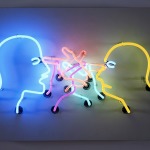
Bruce Nauman is considered a towering and influential figure in postwar American art. His reputation as a master of minimalist and conceptual art was cemented more than four decades ago when he was first showing with Leo Castelli in New York and in important European shows like “When Attitudes Become Form,” at the Kunsthalle Bern in Switzerland.

Currently, Nauman’s neons—paired with Adel Abdessemed’s machete sculptures—make an ominous opening to the main exhibition of the 56th Venice Biennale, “All the World’s Futures,” curated by Okwui Enwezor. TheMuseum of Modern Art in New York recently announced it will stage a full retrospective of Nauman’s work in conjunction with the Schaulager in Basel, Switzerland. The show, which will be the first comprehensive retrospective of the artist’s work across all mediums in over 20 years, will travel to MoMA in September 2018.

Art Market Bracing for an Uncertain Sales Season

LONDON — The international art market is gearing up for a hectic autumn of auctions and fairs. Trading conditions could be challenging. Shanghai’s Composite Index of Shares has lost more than 35 percent of its value since June, destabilizing stock markets across the world. Slowing growth in China has depressed oil and commodity prices, tipping theRussian and Brazilian economies into recession.

At the Frieze and FIAC fairs in October and at Christie’s, Sotheby’s and Phillips’s flagship auctions in New York in November, much attention is likely to be focused on whether the ultra-rich still want to spend millions on postwar and contemporary art. Larger or smaller telephone bids at those New York sales will be watched as a definitive indicator of whether the art market is still “booming” or not.

2015 Fall Art Preview: The 28 New York Exhibitions Everyone Should See

The fall art season is quickly upon us as galleries in New York return from their August hibernation and bring out key shows to chase away the summer languor.  To help you navigate the mess of fall openings, we offer up a calendar of some of the exhibitions we’re most anticipating at museums and galleries (mostly) in New York.

The shows below range from the established favorites (a recreation Roy Lichtenstein’s 1983 mural at Gagosian, and Hauser & Wirth’s first posthumous Mike Kelley show) to the newer and more intriguing (Katherine Bernhardt‘s exuberant paintings at Venus Over Manhattan and Trevor Paglen at Metro Pictures).

And there’s so much more! Enjoy our selection.


10 Surprising Habits of Millennial Art Collectors

As the largest generation in the U.S labor force, according to the Wall Street Journal, and a generation of consumers that are on track to spend $1.4 trillion annually by 2020 and inherit $30 billion in the coming years, according to the New York Times, it’s no wonder businesses are catering to millennial buyers.

Coined by authors William Strauss and Neil Howe, the term applies to those born between 1980 to 2000 and who have grown up with computers and smart phones practically in their cribs.

But how do millennials consume in the art world? Here, we take a look at their lifestyle and habits.  Read on …

10 Tips For Newly-Minted Tech Millionaire Art Collectors

Are you a newly-minted tech millionaire with cash to burn and an urge to start an art collection?  If so, you’re the unicorn that every art dealer in America is hoping to take for a ride.

Why else would mega-galleries like Gagosian, Pace, and David Zwirner be making it out to the Seattle Art Fair this summer? They’re looking to hobnob with you, precious unicorn, and if you want to hold your own everywhere from the booths to the back rooms, here’s what you need to know.

1. Do go to art fairs. 
This is kind of a no-brainer, but it’s true: there’s really no better way to see industry vetted works of art all in one place. Think of it like an art collecting starter kit. Here are some tips for the fair-newbies.

2. Do think about getting an art advisor. 
If you have an eye for what you like but don’t know much about the market, or you understand the numbers but don’t have the art historical background you feel you need to make a smart purchase—then consider getting in touch with an art advisor. They’ll be able to fill you in on what you need to know, whisk you around fairs, and make recommendations tailored to your tastes.

Read on …

Soaring Art Market Attracts a New Breed of Advisers for Collectors

For decades, art advisers were a small club of professionals who personally helped build collections for clients, using their scholarship and connoisseurship. Their role was to consult and offer expertise, rarely to make deals.

But the rapidly changing art market — characterized by soaring prices, high fees and a host of wealthy new buyers from Wall Street and abroad — has prompted scores of new players to jump into the pool, from young art-world arrivistes to former auction-house executives with an abundance of expertise and connections.  The demand for advisers has grown in part because newly rich collectors need help navigating an increasingly transactional, famously opaque art market.

And for these buyers, advisers — once considered largely messengers between collectors and sellers — are increasingly empowered at auctions, galleries and art fairs. “We’re seeing them become more the negotiator than they traditionally might have been,” said Lisa Dennison, the chairwoman of Sotheby’s North and South America.  The best are wooed with elegant dinners, early notice of forthcoming offerings and private showings. “Ten years ago we didn’t watch them closely but now we are courting the most important ones assiduously,” said Victoria Siddall, the director of the Frieze art fairs in New York and London.

The Broad’s Big Debut

LOS ANGELES – Eli Broad is a man with a reputation for getting things done. After building two Fortune 500 companies from the ground up, he transferred his drive to philanthropy about fifteen years ago; his achievements have since included almost single-handedly creating a cultural centre for downtown Los Angeles, including its monumental anchor – the Frank Gehry-designed Walt Disney Concert Hall. That project was dead in the water for years until Broad raised $225 million, and twisted not a few arms in the process.

Headstrong, some have called him. Control freak is a term others have used.

artnet news’ Top 10 Most Expensive Living Women Artists 2015

Our living ladies span four continents, with work that at times reflects the diversity of their geographical profiles. Using data drawn from the artnet Price Database over the past ten years, there are some shifts from our previous report. Three newcomers join the list, two are no longer on it, and Cady Noland still holds the top spot. Several who are on the list again have new records at auction.

Is Theaster Gates America’s most exciting artist?

Though he has produced pottery and paintings, sculptures, music and video works, Theaster Gates is best known, as we put it in our new monograph, for projects that “bridge the gap between art and life and encourage change by reaching beyond a traditional art audience.”

He saved remnants of derelict churches, created black-tar paintings in tribute to his father (a retired roofer), founded his own quasi-religious music group, The Black Monks of Mississippi, and repurposed, decommissioned fire hoses, of the kind used to spray civil rights protestors, into handsome, near-abstract collages. In each instance, a work’s success feeds back into a greater civic scheme that underlies almost everything Gates does.