Found Everything, Tried Everything, All His Own Way

A Sigmar Polke Retrospective Opens at MoMA.

Get confused is the first and last message of “Alibis: Sigmar Polke 1963-2010” at the Museum of Modern Art. And if you think, as I do, that some degree of continuing bafflement is a healthy reaction to art, this disorienting contact high of a show is for you.

Polke, who died in 2010 at 69, is usually mentioned in the same breath with two German near-contemporaries, Anselm Kiefer and Gerhard Richter, as one of the great European male artists of the postwar years. Of the three, though, he was the most resistant to branding, and is still the hardest to get a handle on.

Museums want masterpieces, but Polke, though he produced some, was into process, not perfection. Art history wants wrap-ups, final accounts. The Polke retrospective is such an account, written with commas, colons, semicolons, dashes, ellipses, parentheses, but no periods, no full stops.
 

From Hollywood to the Art World, the New Celebrity Collectors

We don’t have to tell you that art collecting is an expensive hobby. Who has the cash to drop $1 million or more on a single work because of a whim (or perhaps because another collector threatens to snap it up if you don’t)? Well, celebrities, that’s who. So artnet news has compiled a comprehensive list of some of the most famous people in the collecting game and what they’re buying.

Architects Mourn Former Folk Art Museum Building

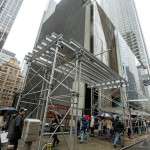
As scaffolding went up around the former Folk Art Museum building on Tuesday, one of its two architects broke his silence to say how devastated he and his partner are about the Museum of Modern Art’s decision to tear down “one of our most important buildings to date.”

“Yes, all buildings one day will turn to dust, but this building could have been reused,” Tod Williams said in his first interview since the Modern announced the demolition of this West 53rd Street building, completed in 2001. “Unfortunately, the imagination and the will were not there.”


Henri Matisse: The Cut-Outs review – ‘how rich, how marvellous, how alive’

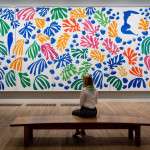
Bees swarm, swallows swerve, a shark swims the wall … with a pair of giant dress-making scissors, Matisse cut himself free from the miseries of illness and old age, creating luscious cut-outs that unleashed a new art. Adrian Searle eats up a joyous show at Tate Modern.

Scissors, paper, pins – these were all it took for Matisse, in the last years of his life, often bedridden and feeling he was living on borrowed time, to create the works that now fill a suite of galleries at Tate Modern. What a joyous and fascinating exhibition this is. I eat it with my eyes and never feel sated.

Top 10 Most Expensive Living British Artists – artnet News

It’s official, the art market is picking up after years spent in a post-crash lull. According to  TEFAF’s much discussed annual art market report, 2013 was the second best year on record, grossing €47.42 billion ($65.45). It was topped only by 2007, the vintage year of the last bubble. In this new series, artnet News zooms in on the artists who are driving the upward trend. First stop, British artists.

Who are the British artists who have achieved the highest prices at auction? Painting­­—which remains collectors’ favorite medium—unsurprisingly dominates these record sales and so do the Young British Artists. It worth noting that half of these records were set post-2008, a real testament to the buoyancy of the art market at the higher end of the scale.

Buyers Find Tax Break on Art: Let It Hang Awhile in Oregon

EUGENE, Ore. — The Jordan Schnitzer Museum of Art, tucked into a quiet corner of a college campus here in the hills of the Pacific Northwest, is hardly the epicenter of the art world. Yet major collectors, fresh from buying a Warhol or a Basquiat or another masterpiece in New York, routinely choose this small, elegant redbrick building at the University of Oregon to first exhibit their latest trophy.

The museum’s intimacy and scholarship are likely to play some role in their choice. But a primary lure for the collectors is often something more prosaic: a tax break.


Could Silicon Valley Contemporary Be the Next Art Basel?

The answer is yes and no. Let’s begin with why Silicon Valley Contemporarycould be a success.

The obvious allure for creating this new fair, and for the 50-some participating galleries to buy in for its first year, is that the tech sphere headquartered in Silicon Valley is generating more wealth more quickly than anywhere else in the world. The nouveau riche of GoogleAppleFacebook,Adobe, and the other industry titans in the area—what Valleywag‘s Sam Biddle has termed “our coddled new overclass”—have lent the San Jose area a few attention-grabbing distinctions: more patents are filed here per capita than anywhere else in the United States (the government opened a patent office in the city so developers wouldn’t have to trek to D.C.), six of the 10 most expensive communities in the country to buy homes are here, and 75 percent of the region’s Fortune 500 companies are within 15 miles of the San Jose Convention Center, where the fair took place.

Gormley to Hirst: today’s top artists on the genius of Henry Moore

Ahead of an exhibition of Moore’s work alongside that of today’s artists, Antony Gormley, Damien Hirst, Bruce Nauman and others talk about seeing bubbles in hula-hoops, sculpting from the gut – and how Moore changed what was possible.

Hot New Artists, Getting Hotter

If the market for contemporary art is in danger of overheating, the first canary in the coal mine will surely be those fashionable young artists whose prices have been driven up by speculators over the past few years.

Midseason auctions of affordable works by emerging names are telling temperature gauges for the contemporary market. Phillips’s quarterly “Under the Influence” sales have, in particular, become events where benchmark values are set for works by young artists. Many of these artworks are privately bought and then quickly sold on, or “flipped,” by insiders before a wider audience gets to hear about them.

As one art consultant observed, “once an artist appears at auction, people think they’re established.” That’s certainly how the Flip Artists got there.

Jordan Wolfson on Transforming the “Pollution” of Pop Culture Into Art

There’s an mesmerizing aberration at David Zwirner Gallery, a technological siren that, once it locks its fearsome eyes on you, will drag you deep into the Uncanny Valley and feast on your brain. Occupying its own cavelike room in the gallery, which the viewer is encouraged to enter alone, this animatronic sculpture—a buxom blonde woman in a green witch’s mask who dances to pop songs while facing a mirror, all the while using facial-recognition technology to follow your eyes—forms the headline-grabbing core of Jordan Wolfson‘s debut at the blue-chip Chelsea gallery. “Is this the most terrifying robot ever?” asked London’s Daily Mail. It’s a good question.

Seattle Art Museum’s First Ai Weiwei Piece Is Baubles

Ai Weiwei’s Colored Vases appeared at Seattle Asian Art Museum on April 5, quivering, just waiting to be smashed. Poor vases. Their cheerful, rainbow-candy appearance is so dumb it’s almost touching. They’re baubles with hidden stories, stories that go back two thousand years.

But we’ll start with 1993. That year, Chinese artist Ai Weiwei returned to Beijing from New York to be with his ill father. He survived as a struggling artist by dealing in antiques, including a trove of Han dynasty urns he acquired in order to turn around and sell them. But he made them into art, too. He reassembled old furniture into sculpture andsplashed the red script of Coca-Cola and other Western trademarks onto antique pots.

Art Market Analysis: Sigmar Polke vs. Anselm Kiefer at Auction

In the landmark June 2011 sale at Sotheby’s London, 34 works in the collection of German industrialist Count Christian Duerckheim went up for auction, among them seven paintings by the postwar German artist Sigmar Polke (who had died the year before). Of those paintings, one,Dschungel (Jungle) (1967), brought in $9,245,139, sailing past its high estimate of $6.4 million and setting a new world record for the artist at auction. Just a month earlier, a painting by fellow German artist Anselm KieferDem unbekannten Maler (To the unknown painter) (1983), set a new record for that artist when it sold for $3.6 million at Christie’s New York.

Now, with “Alibis: Sigmar Polke  1963–2010” set to open on April 19 at the Museum of Modern Art (the exhibition is co-organized by Tate Modern), Polke’s market is doing better than ever.

Stedelijk Taps Jeff Wall for First Post-Reno Photo Show

There is good deal of irony in the manner in which Vancouver’s Jeff Wall presents his photograph “Invisible Man” by Ralph Ellison, the Prologue (1999–2000)—printed on a transparency and mounted on a light box. “The large-scale image is illuminated from behind by fluorescent lights, which Wall began using after seeing light-box advertisements in the late 1970s,” according to the Museum of Modern Art’s website.

In this image, Wall proves a careful student of Ellison’s 1952 novel and its anonymous narrator, who describes his subterranean home, or “hole,” as being “warm and full of light.” The figuratively invisible narrator steals from Monopolated Light & Power to illuminate his 1,369 lights. “I’ve wired the entire ceiling, every inch of it,” Ellison writes. “And not with fluorescent bulbs, but with the older, more-expensive-to-operate kind, the filament type.”

It’s not clear if Wall’s photo contains precisely 1,369 bulbs, but even if it is approximate, the ceiling is covered with lights. Yet Wall uses the very fluorescent bulbs that Ellison’s narrator sought to avoid to illuminate his transparency. Where the invisible man is trying to rack up the biggest bill he can for the Man, Wall is fine with lighting his works on the cheap.

The top 10 drinkers in art

From Bacchus weaving his spell in a Spanish street to Gilbert and George getting gradually drunk on Gordon’s, here’s our pick of pieces in which booze plays a key part.

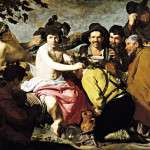
Velázquez – The Triumph of Bacchus or The Drinkers (1628-1629)

In this ironic masterpiece, the Spanish painter whose career took him from portraying the street life of 17th-century Seville to painting the king in Madrid and the pope in Rome edgily juxtaposes myth and reality, high art and low life. Like a modern conceptual photographic artwork (except done in magnificent oil paints), it imagines that the ancient god Bacchus has come to earth in early-modern Spain. Instead of the satyrs and maenads who follow him in the old stories, Bacchus is surrounded by scruffy boozers. The myth of wine as cultural aspiration meets the reality of drink as an escape from poverty.


Marcel Duchamp: a riotous A-Z of his secret life

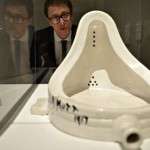
Fountain

The original version of the 1917 urinal Fountain was lost without ever being publicly displayed.

He used the pseudonym R Mutt to conceal his authorship when he sent the work to an exhibition of the Society of Independent Artists in New York. The show’s organisers, among them Duchamp himself, rejected the entry, which led to the resignation of Duchamp and other committee members. His friend Beatrice Wood defended the choice of object, saying “the only works of art America has given are her plumbing and her bridges”.

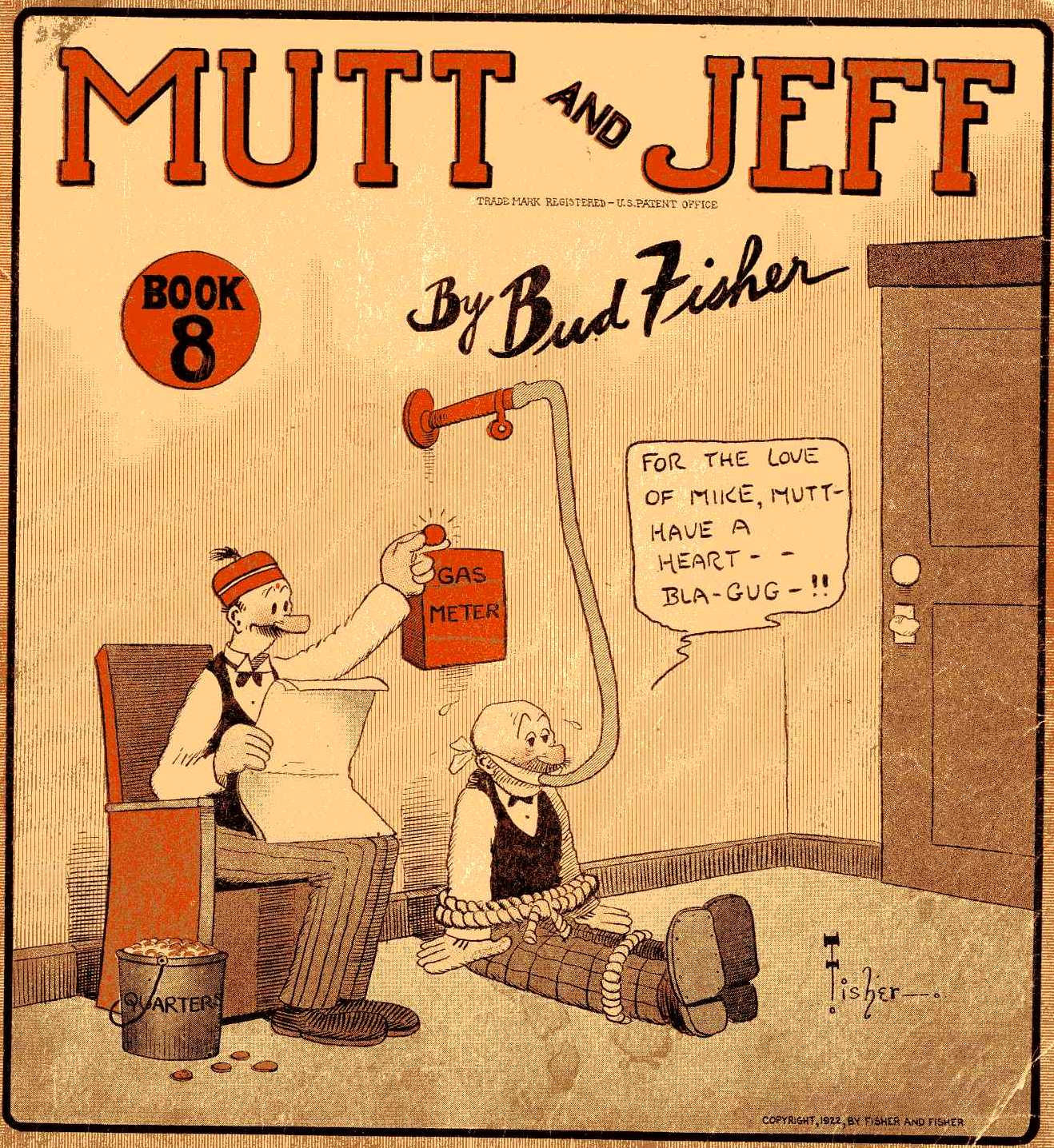
Duchamp claimed the word “Mutt” was inspired by the cartoon Mutt and Jeff, and the company JL Mott Iron Works of Trenton, New Jersey, where he claimed to have bought the urinal.

10 Exhibitions That Changed the Course of Contemporary Art

If the title of Jens Hoffmann‘s latest exhibition. “Other Primary Structures,” rings a bell, it’s because it’s a revisiting one of the most important American art exhibitions of the 20th century: “Primary Structures: Younger American and British Sculptors,” the 1966 exhibition organized at the same museum by the pathbreaking curator Kynaston McShine that changed the aesthetic course of American art. But “Other Primary Structures” is not simply a re-staging of McShine’s original show; instead, through life-sized reproductions of installation images, timelines, text, a scale model of the Jewish Museum’s original building, and a catalogue that cleverly duplicates the design and format of that from the 1966 show, it’s an investigation into the nature of the contemporary art exhibition as a cultural event that also seeks to correct the Western-male-centric scope of the original exhibition by including works by artists from outside of the United States and Europe.

George Bush’s paintings: this is the art of Forrest Gump

The comedy of a naive self-portrait apparently helped humanise the man most responsible for the 2003 invasion of Iraq.

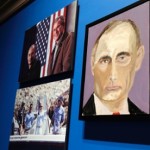
His portrait of Putin actually looks like something you would find in one of America’s trash-rich Salvation Army stores and buy to laugh at. It’s got a classic amateur clumsiness and oddity to it. Bush has attempted to render shadow and shape in stylish blocks of fawn and woodchip and cookies ‘n cream, but they don’t sit right and the whole head looks mildly crazed. Perhaps this mad look is what is meant by revealing Putin’s “soul”, but it seems inept rather than insightful.

Idiocy in art has its charms. In the man who ran the free world into bloodstained buffers, those charms quickly sour. These empty headed daubs look the work of someone you wouldn’t trust to mow a lawn without cutting someone’s foot off.

Forget Go-Go Schadenfreude, Bank On Urs

It was the exhibition that everyone seemed so eager to hate: Mega-dealer Larry Gagosian’s Lower East Side “pop-up” space, open through May 23, showcasing sculptures by Urs Fischer inside a former Chase bank on Delancey Street. (Another gallery outpost at 821 Park Avenue is hosting his massive bronze piece, “last supper.”) “How’s Gagmewithaspoon?,” my friend inquired, rolling her eyes via text message. “You’re going to see Urs Fischer?” asked one young man of his companion, lounging at a more sedate opening for an octogenarian Lebanese painter around the corner. “Oh, how ‘exciiiiiting.’” I wasn’t immune to sarcasm and doubt myself, having previously fired off a snarky tweet after reading the gallery’s announcement about Larry’s attempt to get down with the downtown kids. (“New@Gagosian pop-up outpost in LES is sponsored by @PBR_USA; venue’s official name is Larry’s [expletive deleted] Playhouse.”)