Anish Kapoor Gets One-Man Show at Château de Versailles

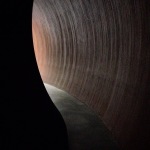
The sculptor Anish Kapoor, no stranger to grandeur, has been awarded a one-man show at the Château de Versailles, reports the New York Times. The show, running from June through October 2015, will follow similar shows in the same space by Takashi Murakami, Joana Vasconcelos, and Jeff Koons. 

According to Catherine Pégard, director of the Château de Versailles, Kapoor was chosen “because he has something particular to say in this setting,” she told the Art Newspaper. Certaintly it has nothing to do with Kapoor’s sculpture constructed for Paris’s annual Monumenta show in 2011, which, according to the Times, “attracted more visitors during its six-week stint that any other Monumenta show.”

Anish Kapoor Chosen for Solo Show at Versailles

PARIS –The sculptor Anish Kapoor will be the next contemporary artist to be given a one-man show at the Château de Versailles. Mr. Kapoor’s show will run from June to October next year, the palace’s chief administrator, Catherine Pégard, said in an interview.

“It’s not easy to choose an artist for Versailles,” Ms. Pégard said. “It’s not a museum, or a gallery or an exhibition space.” She said that Mr. Kapoor, 60, had been chosen “because he has something particular to say in this setting.” The series of solo shows began in 2008 with Jeff Koons and has included Takashi Murakami among others.


2014 in Review: Top 10 Big (Architecture) Projects

Best art gallery: Museo Jumex by David Chipperfield Architects
Built to house the private contemporary art collection of Colección Jumex, owner of Mexico’s leading juice company, David Chipperfield’s three-storey-tall gem of a building is a paragon of travertine-clad understatement. The most distinguishing feature of the relatively small, 2,500-square-metre building is a row of sawtooth peaks that give it the look of a crown. The museum has a wedge-shaped floor plan and the gallery spaces are intentionally plain, letting the art take the lead. In building the newest addition to the upscale Polanco neighbourhood in the heart of Mexico City, an area that has become crowded by signature structures in recent years, Chipperfield had to contend with two neighbouring skyscrapers and the splashy Museo Soumaya across the street, by OMA alumnus Fernando Romero of FR-EE. The result is a timelessly elegant building within a sea of bling and glamour.

Read on …

Will Contemporary Art Sold Today Be of Any Value in 100 Years?

When sightings of Leonardo DiCaprio and Miley Cyrus (dressed as deranged vagabonds) at Art Basel in Miami cause a stir, one wonders what remains of the art world. Indeed it is tempting to think that the art world has been swallowed by the combined marketing and publicity machines of Hollywood and the fashion and music industries. Art is an accessory to wealth and stardom. 

So much has changed in the art world so quickly, it is for many people disconcerting. A hundred years ago the art dealer Paul Durand-Ruel often purposely held onto the Impressionists’ artworks for so long so that his clients’ tastes could catch up (so it was said). Though that’s probably a polite way of saying that it took him a long time to be able to sell the Impressionists’ works to people who understood it, today, by extreme contrast, art sells in nanoseconds at art fairs to people who not only don’t understand it but really don’t care. The juice comes from the emotional rush of the competition for the purchase, plus bragging rights at dinner afterwards; it’s not the physical object that’s exciting.

The Greatest Painting in the World: 10 Luminaries Cast Their Ballots

There are some questions in the art world that are not well received. Most of these have to do with money and rank. Asking how much an artwork costs or how important it is can seem a little crass and demeaning to the intensely personal experience of viewing high art.

“The greatest picture in the world…you smile,” wrote Aldous Huxley in 1925. Although the claim sounded ludicrous to him, he went on to make a passionate and cogent argument for his choice: Piero della Francesca’s ResurrectionARTnews wondered which paintings would be chosen by artists, museum directors, curators, and art historians today as the “greatest.” To find out, we queried a number of them. Many, understandably, declined to participate. A few struggled with their choices, and several circumvented the question—as in the case of Lawrence Rinder, the director of University of California’s Berkeley Art Museum and Pacific Film Archive, who chose a painting in his museum’s collection, which he sees often and knows well.

Some of the works selected tell stories of first love, beauty, and awakening; others hint at mysteries, angst, and defiance. In taking the question seriously, and not so seriously, the respondents collectively affirm that an artwork’s price and popularity are only surface criteria. What is valuable are the more subtle and powerful insights that reside in some of humanity’s most resonant examples of painterly expression.

Read on …

When Private Goes Public: Miami Collections Raise Ethical Questions

Art Basel Miami Beach is an ostentatious display of wealth and the wealthy. That this obvious fact is annually broached with dismay and shock by much of the art world is in no small part due to Art Basel itself, which, increasingly, insists on being similar in style to a biennial or large-scale exhibition, with a film program, installations, a speakers’ series, performances, outdoor public art and more. But this it can’t and never will be. With the exception of dealers and staff bound (tragically) to booths for the duration of the fair, few come to Miami Beach at the beginning of December to spend four days inside a sterile, windowless convention centre.


The Art of Good Business: Hans Haacke Goes After a Koch, Readies London Plinth

Anyone in need of a potent antidote to the feeding frenzy at Art Basel Miami Beach last week should head right now to Paula Cooper Gallery’s second-floor space at 521 West 21st Street in West Chelsea. On view there is a solo show by the German–born, New York–based artist Hans Haacke, whose six-decade career is a singular case study in how to resist and attack, determinedly and elegantly, the machinations and overproduction that have defined the art market in recent decades.

Another reason to visit: Haacke shows are very rare occurrences. His last one-person exhibition in New York, where he has lived since 1965, was a survey that dealer Elizabeth Dee’s X-Initiative presented in 2009, and his last presentation of new work here was the year before, at Cooper, a full six years ago. This one is occurring just as his career reaches a new—and, one might say, unlikely—high point.


You Definitely Need to See This Work in Person’: Art Basel in Miami Beach

For weeks I’d been telling myself, and anyone who would listen, that I was going to skip the 2014 edition of Art Basel Miami Beach. It had been a busy fall. October’s Frieze London fair is at least on my home turf, but then there were whirlwind trips to Paris, for FIAC, and New York, for the auctions. I couldn’t be bothered with yet another fair, especially one so notoriously party-centric. In the end, though, I was reminded of Adam Lindemann’s rallying cry in the pages of The New York Observer back in 2011. “I’m not going to Art Basel Miami Beach this year,” he wrote. “I’m through with it, basta.” But he ended up going. And so did I.

—-

Art is an amusement park for all ages and we act out in the sandbox, in spite of the schoolyard hierarchies. It’s a spectacular pretense for bringing together the hopeful, the jaded, and the discontented. It is social paste for the restless, and all of this is intensified at Art Basel Miami Beach and its environs, a smorgasbord of art. True, there was never a toilet or taxi nearby, the coffee was microwaved, people who looked dead were propped up on the couches of my hotel lobby, and I spent much of my time in excruciating foot pain, but I can’t think of anything I would rather have been doing. 

A Plea to Art Basel: Leave Miami

As we close out our coverage of Art Basel, a small recommendation for next year’s fairs: Get the hell out of Miami. It may look nice, but not even those with helicopters can avoid the traffic jams, there are never enough cabs and the food and hotel costs are astronomical. People, this is bullshit. Time for a revolt. – Paddy Johnson

Have Art Fairs Destroyed Art? Zombie Abstraction and Dumb Painting Ruled in Miami?

“If no one ever looked at art, would anybody even create it? And how much does art actually need buyers.” Extremely reasonable questions put forth by the 2014 BMW Art Guide by Independent Collectors, these queries appeared especially intriguing during the latest iteration of Art Basel in Miami Beach (ABMB). A positively gilded affair that looks increasingly beholden to a global art-as-asset aesthetic, this year’s ABMB featured lots of shiny surfaces, stacks of joke paintings, and enough zombie abstraction to inspire several remakes of World War Z. The fair’s thronged aisles of mostly uniform wares also sparked a few less politic questions. Among them: Who buys all this shit?

Truth or Dare

ON WEDNESDAY, a man with a plan was talking into a banana, walking down Lincoln Road. Two wives, fidgeting with rings and bracelets, prepared to step into a large inflatable concept—TRUTH—while the husbands stood a few paces back. At a bar made of sand, a woman wearing a pure white silicone alligator, clipped like a bib around her neck, told me I could buy one for $85, and I wondered if anyone had ever told her she had only to make it six times the size to sell it for two hundred times the price. Outside the Miami Beach convention center a man in a ten-dollar suit was handing out cards that promised INVITATIONS to ART SHOWS.

Jordan Wolfson, the cute young artist represented by David Zwirner, was occupying a pool chair, complaining about the “levels of exclusivity” in Miami. He was staying at the Edition, where lines for the basement sometimes snake up two flights of marble stairs and down the hall. I nodded, and said that if exclusivity is his bête noire, his artwork must be priced so reasonably.  – Sarah Nicole Prickett

‘Selling Like Hot Cakes’: NADA Opens in Miami Beach

The publicist said they had to open the doors to the NADA fair at the Deauville Beach Resort five minutes early because the crowd was that eager. Publicists are paid to say those kinds of things, but inside there was a veritable feeding frenzy that gave off the feeling of a Moroccan street market.

The day’s refrain was “sorry, it’s sold.” The Belgian collector Alain Servais was wandering the fair in the earlier hours, none too happy about the amount of middle-of-the-road abstract painting on view. There was a lot! Maybe about half of the booths seemed stocked with the stuff. “Half? It’s 90 percent!” Servais said. “It’s selling like hot cakes. I am happy for the dealers. I am not blaming them for bringing what people want to buy, but what kind of world do we live in?”

Your Concise Guide to the 2014 Miami Art Fairs

With the mercury dropping in the art world power centers of old, it’s time for the annual migration to Miami for Art Basel Miami Beach, its ever-expanding roster of satellite fairs and pop-up exhibitions, and the impossible schedule of parties and performances all week long (December 1–7, 2014).

Great week, but getting a bit crazy…?!

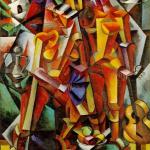
How Cubism Gave Rise to Contemporary Art

Cubism is famous for its difficulty, and the fact that in the early years of its development, Picasso and Braque treated it as a secret, denying its existence to outsiders. It’s very brown, it’s visually severe, it’s hard to enter. What, exactly, was Cubism? 

I think Cubism has been seen as an intellectual art form that puts off some people, partly because of the way it’s been taught and certainly because of misunderstandings. In working on this exhibition for the past year and a half, I have constantly been surprised by the wit in these works, the play, the sense of humor that these young artists exhibited in these pictures. But Cubism developed at a time in the early 20th century when people were challenging everything that was accepted about the world around them, about how it looked. You had Freud reinterpreting dreams and seeing them as being the key to who we are, you had Einstein’s theories of relativity, you had people who could go up in airplanes and photograph aerial views, so if you saw a picture of a farm, all of a sudden that picture of a farm didn’t look at all like what you would have thought. It was completely flattened and rendered from a different perspective. You also had x-rays showing the innards of people and objects. So, everything was being challenged at this moment, and these young artists—Picasso, Braque, Gris, and Léger—were aware of what was happening in the sense of its newness.   Read on …

Some Thoughts About Richard Serra and Martin Puryear (Part 2: Puryear)

From the outset of his career, Puryear refused to give up what he knew and studied in order to align his work with the prevailing aesthetic. Some people believe they should do whatever it takes to fit in, while others accept that they will never fit in and do not try. There is the assimilationist who wants to be loved by everyone, and there is the person who knows that this kind of acceptance comes with a price. In Michael Brenson’s article, “Maverick Sculptor Makes Good” (New York Times Magazine, November 1, 1987), this is how Puryear described his response to Minimalism:

I never did Minimalist art. I never did, but I got real close….
I looked at it, I tasted it and I spat it out. I said, this is not
for me. I’m a worker. I’m not somebody who’s happy to
let my work be made for me and I’ll pass on it, yes or no,
after it’s done. I could never do that.


Some Thoughts About Richard Serra and Martin Puryear (Part 1: Serra)

Quotes from Richard Serra:

“Art is not democratic. It is not for the people.”

“My sculptures are not objects for the viewer to stop and stare at. The historical purpose of placing sculpture on a pedestal was to establish a separation between the sculpture and the viewer. I am interested in creating a behavioral space in which the viewer interacts with the sculpture in its context.”

“The content of the work is not the work. The meaning of the work is your experience inside the work. Or when you see it from far away, it has another meaning. But if all those things mean nothing to you, then it’s meaningless.”


Allen Jones, Royal Academy

A brilliant painter derailed by an unfortunate obsession.

There’s no escaping it; Hat Stand, 1969, is a beastly object. The blank-faced mannequin is too literal to succeed as a sculpture, and the conceit is too nasty to be ignored. Her position – holding up her hands to receive our hats – recalls the torture meted out to prisoners of war by their Japanese guards in WWII. She wears fetish gear comprising a purple bolero over conical tits with teat-like nipples that point heavenwards, a restraining collar linked to a leather g-string and tightly-laced, thigh-high boots. Her body is visible yet constrained and her head is similarly encased in a helmet-like wig. The realism is important; this is a woman serving as a hat stand, not furniture whimsically shaped like a woman.

Over the years her more famous sisters, Chair and Table, have attracted considerable hostility. “Chair” lies on her back, legs in the air; the seat is strapped to her thighs so that her calves act as the chair back. “Table” kneels on all fours with a sheet of glass bolted to her back. Both are dressed in fetish gear and are in positions implying sexual availability. They are still as irritatingly silly and sexist as they were nearly 50 years ago.

But Allen Jones’s retrospective contains another Table, which is far more interesting because it is more ambiguous. Rather than flesh pink, the fibreglass is painted a dark, sparkly green, the glass is shaped like an artist’s palette and the woman’s head is lifted. Her unreal colour and more active demeanour are reminiscent of sci-fi and video game heroines; she may be enslaved but she is not cowed. And her implied role – as an artist’s muse and support – is shown to be a trap.

Is Allen Jones’s sculpture the most sexist art ever?

Zoe Williams goes among the women as fetish furniture at the RA’s new show to find out.

I find it very difficult to have an authentic response to work that has generated a lot of controversy in the past. My inner contrarian harasses me to disagree with the orthodoxy. So I was all set to resist the feminist critique of Allen Jones, simply because it would be predictable to agree with it. And yet, at the same time, I hate the way decades simply trump debate, so that the heat around Jones – that he didn’t attack or make problematic the objectification of women so much as art-ify it, make it respectable – has simply abated, as he has become respectable, part of the canon.

Jones was the canary down the mine in 1969, observing obliquely: This is the real direction of the pop art pin-up, the woman separated by an ad man into all her pneumatic parts; this is where we’re headed, to a place where women can be anything except people. Did second-wave feminists shoot the messenger? Or did he mangle the message? The debate is still open.

Weight of the World: Anselm Kiefer at the Royal Academy

There are many sides to the work of the German artist Anselm Kiefer. Those lucky enough to visit his studio complex at Barjac in the South of France encounter a staggering array of installations, underground tunnels, and tottering concrete towers resembling some contemporary equivalent to the fortifications of medieval Tuscany. But wisely, the Royal Academy has chosen to present Kiefer largely as a painter in a huge and triumphant exhibition of his work, running September 27 through December 14.

This is one of those exhibitions in which a major artist’s work and position in art history fall into place. You walk out feeling Kiefer is a giant figure in contemporary art. The show is visually stunning in an old-fashioned way, through the force of brush-stokes, paint surfaces, and, often, sheer scale.

The cycles of history of are one of Kiefer’s themes, as is time the destroyer, the burgeoning and death of everything — hence those sun flowers that interest Kiefer as much as they did Van Gogh — and the stars of the cosmos. These are weighty subjects, too ponderous you might think for any art to carry. But somehow, Kiefer does it. This exhibition is monumental, magnificently over the top, and marvellous.

Sounds like an exhibition not to be missed – we won’t!