
Berlin played host to the third edition of ArtFi, the Fine Art and Finance Conference, on Wednesday, welcoming influential panelists and art world insiders to the Tagespiegel newspaper headquarters for a day of high-tempo exchange on the latest trends and developments in the art market. Coinciding with Berlin Art Week, the conference’s focus on art and money turned more than a few heads in the German capital, which is legendary for its extremely low concentration of collectors. But speakers such as Art Economics’ Clare McAndrew, the Armory Show’s Noah Horowitz, Art Stage Singapore’s Lorenzo Rudolf, and the Fine Art Fund’s Philip Hoffman, were greeted by a hall packed with international individuals hungry to get the inside scoop on the nexus of money and art. For those that couldn’t attend, artnet News boiled the day down to 10 must-know bits of intel for investing in art.
Art Man of Alcatraz – Ai Weiwei Takes His Work to a Prison
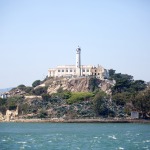
SAN FRANCISCO — Judging from the large bags of colorful Legos on the floor and dozens of plastic base plates piled on tables, this room could have been the activities station for a well-funded summer camp. And the five women and men drifting in and out, slicing open boxes and rooting around for the right size toy bricks, were young enough to pass as camp counselors.
Only the place where they were working is the opposite of summer camp: Alcatraz, the notoriously bleak military prison turned maximum-security penitentiary turned national park. With its banks of small windows and a “gun gallery” for surveillance, this building is where inmates once laundered military uniforms. It’s usually off limits to tourists.
But starting Sept. 27, visitors will be able to see for themselves, spread across the floor, where so many Legos were heading: an ambitious installation by the Chinese activist-artist Ai Weiwei, featuring 176 portraits of prisoners of conscience and political exiles around the world — from the South African leader Nelson Mandela and the Tibetan pop singer Lolo to the American whistle-blower Edward Snowden — composed of 1.2 million Lego pieces. The work is part of an exhibition running through April 26 called “@Large: Ai Weiwei on Alcatraz,” organized by For-Site, a San Francisco producer of public art, in the prison hospital, A Block cells, dining hall and that former laundry building.
Blood and Soil: Vienna Actionism’s Dangerous Game
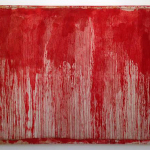
Its Wikipedia entry calls it “a short and violent movement,” and even compared with the aesthetic extremes of the 1960s, the unrelenting art of Vienna Actionism stands apart. After the passage of fifty years, the questions it raised about the limits and origins of art remain no less troubling or closer to resolution.
The four artists who made up the core of the movement — Günter Brus, Otto Muehl, Hermann Nitsch and Rudolf Schwarzkogler — witnessed the ravages of World War II and its aftermath, though only one of them, Muehl, was old enough to fight, entering the Wehrmacht in 1943 at the age of 18.
In the decades following the war, they pursued an idiom that evolved from Abstract Expressionist-influenced paintings to blood-drenched rituals that inverted every sexual, social and hygienic taboo. Their art directly confronted the savagery of war and made a mockery of the entrenched political and religious conservatism that clung to Viennese life despite the cataclysms of Fascism and the Anschluss.
In many ways, their art is of a piece with the tragicomic grotesqueries rampant in the work of generational peers such as the dramatist Fernando Arrabal, the composers Krzysztof Penderecki and Peter Maxwell Davies, the filmmaker Alejandro Jodorowsky and the choreographer Hijikata Tatsumi.
Inside Anselm Kiefer’s astonishing 200-acre art studio
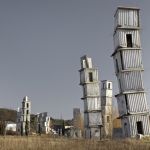
Steampunk shipping containers, planes full of sunflowers and triptychs the size of squash courts – Michael Prodger visits the place that’s produced some of the most extraordinary artworks of the last century.
Anselm Kiefer is a bewildering artist to get to grips with. The word that comes up most often when his work is discussed is the heart-sinking and slippery “references”. His vast pictures, thick with paint and embedded with objects from sunflowers and diamonds to lumps of lead, nod to the Nazis and Norse myth, to Kabbalah and the Egyptian gods, to philosophy and poetry, and to alchemy and the spirit of materials. How is one to unpick such a complex personal cosmology? Kiefer himself refuses to help: “Art really is something very difficult,” he says. “It is difficult to make, and it is sometimes difficult for the viewer to understand … A part of it should always include having to scratch your head.”
Now 69, Kiefer is the subject of a retrospective at the Royal Academy, where he is an honorary academician and which, through its summer exhibitions, has done much to bring him to the attention of the British public. This show is part of an extended German moment in UK galleries: Gerhard Richter and Georg Baselitz have both had exhibitions recently, while Sigmar Polke comes to Tate Modern next month.
The Mona Lisa Curse – Robert Hughes – Video
With his trademark style, Robert Hughes explores how museums, the production of art and the way we experience it have radically changed in the last 50 years, telling the story of the rise of contemporary art and looking back over a life spent talking and writing about the art he loves, and loathes.
The video is over an hour long, but worth the watch for anyone interested in the confluence of art and money.
Phillips Opens Massive New Flagship in London

Phillips announced the opening of a new auction house and exhibition space in the exclusive address of Berkeley Square, London, on Monday. The official opening will take place during October’s buzzing Frieze Art Fair week. The relocation is part of an ambitious plan to propel Phillip beyond its long-standing third-place position in the auctioneering game (“Ostrowski Triumphs at Phillips’ Otherwise Tepid Contemporary Sale”.)
Phillips’ new London’s flagship will mirror its New York premises in 450 Park Avenue. The relocation, from the quieter area of Victoria to the sought-after Mayfair postcode, puts Phillips in good company. The building’s main entry will be accessed from Davies Street, where Gagosian has one of its two London showrooms. Both Sotheby’s and Christie’s have their sales rooms on nearby New Bond Street. The auctioneer Bonhams and a growing number of blue-chip galleries, including David Zwirner, Hauser and Wirth, Sadie Coles, and Pace, are also neighbors.
Six radically converted historical buildings
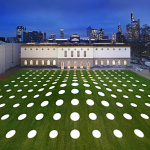
Not all great architecture begins with a bulldozer. From Foster + Partners’ reworking of Berlin’s Reichstag, to last year’s Stirling Prize winner, the partially ruined Astley Castle by Witherford Watson Mann, many of the most successful new buildings start with an older one.
The latest feature on the Phaidon Atlas brings together six of the most notable recent projects that began with an existing, historical building. These vary from derelict racecourse buildings to moribund gas works, yet the resultant buildings share common attributes. In each case, as our Atlas editors put it, “the effect is one of external juxtaposition, bringing a united, new program and adapting buildings to the 21st century.”
50 Women Artists Worth Watching
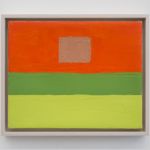
Wouldn’t it be nice to think that a gender-delimited list is no longer relevant? It’s true that to be a practicing woman artist today is hardly the struggle it would have been in Mary Cassatt’s era. Women artists are actively acquired by museums and honored with major surveys and retrospectives; recent names in the spotlight include Julia Margaret Cameron, Rineke Dijkstra, Zarina Hashmi, Sarah Lucas, Cindy Sherman, Lorna Simpson, Rosemarie Trockel, Carrie Mae Weems, and Francesca Woodman. Collectors pounce on new inventory by Marlene Dumas, Julie Mehretu, and Dana Schutz. Many women artists are doing well, even very well, thanks to committed galleries and ecumenical collectors. Dealers boast of higher private sale prices than public ones for their female artists. Yet there remains a glass ceiling in the salesroom.
Time and again, the specialists and dealers we spoke to emphasized that the prices commanded on the block were by no means a measure of the works in question in terms of critical acclaim or artistic value. Connoisseurs in search of excellence, they say, would be wise to ignore gender outright—especially if considering works of the 50 artists we have highlighted here, whose critical reputations outstrip their value in the marketplace.
A Guide to the World’s Biggest Art Prizes
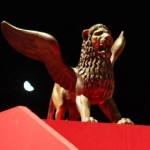
A holdover from the days of the French salon system, art awards provide distinguished organizations—museums, government bodies, corporations, philanthropic groups—with a way to honor the outstanding artistic talent of the day (and to burnish their own reputations in the process). With Grand Rapids’s headline-grabbing Artprize on the horizon, we’ve assembled a glossary of the world’s preeminent tokens of artistic achievement.
Understanding Anselm Kiefer’s Interior
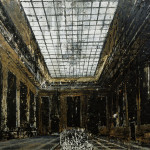
Prior to the Royal Academy’s show, we look at one key work by the great German painter.
No one, beyond the Royal Academy’s curatorial team, knows exactly what’s going on display at next month’s Anselm Kiefer exhibition, yet it is already being described as a blockbuster. The RA is devoting all of its galleries to the German artist, placing him alongside the likes of Anish Kapoor and David Hockney, whose work also occupied every room at the London institution during their respective shows.
Kathleen Soriano, the exhibition curator, says 60 per cent of the exhibition, which opens towards the end of next month, will be a retrospective, while the remaining 40 per cent will be new commissions. It’s hard to know what this newer part will comprise of, as, aside from his works on canvas, Kiefer has sculpted everything from sunflowers to bombers.
Know Your Critics: What Did Leo Steinberg Do?

If you could have dinner with just one 20th-century art historian, you might want to choose Leo Steinberg (1920-2011). Known for delivering garrulously wide-ranging lectures and papers that were as lucid as they were revolutionary, he was also admired for his wit, dropping in enough jazzy lines that Woody Allen could have cherry-picked them for material.
The following is a glimpse into his dazzling mind.
John Baldessari’s Unforgivingly Humorous Art

When John Baldessari started creating his text paintings in the mid 1960s, only a handful of artists had ever trifled with the idea. There were Roy Lichtenstein‘s paintings from comics, and the Cubists had integrated newspaper clippings in their work, but nobody had been brave enough to exhibit paintings that simply offered text.
For one of his early text paintings, Baldessari chose a simple phrase that offered a perfect example of the layered meanings his work is often able to express with extremely limited means: “Pure Beauty.” Presented against a stark, dully monochrome background, the piece was a challenge to viewers who hoped to find painterly drama on the canvas—and, simultaneously, it was a critique of those Minimalists who at the time were stripping all the fun out of art. Either way, Baldessari put himself at the center of the debate about what qualified as art, and quickly gained a reputation for intelligent work that was at once controversial, quirky, humorous, and groundbreaking.
Today, Baldessari is considered one of the fathers of Conceptual art—not only for the influence of his art, but also for his four decades as a leading instructor at CalArts and UCLA—and he remains one of the most well-respected artists alive.
Ai Weiwei prepares for Blenheim Palace show but must keep his distance
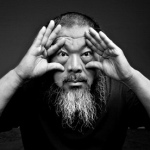
The artist Ai Weiwei, confined to his house and studio in Beijing, his passport confiscated by the state, has been roaming the corridors and state rooms of Blenheim Palace, one of the grandest houses in England, through a 3D computer model.
He has never set foot in the gigantic home of the Duke of Marlborough, but is preparing to install the largest exhibition to date of his work in the UK. When it opens on 1 October, more than 50 new and archive works will sit among the Van Dyck portraits of Churchill ancestors and tapestries of battles fought and won 300 years ago.
“In the beginning, we sent him photographs and detailed plans, but he’s an absolute perfectionist and every inch of where works are placed matters to him. So in the end we lasered all the rooms to make the model for him,” Lord Edward Spencer-Churchill said.
Christians Pissed About Piss Christ, Again
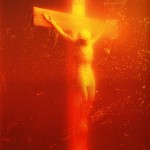
Protesters swarmed the Fesch Museum in Ajaccio, Corsica on Tuesday and Wednesday, demanding that it remove Andres Serrano’s ever-incendiary work Piss Christ (1987). As Le Figaro reported, approximately 50 people stood outside the museum holding a large sign which read “PISS CHRIST FORA,” or “Piss Christ out.” The protesters contend that the work is an affront to Catholicism and an “insult to every Corsican,” the paper reports. The photograph depicts a small plastic crucifix suspended in a container of the artist’s urine.
Piss Christ led the National Endowment for the Arts to end single-artist grants in 1989 when two US senators discovered that Serrano was given $15,000 for the photograph. It has drawn consistent controversy in the years since, leading to death threats on the artist.
China’s Pollution Crisis Inspires An Unsettling Art Exhibit
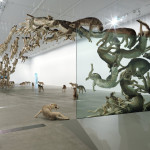
When 16,000 dead pigs floated down a river in Shanghai last year, it inspired a lot of questions about China’s environmental conditions and a lot of disgust.
Now, those pigs have helped inspire an arresting exhibit at Shanghai’s contemporary art museum, the Power Station of Art.
The solo show, called The Ninth Wave, opened this month and features the work of a top, Chinese contemporary artist, Cai Guo-Qiang. His installations are grand, provocative and unsettling.
Scratches in the Art Market Gilding

LONDON — Sometimes art can be difficult to understand. Sometimes the art market can be even more baffling.
Back in December, the contemporary dealer David Zwirnersaid in a New Yorker profile that art was “an industry in its golden age.” His point seemed to have been proven during the June 17 preview of the Art Basel fair in Switzerland, when his gallery sold more than $20 million of artworks by Ad Reinhardt, Jeff Koons, Luc Tuymans and other investment-grade names.
But if these are such gilded times, what do we make of Sotheby’s share price of around $41 as of Friday, down from a high of $53 in January? And of the 48 percent drop in the auction house’s private sales in the first half of this year, according to an Aug. 8 Securities and Exchange Commission filing?
Jeff Koons Retrospective Vandalized
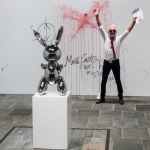
On August 20, Canadian performance artist Istvan Kantor smeared a white wall on the third floor of the Whitney Museum’s Jeff Koons retrospective with his own blood, and signed the impromptu mural with the name “Monty Cantsin,” andHyperallergic reported. He was photographed by a passerby, ecstatically raising his arms and holding a piece of paper.
The Race to Find New Art Collectors
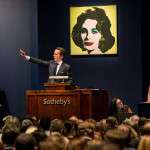
In early May, Christie’s invited a group of 18 new collectors from China to visit New York. The auction house escorted the guests on guided tours through the Museum of Modern Art, arranged VIP tickets to a local art fair and threw a lavish dinner in the Rockefeller Center ballroom of Christie’s. Auctioneers also reserved two discreet skyboxes overlooking the house’s saleroom so the group could watch its major spring sales of Impressionist, modern and contemporary art.
Christie’s efforts paid off: read on …
Bidding Up: Escalating Prices are Putting Pressure on Dealers to Double Down on their Own Artists

When artists agree to be represented by a gallery, they usually work out with the gallery owner such matters as the amount of the dealer’s commission; how often their work will be exhibited in solo or group shows; the price of their artworks; that sort of thing. Another expectation, usually not as explicitly stated but increasingly crucial, is that the dealer will attempt to control the market for the artist’s work even after it has been sold. Some dealers go so far as to bid up, and even buy, pieces when artworks are consigned to auction. The practice is legal.
On a day like today, American painter and graffiti artist Jean-Michel Basquiat died
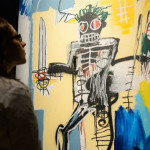
August 12, 1988. Jean-Michel Basquiat (December 22, 1960 – August 12, 1988) was an American artist. He began as an obscure graffiti artist in New York City in the late 1970s and evolved into an acclaimed Neo-expressionist and Primitivist painter by the 1980s.