10 Exotic Art Pilgrimages To Take, To Dream Of, For Summer
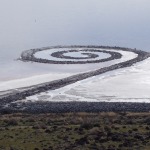

From Picasso’s formidable whores and Magritte’s provocative pipe to Pollock painting like and angel, the best 20th-centrury art reflects a world of flux, abstraction and imagination.
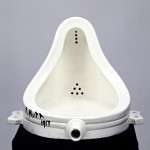
The century was not yet out of its teens. For most of the small minority aware of the experiments of modern art, the bright colours of Matisse were still shocking and Picasso’s assaults on beauty were beyond the pale. What was anyone to make of the porcelain urinal Duchamp submitted to a New York art exhibition? Yet it took. Fountain, with its signature R Mutt and the date 1917, was photographed and remembered. It became art, and so changed art forever.
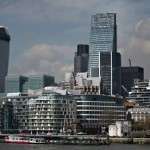
From St Paul’s to the Gherkin, London’s skyline is full of history – and character. Will the new tower frenzy spoil all that? Oliver Wainwright lists his top 10 worst upstarts.
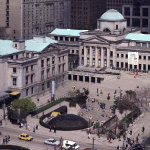
The Swiss architecture firm Herzog & de Meuron – among the world’s leading designers – has been selected to design a new Vancouver Art Gallery. The firm will have two themes: building for art, and making downtown work better.
HdM, which designed Beijing’s Bird’s Nest Olympic stadium and London’s Tate Modern gallery, beat four other firms on the VAG’s shortlist, propelled by a record of designing great museums and a vision to create a building that will suit its location.
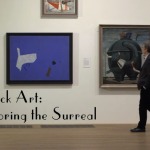
The Doctor travels through time to bring us the story of Surrealism
Need some help getting to grips with Surrealism? The Doctor will see you now.
Peter Capaldi, a former art student, and the latest actor to play Doctor Who, settles down on Freud’s couch to deliver his wry take on the Surrealist movement.

Next up in our series of the world’s most expensive living artists: the Americans. Auction results reveal both the usual suspects as well as some surprises, making this list more diverse than might have been expected. Some of these artists are auction darlings with thousands of works on the block, while others have had nary 100 lots to their name. Many of these examples demonstrate a taste for Americana, whether kitschy objects that reference a peculiarly American innocence, or works that defy that guileless posture or otherwise engage the country’s culture and history.
In May 2013, German artist Gerhard Richter broke his own record when his 1968 painting “Domplatz, Mailand,” which looks like a fuzzy black-and-white photograph, sold at auction for $37 million, the highest amount for any living artist.
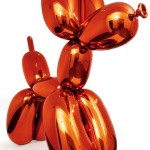
It was a record he held for six months, until Jeff Koons’ “Balloon Dog” smashed it, selling for $58.4 million at Christie’s.
The number staggered even the auctioneer, Jussi Pylkkanen. “We are in a new era of the art market,” he said.
A new era is one way to put it; another would be a world gone mad. As the .00001 percent run out of mansions to buy, they’ve poured their wealth into art. And not art many would find, well, good. Read on …
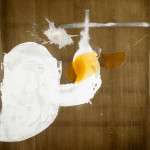
Two Shows Offer a New Look at Julian Schnabel.
At the moment, Julian Schnabel’s painting seems to be the art that dares not speak its name. Its influence is widely visible but rarely cited. You can see it in the work of artists from Joe Bradley to Oscar Murillo and all sorts of painters who emphasize chance or accident and like to work big, using unconventional materials.
In a sense, Mr. Schnabel was Jeff Koons before Jeff Koons. In the early 1980s he signaled a change in attitude toward art-making — as Mr. Koons would in the late 1980s — and then became a vilified lightning rod. Along with other neo-Expressionists like David Salle, Eric Fischl and Jean-Michel Basquiat, Mr. Schnabel accomplished a liberating take-back for painting. His generation retrieved elements banished during the austere 1970s. They included narrative, language, psychology, the figure (or body) and explicit references to the outside world and past art, which had found refuge with Conceptual, performance, video and photo-based artists. It was as if the painters looked around and thought, if nonpainters can have it all, why not us?
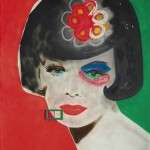
artnet News’s ongoing series on the world’s most expensive living artists by nationality turns next to the French—after previous installments devoted to the Brits and the Germans. And a quick glance at the list below is enough to realize how isolated (others might say undervalued) the market for French art remains. Only three of the auction records presented here hit the million-dollar mark.
Perhaps surprisingly, the generation of French contemporary artists best-known abroad—the likes ofPierre Huyghe, Philippe Parreno, and Xavier Veilhan—is nowhere to be seen. The youngest artist to make the cut is Huang Yong Ping, who turns 60 this year.
It is also worth noting that only one of these records was achieved in the French capital. Most of the others were set in London and New York. As a marketplace, Paris still has a lot to prove.
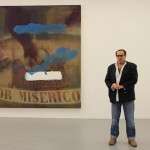
The Dairy Art Centre in London is presenting the first exhibition in 15 years of the seminal American artist Julian Schnabel. The exhibition brings together new and rarely seen works created within the last two decades. Now known as much for his critically acclaimed films as for his art, this exhibition is both a re-evaluation and a celebration of Julian Schnabel the painter – his primary occupation.
As an artist Schnabel has invented new boundaries and categories of what a painting can be. His work is both abstract and figurative, often manifesting both characteristics simultaneously. His series explore a wide range of subject matter and visual motifs, and for his exhibition at Dairy Art Centre, works being displayed will examine themes of ‘The Painter and the Painting,’ and ‘Spirituality and the Sublime.’ These will be contrasted with other works shown in series that incorporate oriental imagery, expressive abstraction and portraits of the artist. At every point within the exhibition, the enormous depth of Julian Schnabel’s visual imagination will challenge the possibility of what painting might be.
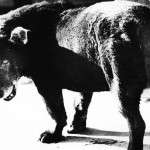
Since 1974, when legendary photography historian John Szarkowski introduced New Japanese Photography to the Western audiences at the Museum of Modern Art, critics have lauded the work of this group of artists, from Shomei Tomatsu and Ken Domon to Nobuyoshi Araki and Daido Moriyami, for being exceptionally distinct from that of their Western counterparts.Often incomplete and fleeting in quality, these artists’ photographs are no less pronounced today in their bold experimentation than they were in the ’70s. Here are 10 photos that exemplify the spirit of Japan’s grand masters, from large-scale works recording a spectacular limestone quarry explosion to blurry snapshots documenting the seedy underbelly of Tokyo‘sShinjuku neighborhood.
In 1976 I found myself in Düsseldorf, one stop on a mission to gather material for a special “European” issue of Art-Rite magazine (which we never managed to put out). One memorable highlight was a Sigmar Polke exhibition at the Frankfurt Kunsthalle. The entryway was blocked off by wood fencing, probably bought at a garden supply store, but visitors could view the gallery space by looking down from the mezzanine. Instead of hanging the pictures on the walls, Polke had scattered his paintings and photographs haphazardly around the space, many face down, in the shape of a giant swastika. Lettering across the fence read, “Art makes you free,” a bitter parody of the phrase “Arbeit Macht Frei,” which crowned the gate at Auschwitz.
Polke, who died too early at 69 in 2010, wasn’t just a bad boy. He was a bad ass.
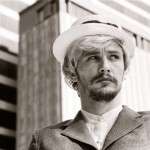
James Franco’s new exhibition at Pace is bad. It’s not a George W. Bush–caliber train wreck, but it’s close. The exhibition, “New Film Stills,” features 29 photographs from Franco’s series inspired by Cindy Sherman’s seminal “Untitled Film Stills” (1977–80). In each black-and-white photograph the artist-actor-scholar appears dressed (or undressed) in women’s clothes, often sporting a wig and makeup, for an effect that falls somewhere between drag and art historical dress-up. Though passable as individual photos, when taken as a conceptual experiment in appropriation, homage, and remixing, “New Film Stills” is at best comically sophomoric. At worst it’s disrespectful—to Sherman, to viewers—and sexist.
Tracey Emin‘s sculpture My Bed (1998) is exactly what it sounds like: the work consists of the artist’s freshly slept-in bed, with crumpled pillows, disheveled sheets, and dirty tissues and other junk (including sanitary items, prophylactics, and liquor bottles) strewn around the footboard. When it debuted at 1999 at London’s Tate, it created an instant commotion in the media—according to the Sunday Mirror, the piece prompted thousands of grumbling letters from readers about the “so-called art work.” Meanwhile, a “furious housewife” was apprehended by museum staff when she attacked the piece with cleaning products.
All of which is to say that My Bed is the kind of artwork that prompts the timeless response: But is it art? To which we reply: Of course it is—because Emin said so. But there’s more to the story. The key to fully understanding the complex operations of contemporary art that may, to the untrained eye, seem lawless and unskilled, is to understand the concept of “the readymade” in the history of 20th-century art.
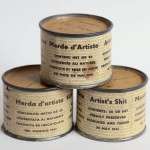
Italian prankster conceptual artist Piero Manzoni famously challenged the idea of the readymade in 1961 when he made Artist’s Shit (Merda d’Artista). Manzoni’s specious claim was that he had actually canned and labeled his own excrement, poking fun at the idea that any item touched by an artist could be transformed into a great work of art—while also, ironically, taking the same notion to its logical extreme. His joke continues to be played out in the market: a can sold for $ 166,618 at Sotheby’s in 2008.
Young-Hae Chang Heavy Industries, “ART IS A LIE THAT JUST WON’T DIE,” 2014. HD Quicktime Movie, 6 minutes. Online.
Everything you need to know about what makes art great, Museums and collecting, the life on an artist, and family – especially Mothers! And that’s a lot for a Video to cover – in just 6 minutes – but it’s all here!
Watch the HD online Video!
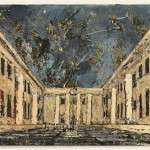
In the second installment of our series of the world’s most expensive living artists, we focus on the Germans. Artists from the country have seen unprecedented success in recent years. And high-flying auction results have been spread relatively evenly across media, if not between the sexes.
Perhaps most interestingly, however, all of the Germans in our top 10 achieved their best prices during or after the great recession of 2008. The country’s penchant for stringent conceptualism and a highly art historical approach likely proves a safe bet for value retention regardless of economic conditions. Looking forward, however, it also likely means we haven’t even begun to hit the peak of where the German market could go.
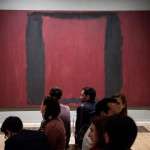
The painting caught Pei-Shen Qian’s eye, but it was the price that affected him deeply.
Mr. Qian, browsing in a booth at a Manhattan art show a decade ago, had stumbled across his own work: a forgery of a modern masterpiece that he had recently completed. He had sold it for just a few hundred dollars, to a man prosecutors now say was Mr. Qian’s co-conspirator in a long-running, $33 million art swindle, whose success stemmed in large measure from Mr. Qian’s skill.
The artist is expected to create a multimedia installation for next year’s Biennale.
Joan Jonas has been selected to represent the United States at the 56th Venice Biennale. The video and performance artist is expected to create a site-specific multimedia installation for the US pavilion, one of the most visible and celebrated international platforms for American artists. Her presentation will be on view from 9 May to 22 November 2015. Jonas’s presentation at the US pavilion will incorporate video, drawings and sound and focus on landscape, natural phenomena and the ocean. Jonas designs every element of her lyrical multimedia installations, from the music to the script.

The 2012 survey of the courageous Chinese artist Ai Weiweiseen at the Hirshhorn Museum in Washington has finally arrived in New York, and is much improved. The show, “Ai Weiwei: According to What?,” which opens Friday at theBrooklyn Museum, has been beefed up throughout, but most notably by two installation pieces completed in 2013. One, “S.A.C.R.E.D.,” is perhaps the best work of art Mr. Ai has yet made.
As a result, this show is far clearer and more gripping than its original incarnation and something of a triumph. It brings many of Mr. Ai’s past efforts into focus as the juvenilia they often were, while making a persuasive case for his ability periodically to reconcile art and ideals and life — which in his case is usually, unavoidably, political — into a memorable balance.
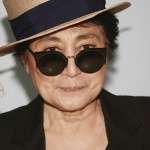
For centuries, the art world and art market were dominated by men—just look at Giorgio Vasari’sThe Lives of the Artists, or, more recently, Jonathan Jones’s all-male list of the greatest artworks ever—but that’s beginning to change. Women now occupy top positions in every sector of the art world, and though they are still paid less than their male colleagues in similar roles, they are slowly helping to right the industry’s historic gender imbalance. Herewith, artnet News recognizes the invaluable work of 25 art world power players who are women.