
Forget the Loft: The Newest Trend in Luxury Real Estate is Walls

For Wendy Maitland, Town Residential’s president of sales, an Oscar-winning director client of hers was a typical real estate shopper with typical requests. He had a seven-figure budget and was keen to buy into one of the many new luxury condo complexes sprouting around Manhattan. The client was downsizing from a huge country house in Connecticut since his children were grown, and he planned to use a new perch in Manhattan as his primary residence. So Maitland showed him multiple locations until they whittled his choice down to two: one a luxe development on the Upper East Side, the other a new building downtown, in SoHo. The clincher for her client was a second opinion from someone he trusted—but it wasn’t his life partner, an interior decorator, or even a feng shui master. It was his art consultant.

“Every space in the apartment had to be approved by the art consultant.”
The unspoken reason why galleries are flocking to Los Angeles

Galleries like Sprüth Magers and Hauser Wirth & Schimmel quietly but fiercely compete for the city’s artists.

The grand openings of the Los Angeles branches of European galleries Sprüth Magers and Hauser & Wirth (called Hauser Wirth & Schimmel), on 23 February and 13 March respectively, are sure to generate even more buzz about the booming Los Angeles art scene. Gallerists who have moved here in the past have praised the “energy” (Dominique Lévy), the “freshness” (Perry Rubenstein), “the ability to spread out” (Michele Maccarone) and the “exciting artists” (Adam Lindemann, of Venus Over Los Angeles). Or, as Lindemann put it more plainly, “The weather is better and there is a lot more room.”

Some of the buzz is well earned, especially when it comes to cheaper downtown real estate and the great artists working and teaching here. But there is another strong incentive behind so many galleries making the move, one that too often goes unmentioned.  Many galleries are fiercely, if discreetly, vying for market control over artists, with high-end galleries such as Hauser Wirth & Schimmel and Sprüth Magers competing directly for the startling number of major Los Angeles-based artists who lack gallery representation there.

Sexy, spotless and sure: the three golden rules of desire

As far as a painting’s hammer price is concerned, other, less noble considerations matter a great deal more than the picture’s intrinsic quality.

Determining the market value of a picture can be a surprisingly heartless experience. There before you stands a fine portrait by a great artist, whose energy and creative genius you see emblazoned on the canvas with brushstrokes as fresh as the day they were painted. Yet you must judge the work not by its painterly strengths, but by the sum of its component parts.

The ABCs of value

• Rock-solid Attribution
There must be no doubts

• Is she a Beauty?

Sexy subjects (and cats) sell

• Country-house Condition
The less (re)touched, the better


4 Shifts in the “Unpredictable Art Market” You Should Know About

A lawyer, a financier, an art advisor, and a journalist walk into a room…

It sounds like the start to a bad gallery dinner joke. But at The Armory Show the topic of discussion was serious: “How to Optimize the Unpredictable Art Market.” In a testament to the topic’s immediacy, moderator and Financial Times columnist Georgina Adam admitted that her panel was originally called “The Rising Art Market,” until warnings of a slowdown began to proliferate. And joining Adam on stage to discuss were CEO of Athena Art Finance Andrea Danese, New York art lawyer Steve Schindler, and art advisor and curator Jeffrey Deitch. Here are four takeaways from the discussion…

BAC in the Globe & Mail

Second careers are a chance to nurture primary passions

Laing Brown decided to “retire” from his 30-plus-year career as a lawyer and partner at two of Canada’s largest law firms.  But instead of carrying on as a consultant or spending his days playing golf, Mr. Brown and his wife, Kathleen Brown, also a lawyer, decided to start a business in an entirely new profession, as international art consultants.

Their business, Vancouver-based BrownArtConsulting Inc. (BAC), is based on a lifelong passion for art collecting, and it shows.  The Browns had an advantage because they were already in the art business before they launched BAC.  What’s more, because they’re not doing it just for the money, Mr. Brown says they can be more selective about which clients they want to work with, and how hard they want to work.

“Our guiding principle is, if it’s not fun, we’re not doing it,” he says.

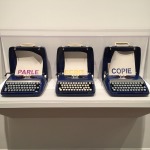
Marcel Broodthaers’s Fraught Relationship with Words

Do words limit our experience of a given artwork? Gustave Flaubert believed that, “Explaining one artistic form by means of another is a monstrosity.” Art critic John Bergerwrote: “When words are applied to visual art, both lose precision.” And what if the words are in the art? Expressed by the artist herself?

From Cubism to conceptual art, the 20th century saw a spike in the appropriation of words in visual expression. Of course, there are earlier examples, like illuminated manuscripts, Egyptian hieroglyphs, or the works of visual poets like William Blake. But it was in the 1960s especially that the boundaries between the seemingly distinct art forms really began to blur.

Marcel Broodthaers was a product of this time. Currently having a retrospective at the Museum of Modern Art (MoMA) in New York, the Belgian is hailed for being innovative with written and visual language, borrowing from Marcel Duchamp, René Magritte (a contemporary and friend), and Pop art, while giving these influences a new twist.

Top 9 Takeaways from Knoedler Forgery Trial

Never has the phrase “Hindsight is 20/20″ held as much weight for anyone as it has for collectors and other art world observers in the  wake of the recent high-profile Knoedler forgery trial.

The case was settled a few days ago (February 10), but not without the art world experiencing a mountain of frequently cringe-worthy evidence and an earful of damning testimony showing how collectors Domenico and Eleanore De Sole—and by extension dozens of others—were duped into spending tens of millions of dollars on purported Abstract Expressionist masterpieces that turned out to be fake. Theirs is the only case to make it to trial so far but several more are pending.

So what have we learned? Herewith, a few of Artnet’s most pressing, albeit unresolved issues and questions raised by the trial.

Philippe Parreno

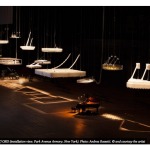
Working across a wide range of media, French artist Philippe Parreno came to prominence during the 1990s and is known both for his collaborative approach to artmaking (with artists such as Liam Gillick, Douglas Gordon and Tino Sehgal) and for treating exhibitions as objects or artworks in themselves, rather than as a collection of discrete works, most notably in his 2013 solo exhibition Anywhere, Anywhere Out of the World at the Palais de Tokyo in Paris, and as cocurator of Il Tempo del Postino (2007–9), a group exhibition in which the participating artists sought to occupy time rather than space. Following his recent exhibition H {N)Y P N(Y} OSIS at the Park Avenue Armory in New York and in advance of a new solo show at Hangar Bicocca in Milan, ArtReview asked him to explore that process of exhibition-making with one of the New York show’s curators, Tom Eccles.

Philippe Parreno: “Hypothesis” at Hangar Bicocca, Milan

Philippe Parreno is one of the most significant French artists of the past two decades. Throughout his work, which includes film, video, sound and writing and drawing, the artist has always explored the borders between reality and its representation utilizing the vocabulary and means typically associated with a variety of media such as radio, television, cinema and, recently, information technology. Parreno also questions the concept of authorship and has worked in collaboration with many highly influential artists, architects or musicians.

The exhibition at Pirelli HangarBicocca is his first survey exhibition in Italy, and it is conceived as a choreographed space following a precise script devised by Parreno. Curated by Andrea Lissoni, the show is inhabited by a series of key pieces together with recent works and music according to a mise-en-scène conceived by artist. “Hypothesis” presents works characterized by sound and light, including Parreno’s iconic Marquees, made between 2006 and 2015. The Marquees and pianos are sequenced to musical compositions by Agoria, Thomas Bartlett, Nicolas Becker, Ranjana Leyendecker, Robert AA Lowe and Mirways.

Watch the video at the bottom, turn up the volume and make it full screen

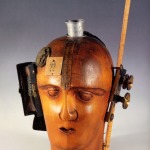
100 Years Ago Today, Dada Was Born at Cabaret Voltaire in Zurich

100 years ago today, on February 5, 1916, the now-legendary Cabaret Voltaire—the artist hangout that gave birth to the Dada movement—was opened in Zurich.

Dada—which advocated coincidence as a leading creative principle—deliberately contravened all known and traditional artistic styles at the time. It was championed by Hugo Ball, Tristan Tzara, Richard Huelsenbeck, Hans Arp, Sophie Taeuber-Arp, and Marcel Janco.  It all started with a “Dada Evening” organized by Ball and Emmy Hennings who opened the popular nightclub frequented by Zurich’s artist community.

Philippe Parreno Announced As 2016 Hyundai Commission At Tate Modern Turbine Hall

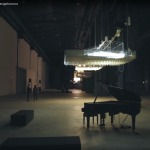
Philippe Parreno will undertake this year’s Hyundai Commission for the Turbine Hall, at Tate ~Modern opening on 4 October 2016.

Parreno is a French artist who works across film, video, sound, sculpture, performance and information technology. A key artist of his generation, Parreno explores the borders between reality and fiction and is known for investigating and redefining the gallery-going experience. Parreno sees his exhibitions as choreographed spaces that follow a score, during which a series of different events unfold. By creating kaleidoscopic environments, he treats exhibitions as one coherent whole rather than a series of objects within a space.

Having collaborated with many visual artists as well as musicians, architects, scientists and writers, Parreno continues the tradition of the avant-garde artist engaged with many cultural disciplines. Recently he presented a vast installation H{N)Y P N(Y}OSIS at Park Avenue Armory, New York (2015), which fused film, light, sound and performance to create a dramatic sensory journey. At the Palais de Tokyo, Paris, in 2013 he was the first artist to occupy the entirety of the gallery’s expanded space of 22,000 square metres.

‘Laura Poitras: Astro Noise’ Examines Surveillance and the New Normal

Political art has changed over the past 50 years. Unlike the protest art of an earlier era, much of the most interesting new work feels slippery and evasive, as if reluctant to speak its mind. In part, this is a reflection of different, though not necessarily evolved, thinking. We’ve abandoned old beliefs in utopias, in visions — some would say hallucinations — of a society built on absolute good for all, in which art plays a declaratively positive role. The 1960s counterculture, even at its most anarchic, was based on such beliefs and visions. And that counterculture is long gone.

Which brings us to “Laura Poitras: Astro Noise,” at the Whitney Museum of American Art, an engrossing solo show by an artist best known for three remarkable films documenting the United States government’s post-Sept. 11 “war on terror.” (She has also written for The New York Times.) The first film focused on the American occupation of Iraq; the second, on the detainment and torture of prisoners at Guantánamo Bay, Cuba. The third, the Oscar-winning “Citizenfour,” was a white-knuckle, you-are-there account of Edward J. Snowden’s leak of thousands of pages of classified National Security Agency documents in 2013, revealing mass surveillance at home and extensive drone wars abroad.

One-Two Punch: The Rise of Joint Representation has Dealers Sharing Artists All The Way to the Bank

If a collector wanted to buy a Frank Stella at Art Basel Miami Beach last December, he could have walked up to the booth of New York’s Marianne Boesky Gallery, which represents Frank Stella. Or, he could have walked up to the booth of London and New York gallery Dominique Lévy, which also represents Frank Stella. Or, he could have walked up to the booth of London, Berlin, and soon Los Angeles outfit Sprüth Magers, which—you guessed it—also represents Frank Stella.

Welcome to the age of artist free agency and gallery partnerships. Gone are the days when a single dealer nurtured the career of an artist in return for the exclusive right to sell her work. While it has long been regular practice for artists to have different dealers in various markets (one for Los Angeles, one for New York), high-profile artists are getting ever more promiscuous and working with more than one gallery in the same town.

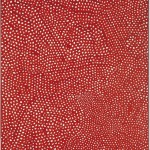
10 things to know about Yayoi Kusama

Florence Waters takes a closer look at the life and work of the woman behind the dots — the world’s most popular artist of 2015. Illustrated with works offered in our forthcoming Post-War and Contemporary Art auctions in London.

1. Painting became an act of rebellion for Kusama when she was just a child. Her mother told her she was not allowed to paint and took her inks and canvases away.

…..

10. The search for stardom is part of her work and story. Kusama often describes how she craved fame when she arrived in New York. As a woman forging a career in an alien country harbouring post-war resentment towards the Japanese, she had to work with fierce determination to get the attention she craved. At the Venice Biennale in 1966 she even handed out flyers featuring Sir Herbert Read’s poetic description of her work as ‘images of strange beauty’ that ‘press … on our organs of perception with terrifying insistence’.

Stieglitz, Steichen & Weston — how photography became a modern art form

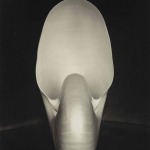
The first decades of the 20th century were among the most fruitful periods of artistic production of the modern era, especially for the still-fledgling art of photography. In New York, just after the turn of the century, a small circle of photographic visionaries revolved around the magnetic figure of Alfred Stieglitz (1864-1946), whose influence as artist, patron and gallerist galvanised this tight-knit community.

As a gallerist, Stieglitz was the first to show the European avant-garde in America: Matisse, Rodin,Picasso and Brancusi were all exhibited at his Gallery 291, and the ripples of their artistic energy spread throughout the continent.  Stieglitz was also a central figure for both the Photo-Secession — a movement in the early 1900s that was known for works in a pictorialist style — and later, in the development of photographic art along Modernist lines.

Why the Whitney is “Nervous” About Upcoming Laura Poitras Show

Classified images leaked by former NSA contractor Edward Snowden will figure as artworks at the Whitney Museum of American Art in its Laura Poitras solo exhibition, “Astro Noise,” opening next week. In an unprecedented sprint from headline to gallery wall, news of the covert intelligence program to which the works pertain will have scarcely broken — last night, in two storieson The Intercept — before the large-scale prints go on view to the public on February 5.

Poitras, a documentary filmmaker, artist, and journalist who became a household name in 2013 for her reporting with journalist Glenn Greenwald on the warrantless spying programs exposed by Snowden, is including newly revealed visuals from the Snowden archive in her show, as well as in an accompanying catalogue. The images are products of a program in which, according The Intercept, “American and British intelligence secretly tapped into live video feeds from Israeli drones and fighter jets, monitoring military operations in Gaza, watching for a potential strike against Iran, and keeping tabs on the drone technology Israel exports around the world.”

8 New Classics of 21st-Century Photography You Need to Know Now

Since its inception in the early 1800s, photography has been the site of immense change as it evolved from a scientific challenge to a world-shaking mass medium over the past 200 years. The digital revolution of the new millennium has brought on both never-before-seen capabilities and a new ubiquity of the photographed image, developments artists have eagerly explored and exploited. These eight works, each excerpted from Phaidon’s The 21st Century Art Book, are some of the shining examples of fine art photography from the past 15 years.

Thomas Ruff, Louise Lawler, Wolfgang Tillmans, Thomas Struth, Hiroshi Sugimoto, Catherine Opie, Dayanita Singh, Luisa Lambri

How Galleries Can Get the Most From Art Fairs

With unstable markets and cautious collectors, art dealers everywhere are adopting leaner strategies that make the most of their gallery’s resources.

Driving 40% of annual gallery revenue, according to TEFAF’s 2015 Art Market Report, art fairs remain a crucial part of the bottom line, providing global reach without the need for multiple locations. The opacity of the primary market, paired with journalism that focuses on anecdotal highlights, can make it challenging for galleries to understand the international landscape when deciding to apply to an art fair.

Commissioning a Work of Art

We received the penned note from Miranda at the end of a punishing day. It was just two sentences long, but it raised a slew of legal issues and a few other concerns. “I am about to commission a sculpture of my husband, Carlo, for a 10-year anniversary,” she wrote. “Anything I should consider?”

Oh, Yeah!  Read on …


Three can’t-miss contemporary-art shows in Vancouver

In Vancouver this January, some important moments in contemporary art: A Canadian artist’s Turner Prize-nominated work has its North American premiere; collector/real estate guru Bob Rennie mounts his most complex show yet at his own gallery; and Brian Jungen returns to his seminal source material – sneakers. Western arts correspondent Marsha Lederman walks us through three essential events.