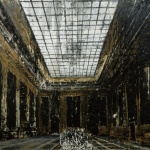
Anselm Kiefer in Conversation with Tim Marlow – Video

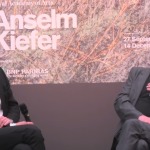
Anselm Kiefer in Conversation before Kiefer’s major retrospective at the Royal Academy in London, with the new Director of the RA, Tim Marlow.

This is only the third time that one artist has taken over the whole of the Royal Academy, the other two being David Hockney and Anish Kapoor – we can’t wait to see it in 10 days time!!

Know Your Critics: What Did Irving Sandler Do?

Irving Sandler is an artists’ art historian. In contrast to other prominent midcentury art critics—like the New York Times’s John Canaday, who warned him against fraternizing with artists for fear of impairing his critical distance—Sandler purposefully immersed himself in his subjects’ milieu, first in his days as a young reviewer for Artnews and later as an art historian. Summing up his writing career in 2006, Sandler proudly wrote: “The thread that runs through my writing is a concern for the intentions, visions, and experiences of artists.”

What follows is a brief look at Sandler’s career, and what makes him tick.

Giant Bronze Babies Make Qataris Queasy as Nation Gorges on Art

Seventy kilometers west of Doha lies the Brouq Nature Reserve, a sand spit in the Gulf of Bahrain where Qataris like to camp and wax nostalgic about their grandparents’ nomadic Bedouin lifestyle. To get there, you drive an hour along a highway bordered by electrical towers and plastic barriers that prevent blowing sand from drifting onto the road. In contrast to the capital’s futuristic skyline of skyscrapers and construction cranes, the open desert is bleak and hazy; oil wells flare on the horizon, and the only other landmarks are a hospital catering to petroleum workers, a ruined 18th-century fort and an underpass for camels.

Known for its lonely beaches and the defunct film set of an old pearl-fishing village, the reserve last spring became the permanent backdrop for ‘East-West/West-East,’ a site-specific sculpture by Richard Serra, Bloomberg Pursuits will report in its Autumn 2014 issue. The installation is part of a high-stakes campaign launched by the Qatari government to educate its citizens about contemporary art.

Anselm Kiefer: Inside a black hole

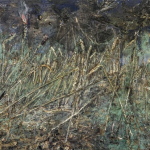
Kiefer uses a vast panoply of materials in his art, each of which have intricate symbolic meanings. Studiously parsed, they trigger a kind of spiritual-historical giddiness. There is the straw, for instance, that symbolises the hair of the German prison guard Margarethe in Paul Celan’s poem “Death Fugue.” There are the seven flames that represent Margarethe’s antagonist in the same poem, the concentration camp prisoner Shulamith, reduced to ashes in the furnaces. There is the lead Kiefer uses, again and again, to invoke the weight of history and the flux and potential of the human spirit. There are the sunflowers and crows that refer to specific paintings by Van Gogh, and the concrete that connects in his mind with spiritual striving, and with the modernist architect, Le Corbusier. On it goes. Sometimes, the allusions feel pointed, precise, and powerfully charged. At other times, it’s all quite bewildering.

Overwhelmed and confused, perhaps, by his work’s undisguised ambition, critics have occasionally accused Kiefer of getting into an uncomfortably intimate dance with Nazi tropes. When he showed his work, alongside his friend Georg Baselitz, in the West German Pavilion at the Venice Biennale of 1980, one critic, Werner Spies, accused Kiefer of inflicting on the public “an overdose of the Teutonic.”


Is the Turner Prize Just a Publicity Machine? JJ Charlesworth Takes on the Tate

This year’s Turner Prize shortlisted artists are hooked on materiality. Not some slick, seamless production-value fetishism geared for maximum visible impact, but almost the exact opposite—a thoughtful, often overly self-conscious, politically inflected take on materials and media, on production and reproduction, in which the frictionless transparency of images is jammed by the clunky inertia of obdurate old tech. The kind of old tech that slows things down and makes you mindful that you’re not just looking at all of this in a JPEG on Tumblr while sitting on your couch in your underpants.

Campbell deserves to win, for the sheer scale of his critical interests and the restless reinvention of his formal and narrative resources. But it would have been great to see an artist like him faced with artists of equal scope but on entirely other trajectories, rather than this narrow serving of middle-range curatorial currencies. It isn’t the artists’ fault, of course; it’s a product of the process itself, which suggests that there needs to be some serious self-scrutiny about the risk of cliquishness when it comes to the tastes and affiliations of the selection panel. If the Turner Prize is starting to feel more parochial than national, it’s because its stated ambition—recognizing an outstanding exhibition by a living artist from Britain—isn’t being taken seriously enough.

Robert Gober Brings It Home at MoMA

Robert Gober’s retrospective “The Heart Is Not A Metaphor,” which opens on October 4 at the Museum of Modern Art in New York, is a strange and moving survey of domestic unease, seemingly pointless labor, and creeping horror, among other things. You enter the exhibition past a pair of very different works: “X Pipe Playpen,” 2013-14, a sculpture of a child’s crib bisected by an industrial pipe; and an untitled painting from 1975 depicting a suburban house, its lawn criss-crossed with ragged shadows of barren trees. The two pieces feed each other — the fairly straightforward, even bucolic scene can’t help but emit sinister vibes next to the modified baby furniture, a symbol of security gone awry. You carry that feeling of molested comfort through the rest of the show, with its sinks and legs and re-contextualized slices of mundane architecture.

The small, early graphite drawings and paintings here could constitute a show of their own, from depictions of dish racks and other household products to one tiny canvas that belies Gober’s allegiance to Bess: an undefined orifice, populated by bats hanging from nails, being pried open by strange, green hands. The latter work hangs next to a sculpture of a petite bed, child- or monk-sized, neatly made. That juxtaposition is a nice summary of Gober’s retrospective in general: An invitation to relax, swiftly pierced by a jab of terror.

Ai Weiwei Takes Over Downton Abbey-esque Estate

To say that Blenheim Palace is grand is an understatement: It’s epic. Entering the estate, with its stunning view of the open fields and humongous 18th-century mansion looming at the back, one feels like they have slipped into the opening credits of cult TV drama Downton Abbey.

The Palace, built in 1704 by architect Sir John Vanbrugh and designated by the UN as a World Heritage site in 1987, is the home of the newly established Blenheim Art Foundation, which was launched last week with the largest ever UK exhibition of works by the Chinese artist and dissident Ai Weiwei.

The Turner prize show: voices, videos and erotic tickling sticks

Has the Turner prize lost its power to shock? No – thanks to James Richards’s sphincter shots. But it’s Tris Vonna-Michell’s spellbinding spoken-word travelogues that deserve to win.

What a heartening way to celebrate 30 years of the Turner prize. People are always saying the Turner, which shocked the nation with Tracey Emin’s unmade bed and Damien Hirst’s bisected cow, has become tame and middle-aged. It no longer creates the kinds of visceral arguments about the nature of art that it did back in the 20th century, when Rachel Whiteread won both the Turner in 1993 and the K Foundation award for “worst artist of the year”. Nowadays, conceptual art is so widely accepted as part of every aspiring person’s cultural makeup that the Turner causes less controversy than The Great British Bakeoff.

It is Vonna-Michell who deserves the Turner when the winner is announced in December. For him, video is just a way of getting at something more elusive and magical: the mystery of live performance. Of the four, he’s the only one whose artistic personality shines through. He seems to have found a highly imaginative way of being in the world. You feel he is an artist when he’s on the loo, as much as he is when he gets up to perform. At the end of his film, he even thanks the audience for listening – what a charmer. The winner of the Turner prize, at least as far as I’m concerned, is the human voice. – says Jonathan Jones of The Guardian.

Anselm Kiefer review – remembrance amid the ruins

Royal Academy, London
Anselm Kiefer’s monumental work in ash, straw, diamonds and sunflowers dazzles in a superb retrospective.

Only with the help of a blindfold would you be able to wander theRoyal Academy’s stupendous retrospective of his work and leave feeling anything less than drunk with amazement. However much you know about Kiefer, it’s impossible to be prepared for this show: for its scale, its pleasures, its provocations and – this must be said – its bafflements. This is a total experience. The work first speaks to the eyes, which instinctively scour every last corner of every painting, every sculpture. Then it calls to the heart, pulling from you all sorts of things Kiefer certainly didn’t intend (in my case: modern-day Syria; the 80s nuclear TV drama Threads; John Wyndham’s novel The Day of the Triffids). Last of all, it engages the head, as you attempt to unravel his complex, multilayered narratives. It’s certainly useful to know your history before you enter these spaces – and if you’re fluent in the language of Richard Wagner and Caspar David Friedrich, so much the better. But it isn’t necessary. In any case, mystification is half the point. No artist puts this much effort into the construction of their work without wanting their audience to linger over it, to try and fathom it out.

Anselm Kiefer: The German artist looking history’s horrors in the eye

The greatest of our gallery spaces are a challenge to fill, but the canvases of Anselm Kiefer, in the exhibition that opens at the Royal Academy on Saturday, make light work of it. Created with colossal labour over a period of many years in his successive huge studios – one a former silk factory in the south of France, the next an abandoned supermarket warehouse on the outskirts of Paris – these are paintings and multimedia works to dwarf the greatest that Titian or Michelangelo could manage, and that throb with the same mythological passions that produced Wagner’s great operas.

What on earth can an artist do, padding about among the shameful ruins of the civilisation that produced him? Here, in one gigantic, tormented, volcanic work after another, is Anselm Kiefer’s answer. And it makes him, in the eyes of many, the world’s greatest living artist.

How to Think About Conceptual Art

There has been a lot of bickering about what Conceptual art is/was; who began it; who did what when with it; what its goals, philosophy, and politics were and might have been. I was there, but I dont trust my memory. I dont trust anyone elses either.  – Lucy Lippard, “Escape Attempts”

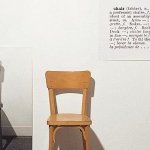
The term “concept art” was coined by Henry Flynt in a 1961 essay to describe “an art of which the material is ‘concepts,’” going on to state that, “concept art proper will involve language.” Was this new term known to the artist practitioners of the time themselves? Curator and writer Lucy Lippard thinks not in her essay “Escape Attempts,” adding that Flynt’s term was “in any case a different kind of ‘concept’—less formal, less rooted in the subversion of art-world assumptions and art-as-commodity.” To Lippard, the term conceptual art means “work in which the idea is paramount and the material form is secondary, lightweight, ephemeral, cheap, unpretentious and/or ‘dematerialized.’” Lippard does not deny conceptual art material form (yes, it can even involve paint) and by stressing the importance of the “idea,” she keeps conceptual art open to language-based work.

Sol LeWitt wrote “Paragraphs on Conceptual Art” for Artforum in 1967 and, like Lippard, focused on the “idea”: “What the work of art looks like isn’t too important. It has to look like something if it has physical form. No matter what form it may finally have it must begin with an idea. It is the process of conception and realization with which the artist is concerned.” Of course, he added, “Conceptual Art is only good when the idea is good.”

Double Negative? Photographers are Increasingly Printing New Versions of Vintage Pictures

It’s an artist’s dilemma: collectors are often more eager to buy a well-established artist’s early work than whatever he or she may be putting out now. Italian Surrealist Giorgio di Chirico famously resolved the problem in a controversial way, intentionally misdating some of his 1940s paintings because they were not nearly as sought-after as his work of the 1910s.

For photographers, there is an easier solution. Many have kept their old negatives, and can produce new editions of older imagery. Galleries describe these kinds of images as “never before seen” or “never before printed” as a way to suggest their freshness to the market. Photographers are now printing many more of these images than ever, delighting some collectors with the greater choice—but frustrating others who may own that earlier work.

“As the older iconic works get bought up, finding their way onto the secondary market where they are more expensive, you see that collectors are foraging for images,” Kevin Moore, a Manhattan art advisor and independent curator, explained. “Photographers are combing through their old negatives for things to print, because of the demand.” Some people just shake their heads and say, ‘crass materialism,’ but if artists and their galleries handle this properly it doesn’t have to be so.”

Culture Art and design Ai Weiwei @Large: Ai Weiwei takes over Alcatraz with Lego carpets and a hippie dragon

The big man of Beijing’s new show fills the former prison with a giant rainbow dragon and Lego models of 175 prisoners of conscience, from Nelson Mandela to Edward Snowden. The artist’s bravery and commitment are extraordinary.

Welcome to prison, and a celebration of liberty. Ai Weiwei, the big man of Beijing, has spent years discovering pockets of freedom in the most straitened circumstances, resisting every effort by the Chinese government to shut him down.

This week he opens a major new exhibition in a place that makes that resistance literal: on Alcatraz, the island penitentiary in the San Francisco bay. The United States has the highest incarceration rate on the planet. But this prison is decommissioned, and Ai is using it to extraordinary effect.

Ai has not stopped exhibiting since his arrest in 2011, and if anything his art has grown more antagonistic and more vital since being carted away by the Beijing police. (He evoked his detention at last year’s Venice Biennale, via uncanny scaled-down dioramas of his prison cell.) But Alcatraz is a different beast from anything that’s come before. It’s not a museum but a major tourist attraction, with an audience that may or may not be disposed to contemporary art, and Ai’s art has been totally integrated into the historical site. It has never hosted anything like this before.

Why Artworks Are Like People

Ever since critic and theorist Walter Benjamin penned his landmark essay in 1936, it’s been accepted as a kind of common wisdom that the aura of the artwork has withered in the (never-ending) age of mechanical reproduction. But a new study suggests the aura hasn’t vanished entirely yet, and perhaps it never will.

Are Artworks More Like People Than Artifacts? Individual Concepts and Their Extensions,” published last month in Topics in Cognitive Science, sees professor George E. Newman and doctoral student Rosanna K. Smith at the Yale School of Management, along with professor Daniel M. Bartels at the University of Chicago Booth School of Business, attempting to unravel the question of how people understand identity continuity — basically the conclusion that a person or thing is still itself over a period of time or change — and how that connects with our valuation of art. To wit, they propose that “judgments about the continuity of artworks are related to judgments about the continuity of individual persons because art objects are seen as physical extensions of their creators.”

Anselm Kiefer at the Royal Academy review – ‘an exciting rollercoaster ride of beauty, horror and history’

Born in Germany as the Nazis fell, Anselm Kiefer’s back catalogue is an astonishing look at the awful burden of history.

Anselm Kiefer was born in Germany in 1945. A new life can rarely have started in a less promising place and time. To enter the world as the Third Reich fell was to be a baby surrounded by human ash.

Does that seem a tasteless way of putting it? Well, Kiefer is not tasteful. Ever since he posed for a photograph in 1969 giving the sea a Nazi salute, he has resurrected the terrors of the 20th-century in a shocking, pungent and explicit way that defies both the politeness of forgetting and the evasiveness of appropriate speech. He would rather you were angry than amnesiac. He will not let the ashes of history’s victims blow away, but thrusts them in your face as a handful of truth.

He is the most liberating painter since Jackson Pollock. Like Pollock, Kiefer transforms a painting from a picture to be contemplated into a fact that splashes out into the world. Pollock often left bits of rubbish on the surface of his paintings; cigarette butts that fell in the wet paint, for instance. And Kiefer, who includes Pollock-esque drips among the marks he makes, also leaves everything from woodcuts to organic matter encrusted on his art’s rich surfaces. But the effect is utterly different from the late American artist.

Anselm Kiefer, Royal Academy, preview: Is he our greatest living artist?

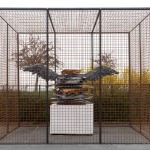
Kiefer’s range seems limitless: the courtyard entrance to the Royal Academy will be dominated by his first ever vitrines for outdoor display, one containing ships, as it were, beached, the other with vessels afloat.

The sunflowers are over for another year: the confident golden heads have drooped, their sunny countenances giving way to a black scowl.

It feels like a metaphor for the end of summer. But for the artist Anselm Kiefer, this is when sunflowers get interesting. Like his hero Van Gogh, he revisits the sunflower time and again, not for its buttery radiance, but for its blackened seeds. Sunflowers, in Kiefer’s work, are embedded into paintings, apparently dead, but bearing the potential for life.
“People think of Kiefer’s work being so masculine and confrontational,” says Soriano, “and I don’t think they understand his gentle side. What I want people to take away from this show is not only the knowledge that he is a great painter, but also that he has great relevance.” Indeed Kiefer, she adds, is looking, like all of us, with great anxiety at today’s turbulent world. “He says you have to remember that history is cyclical.”

AI WEIWEI TRANSFERS TO ALCATRAZ

Since his release from an 81-day detention by Chinese authorities in 2011, Beijing-based artist and activist Ai Weiwei has not kept silent, despite stipulations that prohibited interviews and other activities. In the United States, he was the subject of the traveling retrospective “Ai Weiwei: According to What?” which wound up its tour at the Brooklyn Museum last month. In Brooklyn, the artist added a new work, S.A.C.R.E.D., originally created for the 2013 Venice Biennale: six dioramas realistically depicting him in his jail cell as he ate, slept, paced, showered, went to the bathroom, and sat for interrogation, all under the constant watch of two uniformed guards. It is a harrowing work that brings the Chinese method of breaking individual spirit viscerally to life.

Sunflowers and Nazi salutes: the Anselm Kiefer extravaganza hits the Royal Academy – in pictures

The great German artist hits history and the Holocaust head on in works that are liberating, moving and defiantly dark. The show spans 40 years, from the scandalous series Heroic Symbols, in which he used the Nazi salute illegally, to giant works that took him over a decade to paint.

Go look!

Memory and Regret: Jenny Holzer’s “Dust Paintings”

Is an exhibition ever too beautiful for its own good? Jenny Holzer’s new show at Cheim & Read, Dust Paintings, is ravishing. But the sensuality of these text-based abstractions, done in oil on linen in mostly muted colors, runs counter to their content, which is derived from declassified government reports of brutalization and death during the Afghan War. At what point does the exquisiteness of the paint undermine the barbarity of the subject?

Is an exhibition ever too beautiful for its own good? Possibly, yes — but Holzer’s Dust Paintings (which refers to the literal meaning of ghubar, or traditional Arabic calligraphy, as “dust writing”), with its ruminative strokes of paint suffused with memory and regret, isn’t one.

‘I like vanished things’: Anselm Kiefer on art, alchemy and his childhood

At 69 Kiefer is widely regarded as one of the most important artists alive, or, to put it another way, a master at the alchemy of metamorphosing all manner of items into something more interesting, and sometimes much more valuable than gold: contemporary art. He is one of a succession of notable artists who emerged from Germany in the 1950s and 1960s, beginning with Joseph Beuys, who was a mentor to the young Kiefer, and including Gerhard Richter and Georg Baselitz. Unlike Beuys, however, who was essentially a performance and installation artist, Kiefer’s work often takes more tangible and traditional forms: painting, sculpture, books, architecture — plus unclassifiable mixtures of one or more of the above.

He deals with epic subject matter. Often his paintings depict a landscape simultaneously ancient and modern, covered with ruins that might be the result of either war damage or the ravages of time: mighty ruined structures reminiscent of pyramids or ziggurats, halls like those of Wagnerian heroes and gloomy funereal vaults derived from the architecture of the Third Reich. From such pictures, lead model aircraft and warships may dangle, and metallic wheat or sunflowers sprout. The impression is of some lost civilisation.

He likes things that mutate, and that includes art. ‘Paintings change in two ways. They change naturally, with time, and they change intellectually, because the artist is only half of the process, the other half is the spectator and every spectator creates his own painting.’ So, I asked, will 50 per cent of the exhibition at the Royal Academy really be the creation of the visitors? ‘Absolutely!’